
Being diagnosed with alopecia areata can raise many questions, but one of the most common is, “How long will it take to recover?” While there isn’t a one-size-fits-all answer, understanding how hair regrowth works can help you stay positive and set realistic expectations.
Thank you for reading this post, don't forget to subscribe!Many people who want to Recover from Alopecia hope for immediate results, but hair growth is a gradual process. Recovery depends on several factors, including the severity of hair loss, your overall health, and how your body responds over time.
In this guide, we’ll explain what affects recovery, how long it may take, and what you can do to support healthy hair regrowth.
What Is Alopecia Areata?
Alopecia areata is a condition that causes sudden patchy hair loss. It most commonly affects the scalp but may also involve:
- Eyebrows
- Eyelashes
- Beard
- Other body hair
Unlike permanent hair loss conditions, alopecia areata usually does not permanently damage hair follicles. This means that many people have the potential to Recover from Alopecia and experience natural hair regrowth.
Is Recovery Possible?
Yes, recovery is possible for many individuals.
Hair follicles often remain alive even when hair falls out. As a result, hair may grow back over time. However, recovery differs from person to person.
Some people experience:
- Complete hair regrowth
- Partial regrowth
- Multiple cycles of hair loss and regrowth
- Long periods without noticeable changes
Because every case is unique, no doctor can predict exactly how quickly someone will Recover from Alopecia.
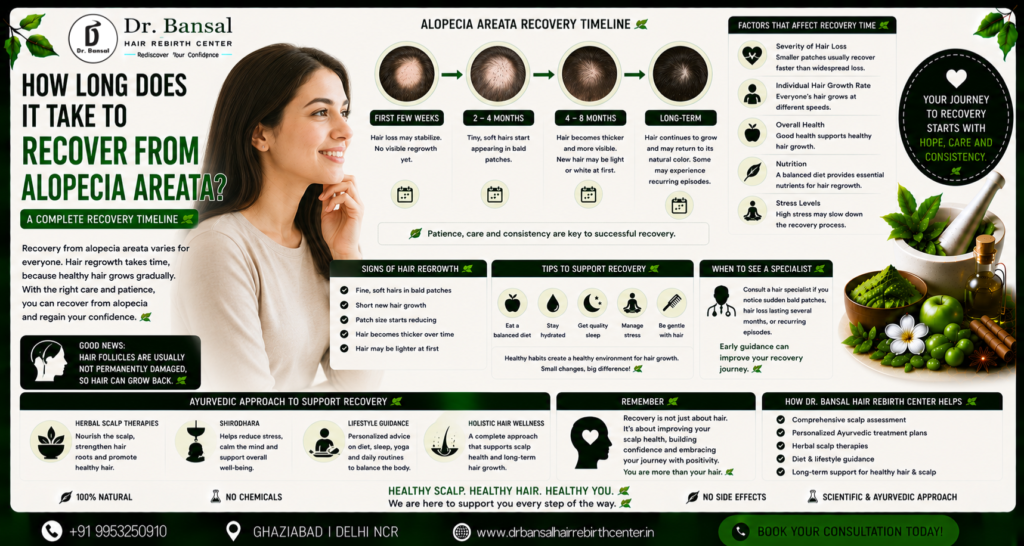
Typical Recovery Timeline
Although every individual is different, recovery often follows a gradual pattern.
First Few Weeks
Hair loss may stabilize, and no obvious regrowth may be visible yet.
Two to Four Months
Some individuals begin noticing tiny, soft hairs appearing inside bald patches.
Four to Eight Months
Hair usually becomes thicker and more noticeable. Initially, new hair may appear white or lighter before gradually returning to its natural color.
Long-Term Recovery
Some people achieve complete regrowth, while others experience recurring episodes that require ongoing care.
Patience is essential when trying to Recover from Alopecia, as hair naturally grows slowly.
What Affects Recovery Time?
Several factors influence how quickly someone may Recover from Alopecia.
Severity of Hair Loss
Smaller patches often recover sooner than widespread hair loss.
Individual Hair Growth Rate
Hair grows at different speeds for different people.
Overall Health
A healthy body supports healthier hair growth.
Nutrition
Hair requires nutrients such as:
- Protein
- Iron
- Zinc
- Vitamins
- Healthy fats
A balanced diet supports scalp wellness.
Stress Levels
Many individuals report increased hair loss during periods of emotional stress. Managing stress may support overall well-being throughout recovery.
Can Alopecia Areata Come Back?
Yes.
Even after you Recover from Alopecia, future episodes may occur.
Some people experience:
- Only one episode
- Occasional recurrence
- Multiple relapses throughout life
Regular scalp monitoring and healthy lifestyle habits remain important, even after hair regrowth.
Signs That Hair Is Growing Back
Early signs of recovery often include:
- Fine, soft hairs appearing inside bald patches
- Reduced patch size
- Increasing hair density
- Stronger hair strands over time
Hair often returns gradually rather than all at once.
Healthy Habits That Support Hair Recovery
Although no lifestyle habit guarantees recovery, healthy choices can create a supportive environment for your scalp.
Eat Nutritious Foods
Choose foods rich in:
- Lean proteins
- Green vegetables
- Fruits
- Nuts and seeds
- Whole grains
Stay Hydrated
Proper hydration supports overall body function, including scalp health.
Prioritize Sleep
Getting enough sleep allows your body to recover and maintain healthy biological processes.
Manage Stress
Helpful practices include:
- Yoga
- Meditation
- Walking
- Deep breathing
- Mindfulness exercises
Reducing stress can contribute to overall wellness while you work to Recover from Alopecia.
Protect Your Hair
Avoid:
- Tight hairstyles
- Excessive heat styling
- Harsh chemical treatments
- Rough brushing
Gentle hair care helps protect existing hair.
When Should You See a Hair Specialist?
Professional evaluation is recommended if you notice:
- Sudden bald patches
- Hair loss lasting several months
- Eyebrow or eyelash hair loss
- Rapidly increasing bald areas
- Recurring hair loss
An early diagnosis helps identify the specific cause and guides appropriate care.
Ayurvedic Perspective on Alopecia Recovery
Ayurveda takes a holistic approach to hair health.
Rather than focusing only on visible hair loss, Ayurvedic principles emphasize supporting the body’s overall balance.
Hair wellness may be influenced by:
- Nutrition
- Digestion
- Sleep
- Emotional well-being
- Daily lifestyle habits
This comprehensive approach aims to create a healthy foundation while working to Recover from Alopecia.
Ayurvedic Therapies That Support Hair Wellness
Depending on individual needs, Ayurvedic care may include:
Herbal Scalp Therapies
These therapies are designed to nourish the scalp and promote healthier hair care routines.
Shirodhara
A traditional Ayurvedic therapy often used to encourage deep relaxation and support stress management.
Lifestyle Counseling
Personalized guidance on diet, sleep, hydration, and daily habits.
Long-Term Hair Wellness Programs
Holistic plans focused on maintaining healthy hair and scalp function over time.
How Dr. Bansal Hair Rebirth Center Helps
At Dr. Bansal Hair Rebirth Center, every patient receives personalized care based on their individual condition.
The clinic provides:
- Comprehensive scalp assessments
- Personalized Ayurvedic consultations
- Herbal scalp therapies
- Lifestyle and dietary guidance
- Long-term hair wellness support
Each care plan is customized to meet the patient’s unique needs and recovery goals.
Contact us. https://drbansalhairrebirthcenter.in/contact-us/
Final Thoughts
The journey to Recover from Alopecia is different for every individual. While some people notice hair regrowth within a few months, others may require more time and ongoing care. The key is to remain patient, maintain healthy lifestyle habits, and seek professional guidance when needed.
Remember that recovery isn’t measured only by hair growth—it also includes improving scalp health, building confidence, and supporting your overall well-being. With the right approach, many people successfully Recover from Alopecia and continue their journey toward healthier hair and renewed confidence.
Contact Details
Dr. Bansal Hair Rebirth Center
MZ-07/08, Sumedha Tower, RDC, Raj Nagar, Ghaziabad
Phone: +91-9953250910
Website: https://drbansalhairrebirthcenter.in/
know more about us – https://vedantamayurveda.in/