
When people first notice bald patches on their scalp or receive a diagnosis of alopecia areata, many questions quickly follow. Among the most common concerns are: “Can I spread this condition to someone else?” and “Will my children inherit it?” These questions are understandable because hair loss can be confusing, especially when there is so much misinformation online.
Thank you for reading this post, don't forget to subscribe!One of the biggest misconceptions surrounding hair loss is the belief that Contagious Alopecia Areata can spread from person to person. Another common myth is that everyone with alopecia areata will automatically pass it on to their children. The reality is far more complex.
In this article, we will explore the facts about Contagious Alopecia Areata, genetics, possible causes, risk factors, and what individuals should know if they are living with this condition.
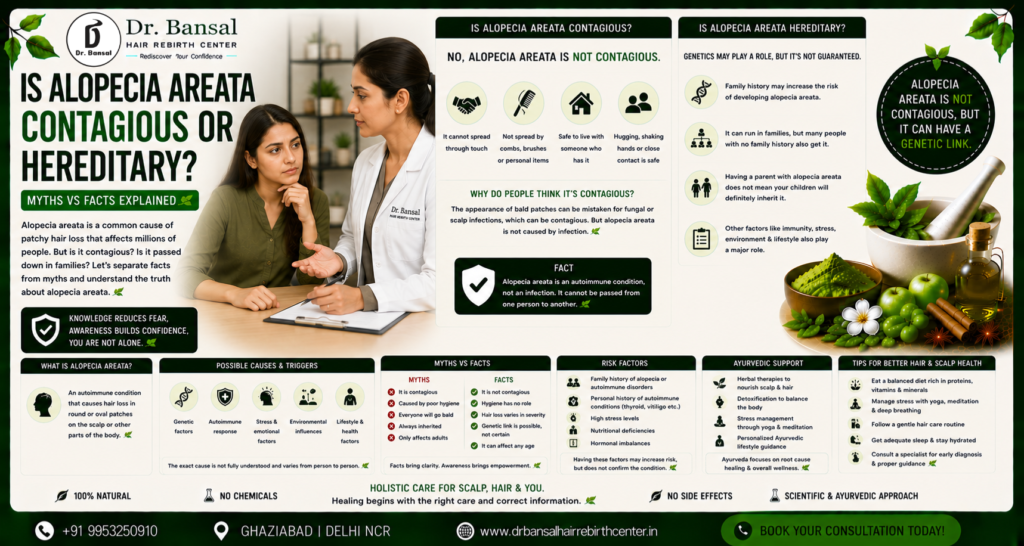
What Is Alopecia Areata?
Alopecia areata is a condition that causes hair loss, usually appearing as round or oval bald patches on the scalp. In some cases, it can also affect:
- Eyebrows
- Eyelashes
- Beard areas
- Other parts of the body
Hair loss may occur suddenly and can vary significantly from person to person. Some individuals experience only one small patch, while others may develop more extensive hair loss.
Understanding the truth about Contagious Alopecia Areata begins with understanding what the condition actually is.
Is Alopecia Areata Contagious?
The simple answer is no.
Contagious Alopecia Areata is a myth. Alopecia areata does not spread from one person to another through physical contact, sharing personal items, or being near someone who has the condition.
You cannot develop alopecia areata by:
- Touching someone’s scalp
- Sharing a comb or brush
- Hugging someone
- Shaking hands
- Sharing a workspace
- Living in the same household
This is an important fact because many people living with alopecia areata face unnecessary social stigma due to misunderstandings about the condition.
Why Do People Think Alopecia Areata Is Contagious?
The appearance of sudden bald patches can sometimes lead people to assume the condition is caused by an infection.
Certain fungal scalp infections can cause patchy hair loss and may spread under specific circumstances. Because the visual appearance can occasionally seem similar, people may mistakenly associate alopecia areata with contagious conditions.
However, Contagious Alopecia Areata is not medically accurate. Alopecia areata is not caused by bacteria, viruses, fungi, or parasites.
Is Alopecia Areata Hereditary?
While alopecia areata is not contagious, genetics may play a role.
Research suggests that some people with alopecia areata have family members who also experience:
- Alopecia areata
- Other hair loss conditions
- Certain immune-related conditions
This does not mean alopecia areata is guaranteed to be inherited. Rather, genetics may increase susceptibility in some individuals.
In other words, having a family history may increase risk, but it does not determine whether someone will develop the condition.
Does Family History Guarantee Alopecia?
No.
Many individuals diagnosed with alopecia areata have no known family history at all.
Likewise, some people with a family history never experience hair loss.
This is why discussions about Contagious Alopecia Areata and heredity should always include the understanding that multiple factors may be involved.
What Causes Alopecia Areata?
The exact cause of alopecia areata remains an area of ongoing research.
Experts believe several factors may contribute, including:
Genetic Factors
Certain inherited traits may increase susceptibility.
Immune System Activity
Many researchers believe immune-related processes may play a role in the development of alopecia areata.
Environmental Influences
Various environmental factors may influence when or how symptoms appear.
Emotional Stress
Some individuals report experiencing significant stress before noticing hair loss, although stress alone is not considered a direct cause.
Can Children Inherit Alopecia Areata?
This is one of the most common questions patients ask.
The answer is that children may inherit a predisposition, but they do not automatically inherit the condition itself.
If a parent has alopecia areata:
- The child’s risk may be higher than average.
- The child may never develop alopecia.
- Hair loss patterns may differ significantly.
Therefore, heredity is only one piece of a much larger picture.
Common Myths About Alopecia Areata
Myth 1: It Is Contagious
This is false.
Contagious Alopecia Areata does not exist, and the condition cannot be spread through contact.
Myth 2: Poor Hygiene Causes It
Hair loss associated with alopecia areata is not caused by poor hygiene.
Myth 3: Everyone with Alopecia Will Lose All Their Hair
Hair loss patterns vary widely among individuals.
Myth 4: It Is Always Inherited
Many people with alopecia have no family history whatsoever.
How Is Alopecia Areata Diagnosed?
A professional assessment typically involves:
- Reviewing medical history
- Examining the scalp
- Evaluating hair loss patterns
- Assessing overall scalp health
Proper diagnosis helps distinguish alopecia areata from other conditions that may cause patchy hair loss.
Living Confidently with Alopecia Areata
Understanding the facts can help reduce anxiety.
Knowing that Contagious Alopecia Areata is a myth allows individuals to:
- Participate confidently in social activities
- Maintain workplace interactions
- Build healthy relationships
- Educate friends and family
Accurate information often reduces fear and misunderstanding.
Ayurvedic Perspective on Hair Wellness
Ayurveda approaches hair health holistically.
According to Ayurvedic principles, healthy hair may be influenced by:
- Nutrition
- Sleep quality
- Emotional balance
- Daily habits
- Overall wellness
Because of this broader perspective, Ayurvedic care often focuses on supporting both scalp health and general well-being.
Supporting Hair and Scalp Health
Simple habits that may support scalp wellness include:
- Maintaining balanced nutrition
- Staying hydrated
- Managing stress
- Following healthy sleep routines
- Using gentle hair-care practices
These habits contribute to overall health and may help support long-term scalp wellness.
How Dr. Bansal Hair Rebirth Center Helps
At Dr. Bansal Hair Rebirth Center, patients receive personalized care designed according to their unique needs and hair concerns.
The clinic focuses on:
- Detailed scalp assessments
- Personalized Ayurvedic consultations
- Herbal scalp therapies
- Lifestyle recommendations
- Long-term scalp wellness support
Every care plan is tailored to the individual rather than using a one-size-fits-all approach.
Contact us. https://drbansalhairrebirthcenter.in/contact-us/
Final Thoughts
One of the most important facts to remember is that Contagious Alopecia Areata is a myth. Alopecia areata cannot be spread through contact, shared items, or close relationships. While genetics may play a role in some cases, having a family history does not guarantee that someone will develop the condition.
By understanding the facts, individuals can make informed decisions, reduce unnecessary worry, and focus on supporting their overall scalp and hair health. If you notice patchy hair loss or have concerns about alopecia areata, seeking professional guidance can help provide clarity and confidence moving forward.
Contact Details
Dr. Bansal Hair Rebirth Center
MZ-07/08, Sumedha Tower, RDC, Raj Nagar, Ghaziabad
Phone: +91-9953250910
Website: https://drbansalhairrebirthcenter.in/
know more about us – https://vedantamayurveda.in/