
One of the first questions people ask after being diagnosed with alopecia areata is, “How long will it take for my hair to grow back?” The answer is not always simple because every individual’s experience is different. Some people notice hair regrowth within a few months, while others may take longer to see visible improvement.
Thank you for reading this post, don't forget to subscribe!If you are hoping to Recover from Alopecia, understanding the factors that influence hair growth can help you set realistic expectations and make informed decisions about your scalp and hair care journey.
In this guide, we’ll explore the recovery timeline, factors that affect regrowth, and practical ways to support healthy hair growth while managing alopecia areata.
What Is Alopecia Areata?
Alopecia areata is a condition that causes hair loss, usually appearing as round or oval bald patches on the scalp. In some cases, it may also affect:
- Eyebrows
- Eyelashes
- Beard areas
- Other parts of the body
The condition can develop suddenly, often leaving people searching for answers about how quickly they can Recover from Alopecia and regain their confidence.
Is Recovery Possible?
The encouraging news is that many people do experience hair regrowth. Hair follicles affected by alopecia areata are often not permanently damaged, which means there is potential for hair to return.
However, recovery varies significantly between individuals. Some people experience complete regrowth, while others may have recurring episodes of hair loss and regrowth over time.
This is why there is no single timeline to Recover from Alopecia.
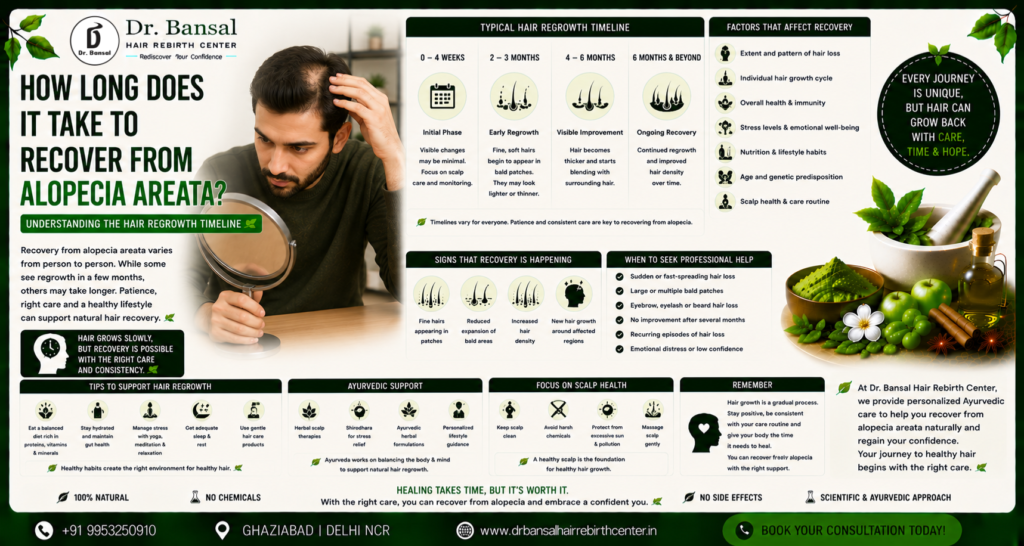
Typical Hair Regrowth Timeline
While every case is unique, hair growth generally follows a gradual process.
First Few Weeks
During the early stages, visible changes may be minimal. Many individuals focus on scalp care and monitoring any changes in the affected areas.
After Several Months
Some people begin noticing fine, soft hairs appearing within bald patches. These new hairs may initially appear lighter in color or thinner than surrounding hair.
Ongoing Recovery
As regrowth continues, hair may gradually become thicker and blend more naturally with existing hair.
Because hair grows slowly, patience is essential when trying to Recover from Alopecia.
Factors That Affect Recovery
Several factors can influence how quickly someone may Recover from Alopecia.
Extent of Hair Loss
Smaller patches may sometimes show improvement sooner than more extensive hair loss patterns.
Individual Hair Growth Cycle
Hair naturally grows at different rates from person to person.
Overall Health
General wellness often plays an important role in supporting healthy hair growth.
Stress Levels
Many people report periods of emotional stress before noticing hair loss. Managing stress may support overall well-being during recovery.
Lifestyle Habits
Nutrition, sleep, hydration, and daily routines can all contribute to scalp health.
Can Alopecia Areata Return After Recovery?
Yes, it can.
One important aspect of alopecia areata is that hair regrowth does not always guarantee that hair loss will never return.
Some individuals:
- Experience a single episode
- Have occasional recurrences
- Notice cycles of hair loss and regrowth
This is why long-term scalp care remains important even after you begin to Recover from Alopecia.
Signs That Recovery Is Happening
People often look for early signs that they are starting to Recover from Alopecia.
Common indicators may include:
- Fine hairs appearing within patches
- Reduced expansion of bald areas
- Increased hair density
- New hair growth around affected regions
Hair may initially appear white, grey, or lighter than surrounding strands before gradually returning to its natural appearance.
Supporting Hair Regrowth Naturally
Although recovery timelines vary, there are several ways to support overall scalp wellness.
Maintain a Balanced Diet
Nutritious foods help support healthy bodily functions.
Focus on:
- Protein-rich foods
- Fruits
- Vegetables
- Healthy fats
- Adequate hydration
Prioritize Sleep
Quality sleep helps support recovery and overall wellness.
Manage Stress
Stress management techniques may include:
- Meditation
- Yoga
- Deep breathing exercises
- Walking
- Mindfulness practices
Use Gentle Hair Care
Avoid excessive heat styling, harsh chemical treatments, and rough handling of the scalp.
These habits can help create a healthy environment as you work to Recover from Alopecia.
When Should You Seek Professional Guidance?
Professional evaluation is important if you experience:
- Sudden hair loss
- Expanding bald patches
- Eyebrow or eyelash loss
- Significant shedding
- Recurrent episodes
A proper assessment can help identify factors that may be influencing your condition and guide you toward appropriate care options.
Ayurvedic Perspective on Hair Recovery
Ayurveda views hair health as closely connected to overall wellness.
According to Ayurvedic principles, healthy hair may be influenced by:
- Balanced nutrition
- Good digestion
- Quality sleep
- Stress management
- Daily routines
Rather than focusing only on visible hair loss, Ayurveda emphasizes supporting the entire body.
This holistic approach can be beneficial for individuals seeking to Recover from Alopecia while improving overall well-being.
Ayurvedic Therapies That Support Hair Wellness
Traditional Ayurvedic care often includes:
Herbal Scalp Therapies
Designed to support scalp nourishment and comfort.
Shirodhara
A relaxing therapy commonly used to promote emotional balance and stress reduction.
Lifestyle Guidance
Personalized recommendations focused on nutrition, sleep, and healthy daily habits.
Scalp Wellness Programs
Holistic care plans designed to support long-term hair and scalp health.
Emotional Recovery Matters Too
Hair loss affects more than appearance.
Many people experience:
- Anxiety
- Reduced confidence
- Frustration
- Emotional stress
As you work to Recover from Alopecia, remember that emotional well-being is an important part of the journey. Seeking support from family, friends, support groups, or healthcare professionals can be valuable.
How Dr. Bansal Hair Rebirth Center Helps
At Dr. Bansal Hair Rebirth Center, patients receive individualized care based on their specific condition and concerns.
The clinic focuses on:
- Detailed scalp assessments
- Personalized Ayurvedic consultations
- Herbal scalp therapies
- Lifestyle recommendations
- Long-term scalp wellness support
Each treatment plan is tailored according to the patient’s needs and goals.
Contact us. https://drbansalhairrebirthcenter.in/contact-us/
Final Thoughts
The journey to Recover from Alopecia is different for every individual. While some people experience regrowth within a few months, others may require more time and ongoing support. Understanding that hair growth is a gradual process can help reduce frustration and encourage patience.
By focusing on scalp health, maintaining healthy lifestyle habits, managing stress, and seeking professional guidance when needed, you can create the best possible environment for hair wellness. Most importantly, remember that recovery is not just about hair growth—it is also about rebuilding confidence, supporting overall health, and moving forward with optimism.
Contact Details
Dr. Bansal Hair Rebirth Center
MZ-07/08, Sumedha Tower, RDC, Raj Nagar, Ghaziabad
Phone: +91-9953250910
Website: https://drbansalhairrebirthcenter.in/
know more about us – https://vedantamayurveda.in/