
Have you ever noticed loose hair in your hands, on your towel or in the shower drain and wondered whether washing your hair is making your hair loss worse? This concern is particularly common among people experiencing sudden bald patches or living with alopecia areata.
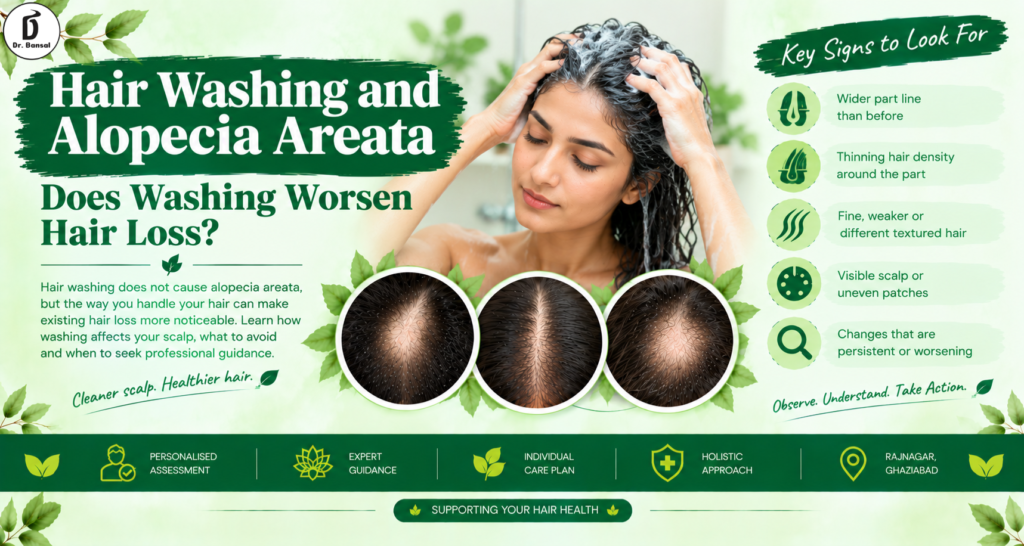
Thank you for reading this post, don't forget to subscribe!Understanding Hair Washing and Alopecia Areata can help you separate normal hair shedding from changes that deserve attention. Washing your hair does not cause alopecia areata, but the way you handle wet hair can contribute to breakage and make existing hair loss more noticeable.
In this guide, we explain how washing affects your hair, which habits to avoid, how to care for your scalp and when professional guidance may be helpful.
What Is Alopecia Areata?
Alopecia areata is an immune-related condition in which the immune system mistakenly targets hair follicles. It commonly causes smooth, round or oval patches of hair loss on the scalp. In some cases, it can also affect eyebrows, eyelashes, beard hair and other areas of the body.
The relationship between Hair Washing and Alopecia Areata is often misunderstood. Alopecia areata develops because of an underlying immune process, not simply because someone washes their hair too frequently or uses an ordinary washing routine.
However, washing can reveal hair that has already detached from the scalp. This may make an existing hair-loss problem seem more dramatic, particularly when you are already worried about your hair.
Does Washing Your Hair Make Alopecia Areata Worse?
Generally, ordinary hair washing does not cause alopecia areata to spread. The condition can change over time independently of your washing schedule.
When considering Hair Washing and Alopecia Areata, it is important to understand the difference between hair shedding and hair loss caused by damage.
During washing, naturally shed strands can become more visible because water brings loose hairs together. If you have not washed or detangled your hair for several days, several days’ worth of loose strands may come away at once.
This does not necessarily mean that washing has caused new bald patches. However, vigorous rubbing, forceful detangling and pulling on wet hair can contribute to breakage.
If you notice a new, smooth bald patch or continuing loss in a particular area, do not assume that your washing routine is responsible. A professional assessment can help identify the likely cause.
Why Does More Hair Appear to Fall Out During Washing?
Several everyday factors can make hair shedding more noticeable in the shower.
Accumulated loose hair: Strands that have already completed their growth cycle may remain caught among surrounding hairs until washing or combing releases them.
Wet-hair handling: Wet hair can be more vulnerable to stretching and breakage, particularly when it is pulled or brushed forcefully.
Hair length and texture: Longer hair can look like a larger amount of shedding because each strand occupies more space. Curly and coily hair may also retain loose strands until washing or detangling.
Existing hair loss: If a scalp condition is already affecting hair density, ordinary shedding may be more noticeable around the affected areas.
Understanding Hair Washing and Alopecia Areata means looking beyond the shower drain. The location of missing hair, the appearance of the scalp and changes over time provide more useful information than the amount of hair seen during one wash.
How Often Should You Wash Your Hair?
There is no single washing schedule that suits everyone. Your scalp’s oiliness, hair texture, activity level and personal comfort all influence how often washing is appropriate.
People with an oily scalp may prefer more frequent washing, while some dry or tightly curled hair types benefit from less frequent washing and careful moisture management.
For Hair Washing and Alopecia Areata, the main priority is gentle handling rather than following a rigid schedule.
Choose a routine that keeps your scalp comfortable and clean. Avoid scratching or aggressively rubbing areas affected by hair loss. If washing causes persistent irritation, pain or noticeable breakage, discuss the problem with a qualified professional.
Washing less often will not necessarily stop alopecia areata, just as washing more often will not make the underlying immune condition disappear.
A Gentle Hair-Washing Routine
A careful routine can help reduce avoidable mechanical damage while keeping your scalp clean.
- Use comfortable water temperature. Very hot water may irritate a sensitive scalp.
- Handle hair gently. Use your fingertips rather than scratching with your nails.
- Avoid forceful rubbing. Clean the scalp without aggressively twisting or pulling the strands.
- Detangle carefully. Work through knots gradually instead of tugging through them.
- Dry without friction. Pat the hair gently with a towel rather than rubbing it vigorously.
- Avoid tight styling afterwards. Choose hairstyles that do not place repeated tension on the roots.
These habits can help limit mechanical damage, but they are not a cure for alopecia areata. Gentle care supports hair handling while the underlying cause of hair loss is assessed.
When Is Hair Loss During Washing a Warning Sign?
The amount of hair in the shower alone cannot determine whether you have alopecia areata. Pay attention to the overall pattern instead.
Consider seeking professional guidance if you notice:
- A new, smooth bald patch.
- Several distinct patches appearing over time.
- A persistent increase in shedding.
- Hair loss involving eyebrows, eyelashes or beard hair.
- Scalp redness, scaling, tenderness or discomfort.
- Changes that continue despite gentler hair handling.
With Hair Washing and Alopecia Areata, recognising the difference between loose strands and a changing bald patch is particularly important. Photographs taken occasionally under similar lighting can help document visible changes.
Avoid repeatedly pulling your hair to test whether it is loose. This can cause additional breakage and make monitoring more confusing.
Why You Need to Visit Dr. Bansal Hair Rebirth Centre
If you are concerned about Hair Washing and Alopecia Areata, a professional assessment can help clarify whether your symptoms are consistent with alopecia areata, another scalp condition or hair breakage.
At Dr. Bansal Hair Rebirth Centre, you can discuss your hair-loss pattern, washing habits, scalp concerns and changes in hair density. An individual assessment can help determine what further evaluation or personalised hair-care guidance may be appropriate.
Before your visit, note when the hair loss began, whether it appears in distinct patches and whether you have experienced irritation or other changes. This information can help make the discussion more productive.
Contact Dr. Bansal Hair Rebirth Centre
- Address: MZL 07/08, Sumedha Tower, Ansal Building, Raj Nagar, Ghaziabad, Uttar Pradesh 201002
- Phone: +91-9953250910
- Website: https://drbansalhairrebirthcenter.in/
- Contact us. https://drbansalhairrebirthcenter.in/contact-us/.
Frequently Asked Questions
1. Can washing cause alopecia areata?
No. Ordinary hair washing does not cause alopecia areata. The condition is associated with an immune-related process affecting hair follicles.
2. Should I stop washing my hair if I have bald patches?
Not necessarily. Gentle washing can maintain scalp cleanliness. If washing causes discomfort or excessive breakage, seek personalised guidance.
3. Does hair in the shower mean my alopecia is spreading?
Not by itself. Loose strands can accumulate before washing. New bald patches or a changing pattern of hair loss deserve closer assessment.
4. Can vigorous towel drying damage hair?
Yes. Rubbing and pulling can contribute to mechanical breakage, so gently patting the hair dry is preferable.
5. Can a gentle washing routine cure alopecia areata?
No. Gentle handling can reduce avoidable breakage, but it cannot guarantee recovery from an underlying hair-loss condition.
Conclusion
Hair Washing and Alopecia Areata are connected mainly through hair handling and the visibility of loose strands, rather than washing being the cause of the condition. Seeing hair in the shower does not automatically mean that alopecia areata is getting worse.
Wash according to your scalp’s needs, handle wet hair gently and pay attention to persistent changes in density or new bald patches. If you are uncertain about the cause of your hair loss, professional assessment can help you understand the pattern and make informed decisions.
Contact Details
Dr. Bansal Hair Rebirth Center
MZ-07/08, Sumedha Tower, RDC, Raj Nagar, Ghaziabad
Phone: +91 8595340077
Website: https://drbansalhairrebirthcenter.in/
know more about us – https://vedantamayurveda.in/