
Have you noticed more scalp showing when you part your hair? A Widening Hair Part can develop gradually, making it difficult to identify exactly when the change began. Some people notice it while styling their hair, taking photographs or looking in the mirror under bright lighting.
Thank you for reading this post, don't forget to subscribe!Although a Widening Hair Part can be associated with several types of hair loss, it does not automatically mean you have alopecia areata. Understanding the pattern, speed and location of hair loss can help you decide whether professional assessment is needed.
This guide explains the possible causes, how alopecia areata may affect the scalp, and which changes deserve attention.
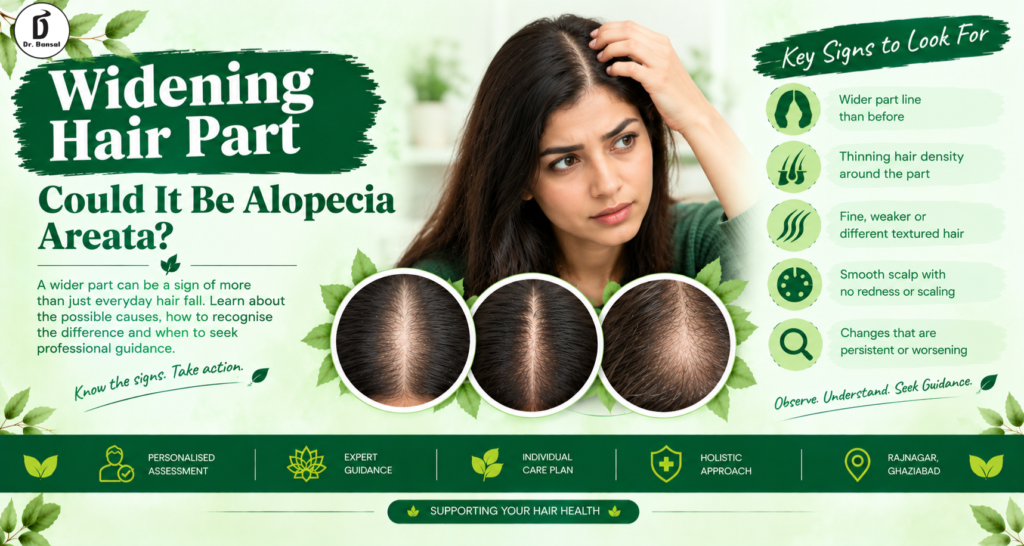
What Does a Widening Hair Part Mean?
A Widening Hair Part means that the line separating the hair appears broader than it did previously, allowing more scalp to become visible. This may happen because hair density has decreased, individual strands have become finer or the hair naturally falls differently.
Sometimes, the appearance changes because of styling habits, lighting or the way hair is positioned. However, a persistent change in density should not be dismissed, especially when it becomes increasingly noticeable.
A Widening Hair Part is a visible sign rather than a diagnosis. Its cause depends on the overall pattern of thinning, your hair-loss history and any other symptoms.
Can Alopecia Areata Cause a Widening Hair Part?
Yes, alopecia areata can affect areas around the parting, but its typical presentation is different from gradual, widespread thinning.
Alopecia areata is an immune-related condition in which the immune system mistakenly targets hair follicles. It commonly produces smooth, round or oval patches of hair loss. In some cases, affected areas may overlap with the natural parting and make the scalp more visible.
If a Widening Hair Part develops alongside clearly defined bald patches, sudden hair loss or new areas of missing hair, an assessment can help determine whether alopecia areata is a possible explanation.
However, gradual widening without distinct patches may point towards another type of hair loss. Appearance alone cannot confirm the cause.
Common Causes of a Widening Hair Part
Several factors can make a Widening Hair Part more noticeable.
1. Female pattern hair loss
This condition often causes gradual thinning over the crown and central scalp. The part may become broader over time, while the hairline can remain relatively unchanged.
2. Telogen effluvium
This type of shedding can occur after significant physical stress, illness or other changes affecting the hair-growth cycle. Increased shedding may make the scalp more visible, including around the parting.
3. Alopecia areata
Alopecia areata more commonly creates distinct patches, although its appearance can vary. Sudden changes or additional bald areas deserve professional attention.
4. Traction-related hair loss
Repeated tension from tight hairstyles can contribute to hair loss, particularly around areas under stress. The distribution often depends on how the hair is styled.
5. Natural variation and styling
A Widening Hair Part may sometimes appear different because of lighting, oily hair clumping together or repeatedly parting the hair in the same direction. If the change persists across different settings, consider having it assessed.
How Can You Tell the Difference Between Alopecia Areata and General Thinning?
Observing the pattern can provide useful clues, although it cannot replace an examination.
- Patchy loss: Smooth, distinct areas with missing hair may be consistent with alopecia areata.
- Gradual central thinning: A slowly broadening part may be associated with pattern hair loss.
- Sudden widespread shedding: Loose hairs across the scalp may suggest a shedding condition rather than classic patchy alopecia areata.
- Hair breakage: Short strands of different lengths may indicate damage or tension.
- Scalp symptoms: Persistent redness, scaling, pain or irritation may indicate another scalp concern.
A Widening Hair Part can have more than one contributing factor, so avoid diagnosing yourself based on one photograph or symptom.
When Should You Be Concerned?
A Widening Hair Part deserves attention when the change is new, persistent or becoming more noticeable.
Consider arranging an assessment if you observe:
- A sudden increase in visible scalp.
- New smooth bald patches.
- Thinning that continues to progress.
- Changes involving eyebrows, eyelashes or other body hair.
- Persistent itching, redness, scaling or discomfort.
- Hair loss that began after a significant illness or physical change.
Keeping a simple record of when the change started can help explain the pattern. If you take photographs, use similar lighting and angles rather than comparing pictures taken under very different conditions.
What Can You Do to Protect Your Hair?
If you have noticed a Widening Hair Part, focus on gentle hair care while investigating the cause.
Avoid hairstyles that repeatedly pull on the roots, brush carefully and minimise unnecessary friction. Maintain balanced nutrition and regular sleep, and avoid assuming that a particular food or hair-care product will resolve every form of hair loss.
Do not repeatedly pull strands to check whether they are loose. This may cause avoidable breakage and make it harder to monitor the situation accurately.
Most importantly, remember that gentle care can protect hair from mechanical damage but cannot guarantee that an underlying hair-loss condition will stop progressing.
Why You Need to Visit Dr. Bansal Hair Rebirth Centre
A persistent Widening Hair Part can be worrying, especially when the cause is unclear. A professional assessment can help distinguish between possible causes of thinning, shedding and patchy hair loss.
At Dr. Bansal Hair Rebirth Centre, you can discuss changes in hair density, sudden bald patches and concerns about alopecia areata. An individual assessment can help clarify what further evaluation or personalised hair-care guidance may be appropriate.
Before your visit, note when the change began, whether it is progressing and whether you have noticed hair loss elsewhere. Photographs taken under consistent lighting may also help document changes over time.
Contact Dr. Bansal Hair Rebirth Centre
- Address: MZL 07/08, Sumedha Tower, Ansal Building, Raj Nagar, Ghaziabad, Uttar Pradesh 201002
- Phone: +91-9953250910
- Website: https://drbansalhairrebirthcenter.in/
- Contact us. https://drbansalhairrebirthcenter.in/contact-us/.
Frequently Asked Questions
1. Does a widening hair part always mean hair loss?
No. Styling, lighting and natural hair variation can affect its appearance. A persistent or progressive change in density should be assessed.
2. Is a widening hair part a common sign of alopecia areata?
Alopecia areata more typically causes distinct bald patches. A widening part alone is not enough to identify the condition.
3. Can stress cause a widening hair part?
Significant physical or emotional stress may contribute to increased shedding in some people, which can make the scalp more visible.
4. Can hair grow back after a widening part develops?
Regrowth depends on the underlying cause. Some types of shedding improve, while other conditions may require ongoing assessment.
5. When should I seek professional guidance?
Arrange an assessment if the change is sudden, persistent, progressively worsening or accompanied by bald patches or scalp symptoms.
Conclusion
A Widening Hair Part can have several explanations, ranging from temporary shedding to longer-term hair-loss conditions. Although alopecia areata can affect the parting area, its typical pattern involves distinct patches rather than only gradual central thinning.
Pay attention to persistent changes, avoid unnecessary pulling and seek professional guidance when the pattern is unusual or worsening. Understanding the cause is the most useful first step towards making informed decisions about your hair and scalp health.
Contact Details
Dr. Bansal Hair Rebirth Center
MZ-07/08, Sumedha Tower, RDC, Raj Nagar, Ghaziabad
Phone: +91 8595340077
Website: https://drbansalhairrebirthcenter.in/
know more about us – https://vedantamayurveda.in/