
For many people diagnosed with Alopecia Areata, seeing hair grow back is a moment of relief and renewed confidence. However, one question often remains in the back of their minds: “Can the hair loss return?”
Thank you for reading this post, don't forget to subscribe!The answer is that Alopecia Areata can sometimes reappear even after successful hair regrowth. While some individuals experience only one episode in their lifetime, others may notice new patches developing months or even years later. Understanding why this happens can help individuals take better care of their scalp and manage expectations throughout their hair recovery journey.
At Dr. Bansal Hair Rebirth Center, many patients seek guidance not only for hair regrowth but also for maintaining long-term scalp health after recovering from Alopecia Areata.
What Is Alopecia Areata?
Alopecia Areata is a condition that causes patchy hair loss, usually appearing as small round bald spots on the scalp. In some cases, it may also affect the beard, eyebrows, eyelashes, or other body areas.
One of the unique characteristics of Alopecia Areata is its unpredictability. Hair may regrow naturally, respond to treatment, or disappear again after a period of improvement.
Because every case is different, understanding the possibility of recurrence is important.
Can Alopecia Areata Come Back?
Yes, Alopecia Areata can return after hair regrowth.
Some people experience:
- A single episode followed by permanent regrowth
- Occasional recurrences over several years
- Multiple episodes throughout life
- New patches in different scalp areas
The possibility of recurrence does not mean hair cannot grow back again. Many individuals who experience a relapse also experience subsequent regrowth.
Why Does Alopecia Areata Return?
Researchers continue to study why Alopecia Areata recurs in some people. Although there is no single explanation, several factors may contribute.
Individual Hair Growth Cycles
Hair naturally grows in cycles. These cycles can vary from person to person and may influence how Alopecia Areata behaves over time.
Stress and Emotional Factors
Many individuals report increased hair-loss episodes during periods of emotional stress. While stress is not considered the direct cause of Alopecia Areata, it may influence overall scalp wellness.
Genetic Predisposition
People with a family history of alopecia or immune-related conditions may have a higher likelihood of experiencing recurrence.
Lifestyle Factors
Poor sleep, unhealthy eating habits, and lack of self-care may affect overall wellness and potentially influence scalp health.
Early Signs That Alopecia Areata May Be Returning
Recognizing early warning signs can help individuals seek guidance sooner.
Possible indicators include:
- Increased hair shedding
- Small thinning areas
- Newly developing bald patches
- Excess hair on pillows or combs
- Reduced hair density in previously affected areas
Regular scalp observation can help identify changes before patches become larger.
Does Recurrence Mean Treatment Failed?
This is a common misconception.
The return of Alopecia Areata does not necessarily mean that previous treatment was unsuccessful.
Because Alopecia Areata often follows an unpredictable pattern, recurrence can occur even after excellent hair regrowth. Long-term scalp care and monitoring remain important regardless of past results.
The Emotional Side of Recurring Hair Loss
Experiencing hair loss again after successful regrowth can be emotionally difficult.
Many individuals feel:
- Frustration
- Anxiety
- Disappointment
- Reduced confidence
- Fear of future hair loss
These feelings are understandable. Seeking support and maintaining realistic expectations can help individuals manage the emotional aspects of their journey.
Why Scalp Health Matters After Hair Regrowth
Many people stop focusing on scalp care once their hair returns. However, maintaining scalp wellness remains important.
Healthy scalp care may support:
- Better follicle function
- Improved scalp comfort
- Healthy circulation
- Long-term hair wellness
- Stronger hair roots
A healthy scalp provides a better environment for ongoing hair growth.
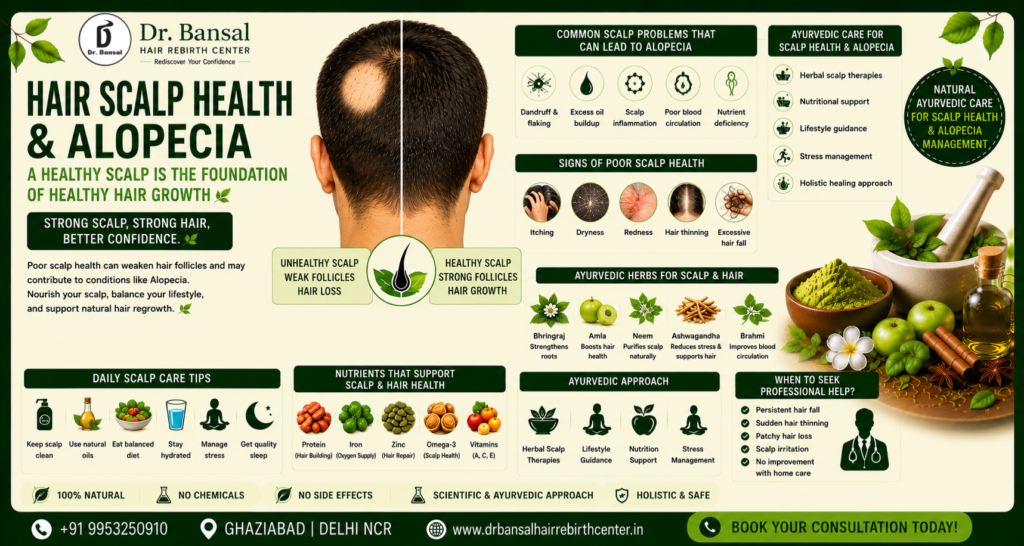
Ayurvedic Perspective on Alopecia Areata
Ayurveda focuses on maintaining balance throughout the body while supporting scalp and hair health naturally.
Rather than concentrating solely on visible hair loss, Ayurvedic care often emphasizes:
- Nutritional balance
- Stress management
- Healthy daily routines
- Scalp nourishment
- Overall wellness
This holistic approach aims to support long-term health and scalp function.
Ayurvedic Approaches That May Support Hair Wellness
At Dr. Bansal Hair Rebirth Center, Ayurvedic care is tailored according to individual needs.
Herbal Scalp Therapies
Traditional therapies may help support scalp nourishment and comfort.
Personalized Lifestyle Guidance
Healthy daily routines can contribute to long-term wellness.
Nutritional Recommendations
Balanced nutrition helps support healthy hair follicles.
Stress Management Practices
Yoga, meditation, and mindfulness techniques may support emotional wellness.
Ayurvedic Herbs Commonly Used for Hair Care
Bhringraj
Traditionally associated with healthy hair and scalp support.
Amla
Known for its nutritional and antioxidant properties.
Brahmi
Often used to support mental relaxation.
Ashwagandha
Commonly used to support stress management and overall wellness.
Neem
Supports scalp hygiene and cleanliness.
Daily Habits to Support Long-Term Hair Wellness
People recovering from Alopecia Areata can benefit from healthy lifestyle habits.
Maintain a Balanced Diet
Focus on nutrient-rich foods that support overall wellness.
Stay Hydrated
Proper hydration helps maintain healthy skin and scalp function.
Sleep Adequately
Quality sleep supports overall health and recovery.
Manage Stress
Regular relaxation practices may contribute to emotional balance.
Follow Consistent Scalp Care
Healthy scalp habits can support long-term hair wellness.
When Should You Seek Professional Guidance?
Consider professional evaluation if you notice:
- New bald patches
- Increased shedding
- Sudden thinning
- Reappearance of previous symptoms
- Changes in scalp condition
Early assessment can help identify changes and guide appropriate care.
Contact us. https://drbansalhairrebirthcenter.in/contact-us/
How Dr. Bansal Hair Rebirth Center Helps
Dr. Bansal Hair Rebirth Center provides personalized Ayurvedic care for individuals experiencing Alopecia Areata and other forms of hair loss.
The clinic focuses on:
- Detailed scalp analysis
- Herbal scalp therapies
- Natural hair care approaches
- Lifestyle guidance
- Holistic wellness support
Patients from Ghaziabad, Delhi NCR, and across India seek individualized support for scalp and hair concerns.
Final Thoughts
Alopecia Areata is known for its unpredictable nature, and recurrence can occur even after successful hair regrowth. However, a relapse does not mean the end of progress. Many individuals continue to experience regrowth and maintain healthy hair with proper care and attention.
By focusing on scalp health, balanced nutrition, stress management, and consistent self-care, individuals can create a strong foundation for long-term hair wellness and confidence.
Contact Details
Dr. Bansal Hair Rebirth Center
MZ-07/08, Sumedha Tower, RDC, Raj Nagar, Ghaziabad
Phone: +91-9953250910
Website: https://drbansalhairrebirthcenter.in/
know more about us – https://vedantamayurveda.in/