
Should I Disclose My Alopecia to My Employer? A Practical Guide for Working Professionals Receiving a diagnosis of alopecia or experiencing noticeable hair loss can raise many personal and professional questions. One concern that often goes unspoken is whether you should tell your employer about your condition. For many professionals, navigating Alopecia in Office environments can feel challenging, especially when appearance changes become noticeable to colleagues, clients, or management.
Thank you for reading this post, don't forget to subscribe!The truth is that there is no single right answer. Some individuals feel comfortable discussing their condition openly, while others prefer to keep it private. The decision depends on your comfort level, workplace culture, job responsibilities, and personal circumstances.
If you are wondering whether disclosure is necessary and how to handle conversations about hair loss professionally, this guide can help you make an informed decision.
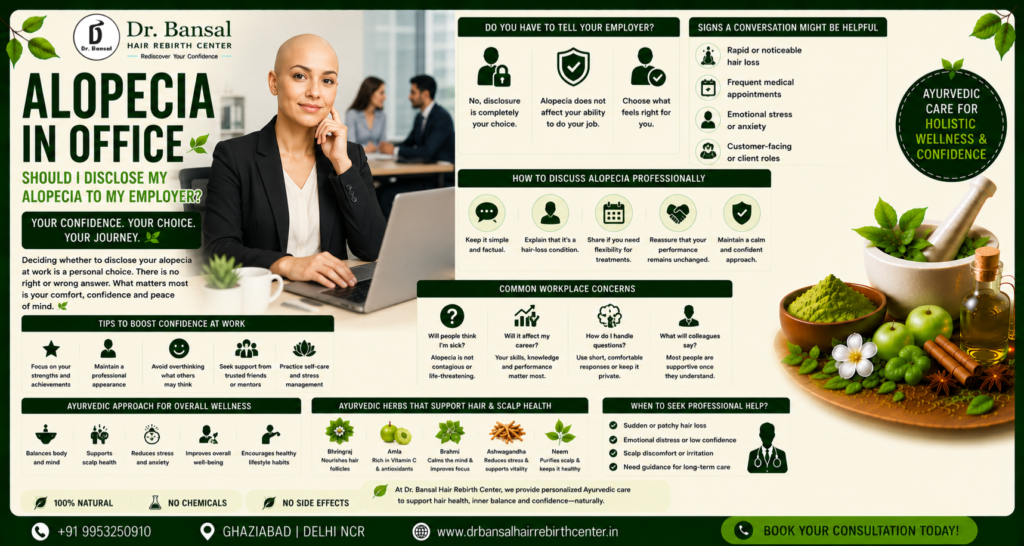
Understanding Alopecia in Office Settings
When people think about workplace performance, they often focus on skills, experience, and productivity. However, visible changes in appearance can sometimes create anxiety for employees.
For someone dealing with Alopecia in Office environments, concerns may include:
- Questions from coworkers
- Client-facing interactions
- Changes in self-confidence
- Fear of being judged
- Workplace misunderstandings
While alopecia does not affect professional abilities, the emotional impact of visible hair loss can sometimes influence workplace confidence.
Do You Have to Tell Your Employer?
In most situations, disclosing alopecia is a personal choice.
Many professionals successfully manage Alopecia in Office settings without formally informing their employer. Others choose to have a conversation because it helps prevent misunderstandings or provides peace of mind.
You may choose not to disclose if:
- Your condition does not affect job duties.
- You prefer to keep personal health matters private.
- You feel comfortable managing workplace questions independently.
You may consider disclosure if:
- Hair loss is progressing rapidly.
- You anticipate noticeable appearance changes.
- You need flexibility for appointments or treatments.
- You believe transparency will reduce stress.
Ultimately, the decision should be based on what feels right for you.
Signs That a Conversation Might Be Helpful
Not everyone needs to discuss alopecia at work, but certain situations may make communication beneficial.
For example:
Significant Appearance Changes
If your hair loss becomes highly visible over a short period, colleagues may naturally become curious.
Frequent Medical Appointments
If you require regular consultations or treatments, informing management may help explain scheduling needs.
Emotional Stress
Sometimes the anxiety of hiding a condition creates more stress than discussing it openly.
Customer-Facing Roles
Professionals who regularly interact with clients may feel more comfortable proactively addressing appearance changes.
These situations do not require disclosure, but they may influence your decision.
How to Discuss Alopecia Professionally
If you decide to talk with your employer, simplicity is often the best approach.
You do not need to provide extensive personal details.
A straightforward explanation may include:
- You are experiencing a hair-loss condition.
- The condition does not affect your ability to perform your job.
- You may occasionally need time for consultations.
- You wanted to keep management informed.
Professional and factual communication usually works best.
Common Workplace Concerns
“Will People Think I’m Sick?”
One concern related to Alopecia in Office environments is the fear that colleagues may assume a serious illness.
Many people are unfamiliar with alopecia and may not understand the condition.
Simple education often helps eliminate confusion and unnecessary assumptions.
“Will It Affect My Career?”
Alopecia does not determine professional capability.
Skills, performance, communication, and expertise remain the most important factors in workplace success.
“How Do I Handle Questions?”
Some professionals choose to answer questions openly, while others prefer brief responses.
Examples include:
- “It’s a hair-loss condition called alopecia.”
- “I’m managing a scalp condition, but I’m doing well.”
- “Thank you for asking, but I’d rather keep it private.”
All of these responses are perfectly acceptable.
Building Confidence While Managing Alopecia in Office Environments
Confidence plays a major role in professional success.
When dealing with Alopecia in Office situations, consider focusing on factors you can control.
Focus on Your Professional Strengths
Your value comes from your skills, knowledge, and work ethic—not your hairstyle.
Maintain a Professional Appearance
Whether you choose wigs, scarves, hats (where appropriate), or embrace your natural appearance, confidence often comes from feeling comfortable with your choices.
Avoid Constant Self-Monitoring
Many people notice their own appearance changes more than others do.
Try to focus on work performance rather than worrying about every interaction.
Seek Support
Friends, family members, and support groups can help provide encouragement and perspective.
Managing Stress and Workplace Well-Being
Stress can affect overall wellness and self-confidence.
Helpful habits include:
- Regular exercise
- Adequate sleep
- Mindfulness practices
- Healthy eating
- Taking breaks when needed
These habits support both professional performance and personal well-being.
Ayurvedic Perspective on Alopecia
Ayurveda views hair health as closely connected to overall balance within the body.
According to Ayurvedic principles, factors that influence hair wellness include:
- Nutrition
- Digestion
- Lifestyle habits
- Emotional well-being
- Daily routines
A holistic approach often focuses on supporting overall health rather than addressing hair concerns alone.
How Dr. Bansal Hair Rebirth Center Supports Patients
At Dr. Bansal Hair Rebirth Center, many patients seek guidance not only for hair loss but also for rebuilding confidence in social and professional environments.
The clinic focuses on:
- Detailed scalp assessment
- Personalized Ayurvedic care
- Herbal scalp therapies
- Lifestyle guidance
- Long-term scalp wellness support
Every individual’s journey with alopecia is unique, and care plans are designed accordingly.
Contact us. https://drbansalhairrebirthcenter.in/contact-us/
Final Thoughts
Deciding whether to disclose your condition is a personal choice. There is no universal rule when it comes to managing Alopecia in Office environments. Some professionals feel empowered by open communication, while others prefer privacy.
What matters most is remembering that alopecia does not define your abilities, intelligence, or professional value. By focusing on confidence, workplace performance, and overall well-being, you can continue to grow professionally while managing hair loss with dignity and self-assurance.
Whether you choose disclosure or privacy, the decision should support your comfort, confidence, and peace of mind.
Contact Details
Dr. Bansal Hair Rebirth Center
MZ-07/08, Sumedha Tower, RDC, Raj Nagar, Ghaziabad
Phone: +91-9953250910
Website: https://drbansalhairrebirthcenter.in/
know more about us – https://vedantamayurveda.in/