
When people think about alopecia, they usually focus on the physical side of hair loss. Bald patches, thinning hair, or complete hair loss are often the most visible aspects of the condition. However, what many people don’t talk about enough is the emotional journey that comes with it. The connection between Alopecia and Mental Health is real, and for many individuals, the emotional effects can be just as challenging as the hair loss itself.
Thank you for reading this post, don't forget to subscribe!If you’ve ever found yourself feeling sad, frustrated, anxious, angry, or overwhelmed because of your hair loss, you’re not alone. These emotions are common, understandable, and experienced by people of all ages living with alopecia.
At Dr. Bansal Hair Rebirth Center, many patients share not only concerns about hair growth but also questions about confidence, self-image, and emotional well-being. Understanding the relationship between Alopecia and Mental Health can be an important step toward healing both physically and emotionally.
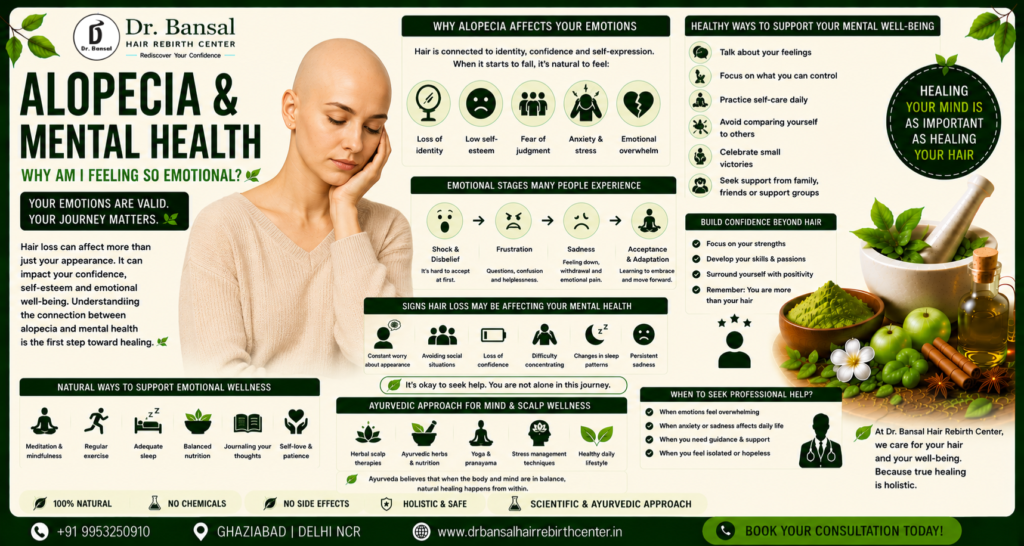
Why Does Hair Loss Feel So Emotional?
Hair is often more than just hair.
For many people, it represents:
- Identity
- Personal style
- Self-expression
- Confidence
- Cultural significance
When hair begins to fall unexpectedly, it can feel like losing a part of yourself. This is one reason why Alopecia and Mental Health are so closely connected.
Even though alopecia does not define who you are, the visible changes can affect how you see yourself and how you think others see you.
The Emotional Stages Many People Experience
Everyone’s journey is different, but many individuals experience similar emotional reactions after noticing hair loss.
Shock and Disbelief
The first bald patch or sudden hair shedding often comes as a surprise.
Many people initially think:
- “This can’t be happening.”
- “Maybe it’s temporary.”
- “It will probably go away on its own.”
Frustration
As hair loss continues, frustration can develop.
Questions such as:
- Why is this happening?
- What did I do wrong?
- Why isn’t my hair growing back?
are very common.
Sadness
The connection between Alopecia and Mental Health becomes more noticeable when feelings of sadness begin affecting daily life.
Some people may avoid photos, social gatherings, or social media because they feel uncomfortable with their appearance.
Acceptance and Adaptation
Over time, many individuals learn to adapt and regain confidence, although the process is different for everyone.
How Alopecia Can Affect Self-Confidence
Confidence often becomes one of the biggest challenges associated with hair loss.
Many people with alopecia report concerns such as:
- Feeling less attractive
- Worrying about being judged
- Avoiding public situations
- Feeling different from others
The relationship between Alopecia and Mental Health often becomes stronger when confidence starts affecting work, relationships, or social activities.
It’s important to remember that confidence is built from many qualities beyond appearance.
Social Situations Can Feel More Difficult
One reason Alopecia and Mental Health are closely linked is because hair loss is often visible to others.
People may ask questions such as:
- “What happened to your hair?”
- “Are you sick?”
- “Will it grow back?”
While most questions are not intended to be hurtful, answering them repeatedly can become emotionally exhausting.
Many individuals report feeling anxious before social events because they anticipate unwanted attention or comments.
Can Stress Make Things Feel Worse?
Stress is not always the cause of alopecia, but it can influence how people experience the condition emotionally.
When someone is already worried about hair loss, ongoing stress may contribute to:
- Anxiety
- Poor sleep
- Low mood
- Reduced confidence
This is why managing stress is often an important part of supporting both Alopecia and Mental Health.
Signs That Hair Loss Is Affecting Your Mental Well-Being
It’s normal to feel emotional about hair loss. However, some signs may indicate that additional support could be helpful.
These include:
- Constant worry about appearance
- Avoiding social situations
- Loss of confidence
- Difficulty concentrating
- Persistent sadness
- Changes in sleep patterns
Recognizing these signs early can help individuals take positive steps toward emotional wellness.
Healthy Ways to Support Emotional Well-Being
Talk About Your Feelings
Sharing concerns with trusted family members or friends can reduce feelings of isolation.
Focus on What You Can Control
While hair growth may take time, you can focus on:
- Healthy habits
- Scalp care
- Nutrition
- Self-care routines
Avoid Comparing Yourself to Others
Every alopecia journey is different.
Comparisons often increase stress rather than improve confidence.
Celebrate Small Wins
Progress isn’t always measured by hair growth alone.
Improved confidence, better self-care habits, and emotional resilience are valuable achievements.
Ayurvedic Perspective on Alopecia and Mental Health
Ayurveda views emotional well-being and physical health as deeply connected.
According to Ayurvedic principles, healthy hair and emotional balance may be influenced by:
- Nutrition
- Lifestyle habits
- Sleep quality
- Stress levels
- Daily routines
Rather than focusing only on visible symptoms, Ayurvedic care seeks to support overall wellness.
Ayurvedic Approaches That May Support Overall Wellness
At Dr. Bansal Hair Rebirth Center, care is personalized based on individual needs.
Approaches may include:
Herbal Scalp Therapies
Traditional therapies that support scalp wellness.
Lifestyle Guidance
Healthy daily habits that encourage balance and well-being.
Nutritional Recommendations
Balanced eating habits that support overall health.
Stress Management Practices
Yoga, meditation, and mindfulness techniques that may encourage emotional calmness.
Building Confidence Beyond Hair
One of the most important lessons many people learn is that confidence is not determined by hair alone.
Confidence can also come from:
- Personal achievements
- Relationships
- Character
- Skills
- Positive habits
The journey between Alopecia and Mental Health often becomes easier when individuals begin focusing on their strengths rather than only their appearance.
How Dr. Bansal Hair Rebirth Center Helps
At Dr. Bansal Hair Rebirth Center, the focus extends beyond hair loss alone.
The clinic provides:
- Detailed scalp assessments
- Personalized Ayurvedic care
- Herbal scalp therapies
- Lifestyle guidance
- Holistic wellness support
Patients receive care that addresses both scalp health and overall well-being.
Contact us. https://drbansalhairrebirthcenter.in/contact-us/
Final Thoughts
The connection between Alopecia and Mental Health is often stronger than many people realize. Hair loss can affect confidence, emotions, and daily life, but these feelings are completely understandable. If you find yourself feeling emotional, frustrated, or overwhelmed, remember that you are not alone.
By focusing on self-care, emotional well-being, healthy lifestyle habits, and professional support, it is possible to build confidence and maintain a positive outlook. Hair loss may be part of your story, but it does not define your value, abilities, or future.
Contact Details
Dr. Bansal Hair Rebirth Center
MZ-07/08, Sumedha Tower, RDC, Raj Nagar, Ghaziabad
Phone: +91-9953250910
Website: https://drbansalhairrebirthcenter.in/
know more about us – https://vedantamayurveda.in/