
Modern work life can be demanding. Tight deadlines, long hours, workplace pressure, and constant responsibilities can take a toll on both physical and emotional well-being. When people start noticing increased shedding in the shower or extra hair on their pillow, a common question arises: “Is my job causing this?” More importantly, many wonder how long Hair Loss caused by work stress takes to stop.
Thank you for reading this post, don't forget to subscribe!The connection between stress and Hair Loss has become an increasingly discussed topic in recent years. While stress is not responsible for every type of hair loss, prolonged workplace pressure can influence the body’s natural balance and may contribute to increased shedding in some individuals.
Understanding how stress affects hair and what recovery typically looks like can help reduce anxiety and support a healthier approach to hair care.
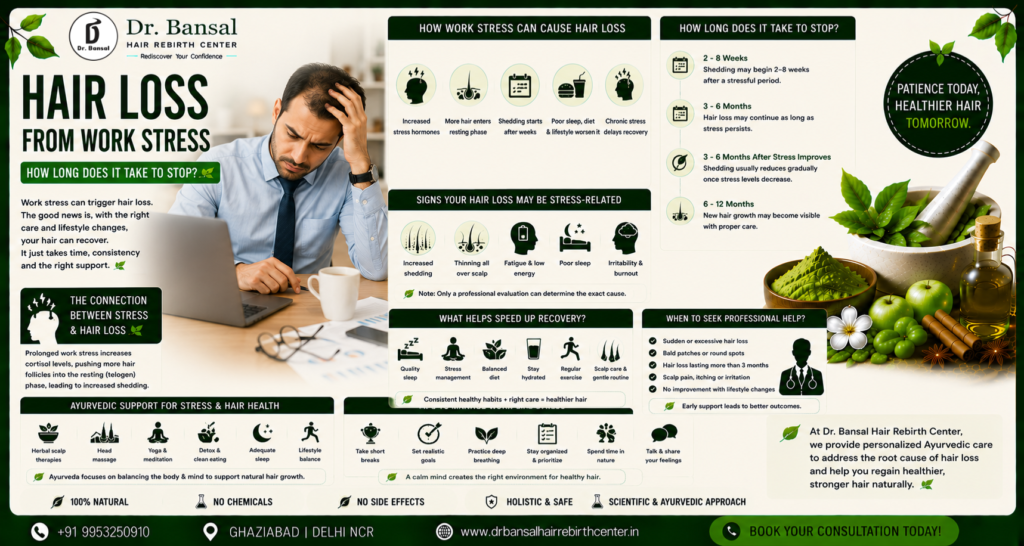
Can Work Stress Really Cause Hair Loss?
The short answer is yes, stress can contribute to certain types of Hair Loss.
When the body experiences ongoing stress, it responds by releasing stress hormones and shifting energy toward essential survival functions. During prolonged periods of pressure, normal hair growth cycles can sometimes be affected.
This does not mean that every stressful day will result in Hair Loss, but chronic workplace stress may contribute to increased shedding in susceptible individuals.
Understanding the Hair Growth Cycle
To understand stress-related Hair Loss, it helps to know how hair naturally grows.
Hair typically moves through three main stages:
Growth Phase (Anagen)
This is the active growth stage where hair continues to develop.
Transition Phase (Catagen)
A short period when hair growth slows down.
Resting and Shedding Phase (Telogen)
Hair naturally sheds and makes room for new growth.
When significant stress occurs, more hair follicles may enter the resting phase earlier than normal, which can result in noticeable shedding weeks or months later.
Why Does Hair Loss Often Appear Later?
One reason stress-related Hair Loss can be confusing is that it usually does not happen immediately.
Many people experience:
- Workplace stress today
- Increased shedding several weeks later
- Noticeable thinning after a few months
Because of this delay, people often fail to connect their Hair Loss with a stressful event or demanding work period.
How Long Does Stress-Related Hair Loss Last?
One of the most common questions patients ask is how long stress-related Hair Loss takes to stop.
The answer varies depending on:
- Overall health
- Stress levels
- Lifestyle habits
- Nutrition
- Sleep quality
- Scalp condition
For many individuals, shedding gradually improves once the body recovers from the period of prolonged stress.
However, recovery timelines can differ significantly from person to person.
Signs That Work Stress May Be Affecting Your Hair
While only a professional assessment can determine the exact cause of hair concerns, some signs may suggest a connection between stress and Hair Loss.
These may include:
- Increased shedding after a stressful period
- Hair thinning across the scalp
- Persistent fatigue
- Sleep disturbances
- Emotional burnout
- Difficulty concentrating
If these symptoms occur alongside noticeable hair changes, workplace stress may be a contributing factor.
Can Hair Grow Back After Stress-Related Hair Loss?
In many cases, individuals notice improvement once stress levels become more manageable and healthy habits are restored.
Hair follicles often respond positively when overall wellness improves.
Supporting factors may include:
- Better sleep
- Balanced nutrition
- Reduced stress
- Consistent self-care
- Scalp wellness practices
The key is patience, as hair growth is a gradual process rather than an overnight transformation.
How to Support Recovery
Although there is no instant solution for stress-related Hair Loss, certain lifestyle habits may support overall scalp health.
Prioritize Sleep
Sleep plays an important role in recovery and overall well-being.
Aim for a consistent sleep schedule whenever possible.
Manage Workplace Stress
Practical stress-management techniques include:
- Meditation
- Deep breathing
- Yoga
- Walking
- Mindfulness exercises
Reducing stress may benefit both mental wellness and overall health.
Maintain a Nutrient-Rich Diet
Hair follicles rely on proper nutrition.
Focus on:
- Protein-rich foods
- Fruits
- Vegetables
- Nuts and seeds
- Healthy fats
Balanced nutrition supports the body’s natural processes.
Stay Hydrated
Adequate hydration contributes to healthy skin and scalp function.
Create Work-Life Balance
While not always easy, maintaining boundaries between work and personal time may help reduce ongoing stress.
When Hair Loss May Not Be Related to Stress
Although workplace pressure can contribute to Hair Loss, it is important to remember that not all hair loss is stress-related.
Other factors may include:
- Genetics
- Hormonal changes
- Nutritional deficiencies
- Autoimmune conditions
- Alopecia Areata
- Scalp disorders
This is why professional evaluation is important when hair loss becomes significant or persistent.
Ayurvedic Perspective on Stress and Hair Health
Ayurveda views hair as a reflection of overall health and internal balance.
According to Ayurvedic principles, excessive stress may influence:
- Emotional well-being
- Sleep quality
- Digestion
- Overall vitality
Because of this connection, Ayurvedic care often focuses on supporting both mind and body rather than treating hair as an isolated concern.
Ayurvedic Practices That Support Wellness
Traditional Ayurvedic approaches may include:
Herbal Scalp Therapies
Used to support scalp comfort and wellness.
Relaxation Techniques
Meditation and yoga are often encouraged.
Personalized Lifestyle Guidance
Recommendations may be tailored according to individual needs and routines.
Balanced Nutrition
Dietary habits are viewed as an important foundation for overall health.
These practices aim to support long-term well-being rather than short-term fixes.
When Should You Seek Professional Help?
Consider consulting a specialist if you experience:
- Sudden Hair Loss
- Bald patches
- Rapid thinning
- Persistent shedding
- Scalp discomfort
- Eyebrow or eyelash hair loss
Early evaluation can help identify possible contributing factors and guide appropriate care.
Contact us. https://drbansalhairrebirthcenter.in/contact-us/
How Dr. Bansal Hair Rebirth Center Helps
At Dr. Bansal Hair Rebirth Center, patients receive personalized care designed to support both scalp wellness and overall health.
The clinic focuses on:
- Detailed scalp assessments
- Personalized Ayurvedic consultations
- Herbal scalp therapies
- Lifestyle guidance
- Long-term hair wellness support
Each care plan is tailored according to the individual’s hair concerns, lifestyle, and goals.
Final Thoughts
Experiencing Hair Loss during a stressful period can be frustrating and emotionally challenging. While workplace stress may contribute to increased shedding in some individuals, recovery is often possible when stress levels are managed and healthy habits are restored.
The most important thing to remember is that hair recovery takes time. Consistent self-care, proper nutrition, adequate sleep, and professional guidance can all play a valuable role in supporting scalp health. If your Hair Loss continues or worsens, seeking expert evaluation can help you better understand the cause and choose the most appropriate path forward.
Contact Details
Dr. Bansal Hair Rebirth Center
MZ-07/08, Sumedha Tower, RDC, Raj Nagar, Ghaziabad
Phone: +91-9953250910
Website: https://drbansalhairrebirthcenter.in/
know more about us – https://vedantamayurveda.in/