
When a loved one is diagnosed with alopecia, it’s natural to wonder how you can help. While hair loss is often seen as a physical condition, its emotional impact can be just as significant. A kind word, a listening ear, or simply being present can make a tremendous difference for Someone with Alopecia.
Thank you for reading this post, don't forget to subscribe!Whether it’s a family member, friend, partner, colleague, or child, understanding what they are experiencing can help you provide meaningful support. This guide explains practical ways to encourage Someone with Alopecia while respecting their feelings, choices, and journey.
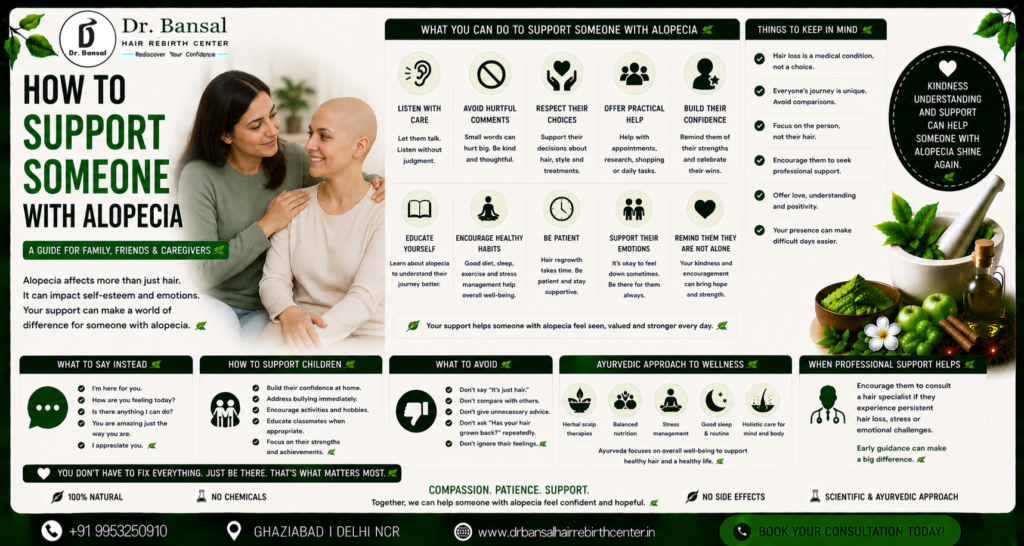
Understanding Alopecia
Alopecia is a term used to describe different types of hair loss. Depending on the condition, hair loss may affect the scalp, eyebrows, eyelashes, beard, or other areas of the body.
Common forms include:
- Alopecia areata
- Alopecia totalis
- Alopecia universalis
- Pattern hair loss
- Other non-scarring hair loss conditions
For Someone with Alopecia, the experience is often about much more than losing hair. It may also involve changes in confidence, self-image, and emotional well-being.
Recognize the Emotional Impact
Hair is closely connected to identity for many people. Losing it unexpectedly can trigger emotions such as:
- Sadness
- Anxiety
- Embarrassment
- Frustration
- Fear of being judged
Remember that every person’s experience is different. Some adjust quickly, while others need more time. Showing patience and understanding can help Someone with Alopecia feel supported rather than isolated.
Listen More Than You Speak
One of the best things you can do is simply listen.
Allow Someone with Alopecia to talk openly without interrupting or immediately offering solutions. Sometimes they may simply want someone who will hear them without judgment.
Instead of trying to “fix” the situation, acknowledge their feelings with empathy and compassion.
Avoid Unhelpful Comments
Even well-meaning comments can unintentionally hurt.
Avoid saying things like:
- “It’s just hair.”
- “At least it’s not something worse.”
- “Don’t worry, it’ll grow back.”
- “You still look fine.”
Although these statements are often intended to comfort, they may minimize what Someone with Alopecia is experiencing.
Instead, try saying:
- “I’m here for you.”
- “How are you feeling?”
- “Is there anything I can do to help?”
Respect Their Choices
Everyone copes with alopecia differently.
Some people choose to wear:
- Wigs
- Scarves
- Hats
- Hair toppers
Others prefer to embrace their natural appearance.
Support Someone with Alopecia regardless of the choices they make. Avoid pressuring them to cover their hair or encouraging them to do something they are not comfortable with.
Help Build Confidence
Confidence doesn’t come from hair alone.
Remind Someone with Alopecia of their strengths, talents, kindness, and accomplishments. Genuine compliments that focus on their personality and abilities can help reinforce self-worth.
Encourage them to continue enjoying hobbies, work, travel, and social activities rather than withdrawing because of their appearance.
Learn About Alopecia Together
Understanding the condition can reduce fear and misconceptions.
Take time to learn about:
- Different types of alopecia
- Possible causes
- Hair regrowth patterns
- Treatment options
- Healthy scalp care
By educating yourself, you’ll be better equipped to support Someone with Alopecia with empathy and accurate information.
Offer Practical Help
Sometimes small acts of kindness make the biggest difference.
You might:
- Drive them to appointments
- Help research treatment options
- Join them during consultations if they wish
- Assist with shopping for scarves or wigs
- Encourage healthy daily routines
Practical support shows Someone with Alopecia that they don’t have to face the journey alone.
Encourage Healthy Lifestyle Habits
Overall wellness plays an important role in supporting scalp health.
Encourage habits such as:
- Eating balanced meals
- Drinking enough water
- Getting adequate sleep
- Exercising regularly
- Managing stress
These habits support general health and can contribute to emotional well-being.
Be Patient During Their Journey
Hair regrowth can take time, and in some cases, hair loss may recur.
Avoid asking frequent questions like:
- “Has your hair grown back yet?”
- “Is the treatment working?”
Instead, let Someone with Alopecia decide when they want to talk about their progress.
Patience helps create a safe and supportive environment.
Support Children with Alopecia
Children experiencing hair loss may face unique emotional challenges.
Parents, teachers, and caregivers can help by:
- Building confidence at home
- Addressing bullying promptly
- Encouraging participation in activities
- Educating classmates when appropriate
- Celebrating achievements unrelated to appearance
Positive reinforcement can have a lasting impact on a child’s self-esteem.
The Ayurvedic Perspective on Hair Wellness
Ayurveda views healthy hair as part of overall physical and emotional balance.
Traditional Ayurvedic care often emphasizes:
- Balanced nutrition
- Healthy digestion
- Quality sleep
- Stress management
- Herbal scalp therapies
- Daily wellness routines
This holistic approach aims to support both scalp health and overall well-being.
When Professional Guidance Is Helpful
If Someone with Alopecia experiences persistent hair loss or emotional distress, encourage them to seek professional advice.
A qualified hair specialist can provide:
- Detailed scalp assessments
- Accurate diagnosis
- Personalized care recommendations
- Guidance on long-term scalp health
Professional support can also provide reassurance and help individuals better understand their condition.
How Dr. Bansal Hair Rebirth Center Helps
At Dr. Bansal Hair Rebirth Center, every patient receives personalized care based on their unique hair and scalp concerns.
The clinic offers:
- Comprehensive scalp assessments
- Personalized Ayurvedic consultations
- Herbal scalp therapies
- Lifestyle and dietary guidance
- Long-term hair wellness support
The focus is not only on scalp health but also on helping patients feel informed, supported, and confident throughout their journey.
Contact us. https://drbansalhairrebirthcenter.in/contact-us/
Final Thoughts
Supporting Someone with Alopecia is about much more than discussing hair loss. It means listening without judgment, respecting their choices, offering practical help, and reminding them that their value extends far beyond their appearance.
Whether you’re a family member, friend, colleague, or caregiver, your kindness and encouragement can make a meaningful difference. By staying informed, showing empathy, and offering consistent support, you can help Someone with Alopecia face their journey with greater confidence, hope, and resilience.
Contact Details
Dr. Bansal Hair Rebirth Center
MZ-07/08, Sumedha Tower, RDC, Raj Nagar, Ghaziabad
Phone: +91-9953250910
Website: https://drbansalhairrebirthcenter.in/
know more about us – https://vedantamayurveda.in/