
Finding more hair than usual on your pillow, hairbrush, or shower drain can be alarming. Many people immediately begin searching online and asking themselves, “Do I have alopecia or hair loss?” While these terms are often used interchangeably, they are not exactly the same. Understanding the difference is essential because the cause of your condition will determine the most appropriate approach to care.
Thank you for reading this post, don't forget to subscribe!If you’re unsure whether you’re dealing with Alopecia or Hair Loss, this guide explains the signs, possible causes, and when it’s time to consult a hair specialist.
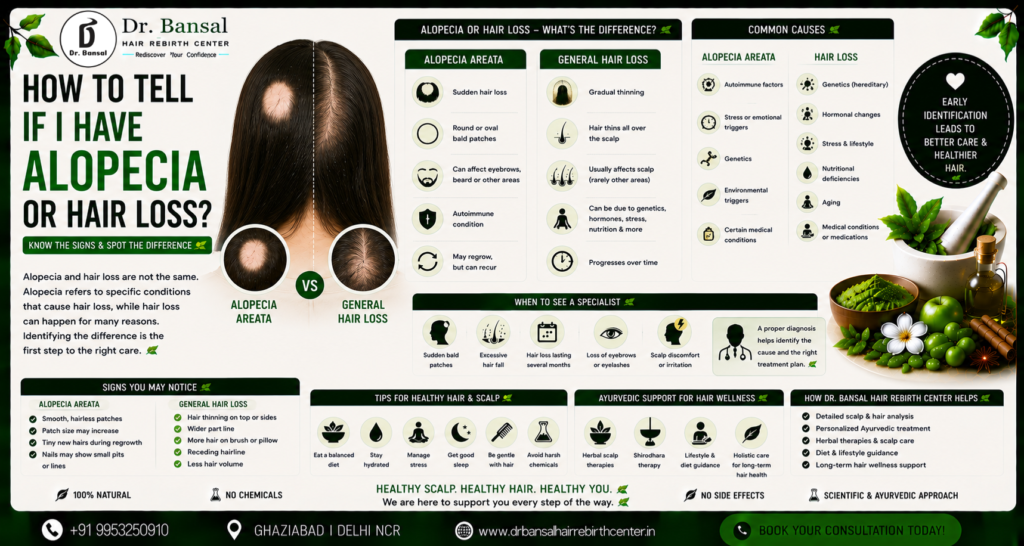
Understanding Alopecia and Hair Loss
Hair loss is a general term that describes the shedding or thinning of hair. It can happen for many reasons, including stress, hormonal changes, genetics, nutritional deficiencies, illness, or aging.
Alopecia, on the other hand, refers to a group of conditions that cause hair loss. In simple words, alopecia is one type of hair loss—but not all hair loss is alopecia.
Knowing whether you have Alopecia or Hair Loss helps guide proper diagnosis and long-term management.
Common Signs of General Hair Loss
General hair loss usually develops gradually.
You may notice:
- Hair thinning across the scalp
- More hair in the shower
- Hair on your pillow
- A widening part line
- Reduced hair volume
- A receding hairline
These changes often happen slowly over months or even years.
Common Signs of Alopecia Areata
Alopecia areata usually appears differently from ordinary hair loss.
Typical signs include:
- Round or oval bald patches
- Smooth areas without hair
- Sudden hair loss
- Hair loss affecting eyebrows or beard
- Small patches that may grow larger
If you notice these symptoms, you may be experiencing Alopecia or Hair Loss related to an autoimmune condition rather than ordinary shedding.
Does Hair Fall Always Mean Alopecia?
No.
It is completely normal to lose some hair every day as part of the natural hair growth cycle.
Temporary hair loss can happen because of:
- Emotional stress
- High fever
- Poor nutrition
- Hormonal changes
- Certain medications
- Seasonal shedding
This does not automatically mean you have alopecia.
However, if your hair loss becomes persistent or develops into visible bald patches, it is important to investigate whether it is Alopecia or Hair Loss requiring professional evaluation.
What Causes Alopecia?
Different forms of alopecia have different causes.
Some possible factors include:
- Autoimmune activity
- Genetics
- Hormonal influences
- Chronic stress
- Certain medical conditions
- Environmental triggers
The exact cause may vary from person to person.
What Causes General Hair Loss?
General hair loss may result from:
- Family history
- Aging
- Nutritional deficiencies
- Physical illness
- Stress
- Hormonal imbalance
- Poor scalp health
Identifying the underlying cause is one of the most important steps in choosing the right care plan.
Can You Diagnose Yourself?
Although online articles can provide useful information, it is difficult to accurately determine whether you have Alopecia or Hair Loss without a professional assessment.
Several hair conditions can look similar during the early stages.
A qualified hair specialist may evaluate:
- Hair loss pattern
- Scalp condition
- Medical history
- Lifestyle factors
- Nutritional status
- Family history
This comprehensive approach helps identify the specific cause.
When Should You Visit a Hair Specialist?
You should consider professional evaluation if you notice:
- Sudden bald patches
- Rapid hair shedding
- Hair loss lasting several months
- Eyebrow or eyelash hair loss
- Persistent scalp discomfort
- Repeated episodes of hair loss
Early assessment improves the chances of identifying the underlying condition before it progresses.
Can Hair Grow Back?
Whether hair regrows depends on the underlying cause.
Some forms of Alopecia or Hair Loss improve naturally, while others require ongoing management.
Hair follicles affected by alopecia areata often remain alive, making regrowth possible for many individuals. However, recovery timelines differ from person to person.
Supporting Healthy Hair Naturally
Regardless of whether you have Alopecia or Hair Loss, healthy daily habits can support overall scalp wellness.
Eat a Balanced Diet
Choose foods rich in:
- Protein
- Iron
- Fresh vegetables
- Fruits
- Healthy fats
- Whole grains
Manage Stress
Stress management techniques include:
- Yoga
- Meditation
- Deep breathing
- Walking
- Mindfulness
Protect Your Hair
Avoid:
- Tight hairstyles
- Harsh chemical treatments
- Excessive heat styling
- Rough brushing
Gentle care helps protect existing hair.
Prioritize Sleep
Quality sleep supports overall health, including healthy hair growth.
Ayurvedic Perspective on Hair Wellness
According to Ayurveda, healthy hair reflects overall balance within the body.
Traditional Ayurvedic care focuses on:
- Proper digestion
- Balanced nutrition
- Healthy daily routines
- Stress management
- Herbal scalp therapies
Rather than addressing only visible symptoms, Ayurveda encourages a holistic approach to maintaining healthy hair and scalp function.
Ayurvedic Therapies That Support Scalp Health
Depending on individual needs, Ayurvedic care may include:
Herbal Scalp Therapies
Designed to nourish the scalp and support healthy hair.
Shirodhara
A calming therapy commonly used to encourage relaxation and emotional balance.
Lifestyle Counseling
Guidance related to sleep, nutrition, hydration, and stress management.
Personalized Hair Wellness Plans
Long-term strategies focused on maintaining scalp health and supporting healthy hair growth.
How Dr. Bansal Hair Rebirth Center Helps
At Dr. Bansal Hair Rebirth Center, every patient receives an individualized assessment to determine the cause of their hair concerns.
The clinic provides:
- Detailed scalp evaluations
- Personalized Ayurvedic consultations
- Herbal scalp therapies
- Lifestyle and dietary guidance
- Long-term hair wellness support
Each treatment plan is customized according to the patient’s unique needs rather than following a one-size-fits-all approach.
Contact us. https://drbansalhairrebirthcenter.in/contact-us/
Final Thoughts
If you’re wondering whether you have Alopecia or Hair Loss, remember that the two terms are related but not identical. Hair loss has many possible causes, and only a proper evaluation can determine the exact reason behind your symptoms.
The sooner you understand what is happening, the sooner you can make informed decisions about your scalp health. Whether your hair loss is temporary or related to alopecia, maintaining healthy habits and seeking timely professional guidance can help you protect your hair and support long-term wellness.
Contact Details
Dr. Bansal Hair Rebirth Center
MZ-07/08, Sumedha Tower, RDC, Raj Nagar, Ghaziabad
Phone: +91-9953250910
Website: https://drbansalhairrebirthcenter.in/
know more about us – https://vedantamayurveda.in/