
Being diagnosed with alopecia universalis can feel overwhelming. Losing hair from the scalp, eyebrows, eyelashes, and the rest of the body often raises difficult questions about the future. One of the most common concerns people have is, “Can I Recover From Alopecia?”
Thank you for reading this post, don't forget to subscribe!The answer is not the same for everyone. Alopecia universalis is one of the rarest and most extensive forms of alopecia, but every individual responds differently. While some people experience little or no regrowth, others may notice partial or even significant hair regrowth over time. Understanding the condition, seeking professional guidance, and maintaining realistic expectations are important steps on the journey to Recover From Alopecia.
In this article, we’ll explain what alopecia universalis is, whether recovery is possible, and how you can support your overall hair and scalp health.
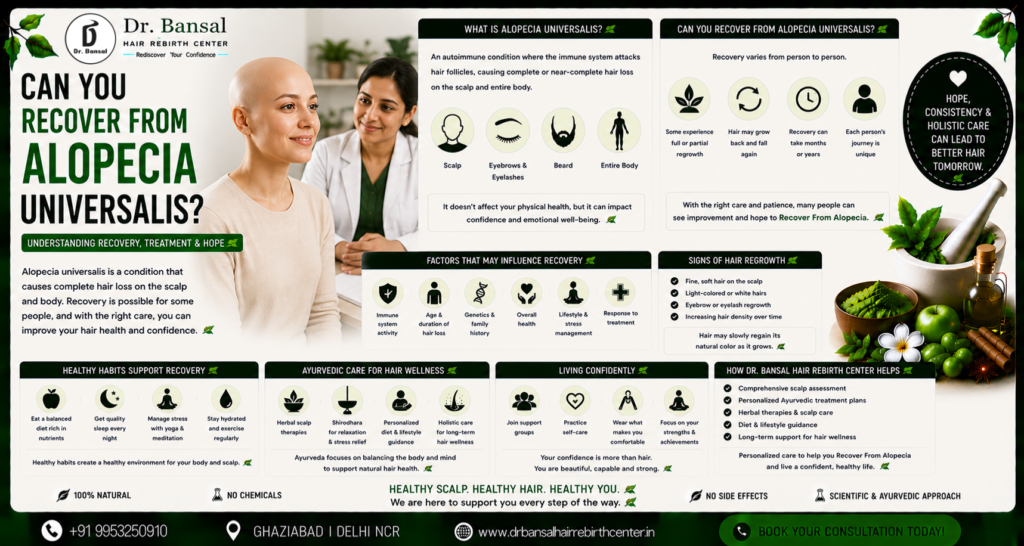
What Is Alopecia Universalis?
Alopecia universalis is an advanced form of alopecia areata. It is considered an autoimmune condition in which the immune system mistakenly targets healthy hair follicles.
Unlike patchy hair loss seen in alopecia areata, alopecia universalis causes complete or nearly complete loss of hair from the entire body, including:
- Scalp
- Eyebrows
- Eyelashes
- Beard
- Arms and legs
- Chest and back
Although the condition affects hair growth, it does not damage your overall physical health.
Can You Recover From Alopecia Universalis?
Many people ask whether they can Recover From Alopecia after developing alopecia universalis.
The honest answer is that recovery varies greatly from person to person.
Some individuals experience:
- Partial hair regrowth
- Hair returning in certain areas first
- Temporary regrowth followed by recurrence
- Long periods without noticeable changes
Because every immune system behaves differently, predicting recovery is difficult. Even experienced specialists cannot guarantee how quickly someone may Recover From Alopecia.
Why Does Recovery Differ?
Several factors may influence the possibility of hair regrowth.
These include:
- Individual immune system activity
- Age
- Duration of hair loss
- Overall health
- Family history
- Response to treatment
- Lifestyle factors
Research is still ongoing to better understand why some people Recover From Alopecia while others experience long-term hair loss.
Signs That Hair May Be Growing Back
When regrowth begins, it often happens gradually.
Early signs include:
- Fine, soft hair appearing on the scalp
- Light-colored or white hairs
- Eyebrow or eyelash regrowth
- Increased hair density over time
Hair may slowly regain its natural color as it continues to grow.
Can Hair Fall Out Again?
Yes.
Even after someone begins to Recover From Alopecia, future episodes of hair loss can occur.
Some individuals experience cycles of:
- Hair regrowth
- Hair shedding
- Stable periods
- New regrowth
This is why regular follow-up and long-term scalp care remain important.
How Is Alopecia Universalis Diagnosed?
A hair specialist usually evaluates:
- Hair loss pattern
- Medical history
- Family history
- Scalp examination
- Overall health
- Possible underlying conditions
In some cases, additional tests may be recommended to rule out other causes of hair loss.
An accurate diagnosis is the first step toward creating a personalized plan to Recover From Alopecia.
Healthy Lifestyle Habits That Support Hair Wellness
While healthy habits cannot guarantee hair regrowth, they support overall well-being and may help create a healthier environment for the body.
Eat a Balanced Diet
Include foods rich in:
- Protein
- Iron
- Zinc
- Vitamins
- Healthy fats
- Fresh fruits and vegetables
Prioritize Sleep
Quality sleep supports immune function and overall health.
Manage Stress
Stress may influence overall wellness.
Helpful practices include:
- Yoga
- Meditation
- Walking
- Deep breathing
- Mindfulness
Stay Physically Active
Regular exercise supports circulation, energy, and general well-being.
These habits contribute to a healthier lifestyle while working to Recover From Alopecia.
The Ayurvedic Perspective on Alopecia Universalis
Ayurveda views hair health as a reflection of the body’s internal balance.
Traditional Ayurvedic care focuses on supporting overall wellness through:
- Balanced nutrition
- Healthy digestion
- Stress management
- Herbal scalp therapies
- Personalized daily routines
Rather than addressing only visible symptoms, Ayurveda emphasizes caring for the whole person.
Ayurvedic Therapies That May Support Hair Wellness
Depending on the individual’s condition, Ayurvedic care may include:
Herbal Scalp Therapies
Designed to nourish the scalp and maintain healthy skin.
Shirodhara
A calming therapy often recommended to promote relaxation and reduce stress.
Personalized Diet and Lifestyle Guidance
Recommendations tailored to support overall health and wellness.
Long-Term Hair Wellness Programs
Holistic plans that encourage healthy habits and scalp care.
Living Confidently with Alopecia Universalis
Recovery isn’t measured only by hair growth.
Many individuals build confidence by:
- Joining support groups
- Educating family and friends
- Wearing wigs or scarves if desired
- Practicing self-care
- Focusing on overall health
- Celebrating personal achievements
Remember, your appearance does not define your abilities, relationships, or self-worth.
How Dr. Bansal Hair Rebirth Center Helps
At Dr. Bansal Hair Rebirth Center, every patient receives individualized attention based on their specific condition.
The clinic offers:
- Comprehensive scalp assessments
- Personalized Ayurvedic consultations
- Herbal scalp therapies
- Lifestyle and dietary guidance
- Long-term hair wellness support
Each treatment plan is designed to address the patient’s unique needs while promoting overall scalp health and well-being.
Contact us. https://drbansalhairrebirthcenter.in/contact-us/
Final Thoughts
If you’re wondering whether you can Recover From Alopecia after being diagnosed with alopecia universalis, remember that every journey is different. While complete hair regrowth cannot be guaranteed, many people experience varying degrees of improvement over time. The most important steps are obtaining an accurate diagnosis, following healthy lifestyle habits, seeking professional guidance, and maintaining hope.
With the right support, holistic care, and a positive mindset, you can focus not only on your hair health but also on your confidence, emotional well-being, and quality of life.
Contact Details
Dr. Bansal Hair Rebirth Center
MZ-07/08, Sumedha Tower, RDC, Raj Nagar, Ghaziabad
Phone: +91-9953250910
Website: https://drbansalhairrebirthcenter.in/
know more about us – https://vedantamayurveda.in/