
When you are living with alopecia, one of the most emotional moments can be explaining your condition to your children. Whether your hair loss is gradual or sudden, children often notice changes quickly and may become curious or even worried. Choosing to Talk to Your Children openly about alopecia can help reduce confusion, build trust, and reassure them that everything is okay.
Thank you for reading this post, don't forget to subscribe!Many parents wonder if they should wait until their children ask questions or start the conversation themselves. In most cases, honest and age-appropriate communication is the best approach. This article will help you understand how to Talk to Your Children about alopecia in a way that is comforting, reassuring, and easy for them to understand.
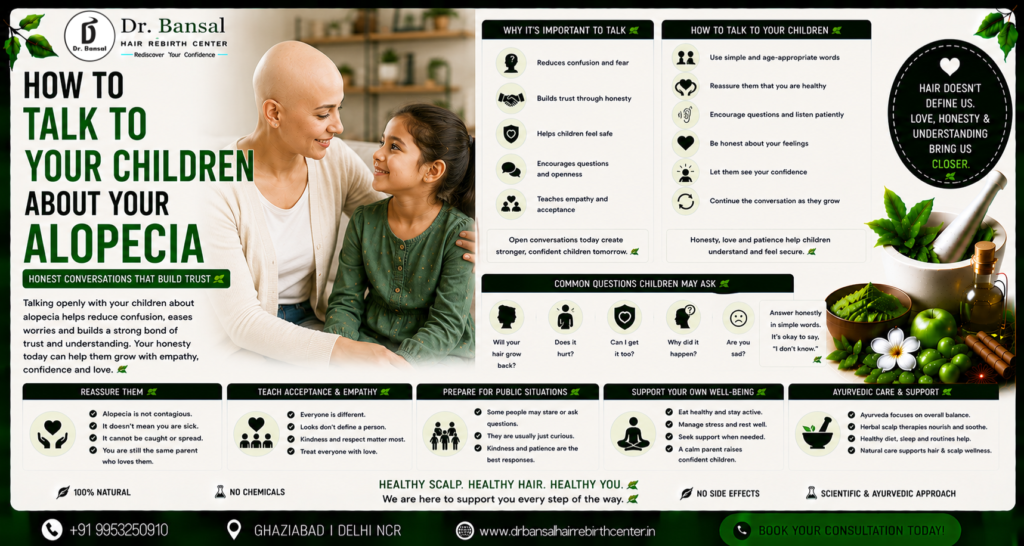
Why Talking Matters
Children are naturally observant. If they notice your hair changing but receive no explanation, they may create their own assumptions, which can sometimes be more frightening than the truth.
When you Talk to Your Children, you help them:
- Understand what is happening.
- Feel safe and reassured.
- Build trust through honesty.
- Ask questions without fear.
- Develop empathy and acceptance.
Simple conversations today can prevent unnecessary anxiety later.
Explain Alopecia in Simple Words
Young children do not need complicated medical explanations.
You can say something like:
“My body has a condition called alopecia. It causes my hair to fall out, but it doesn’t make me sick, and you can’t catch it from me.”
Keeping your explanation simple makes it easier for children to understand.
Reassure Them That You Are Healthy
One of the first worries many children have is whether their parent is seriously ill.
As you Talk to Your Children, reassure them by explaining:
- Alopecia affects hair.
- It is not contagious.
- It does not spread by touching or hugging.
- You are still the same parent they know and love.
This reassurance helps children feel safe and secure.
Encourage Questions
Children often process information by asking many questions.
Common questions may include:
- Will your hair grow back?
- Does it hurt?
- Can I get it too?
- Why did it happen?
- Are you sad?
Answer honestly while using language appropriate for their age. If you don’t know the answer, it’s perfectly fine to say so.
Be Honest About Your Feelings
As you Talk to Your Children, it’s okay to admit that sometimes you feel frustrated or emotional.
For example:
“Sometimes I miss having hair, but I’m learning how to take care of myself and stay positive.”
This teaches children that it’s healthy to acknowledge emotions while also demonstrating resilience.
Let Them See Your Confidence
Children learn by observing their parents.
If they see you continuing to:
- Smile
- Go to work
- Spend time with family
- Enjoy hobbies
- Stay active
they are more likely to view alopecia as just one part of life rather than something frightening.
Confidence is one of the greatest gifts you can give your children.
Prepare Them for Public Situations
Sometimes strangers may ask questions or stare.
Before these situations happen, Talk to Your Children about what they might see or hear.
Explain that:
- Some people are simply curious.
- Not everyone understands alopecia.
- Kindness and patience are always good responses.
Preparing children in advance helps them feel more comfortable.
Teach Acceptance and Empathy
Alopecia creates a valuable opportunity to teach children important life lessons.
Discuss ideas such as:
- Everyone looks different.
- Appearance does not determine someone’s value.
- Kindness matters more than looks.
- Respect should be shown to everyone.
These lessons help children develop compassion that extends far beyond alopecia.
Answer Questions About Hair Regrowth
Children often want simple answers.
You might explain:
“Some people’s hair grows back, while others continue to have hair loss. Every person’s body is different.”
Avoid making promises that cannot be guaranteed while still remaining hopeful.
Continue the Conversation
One discussion is usually not enough.
As children grow, their understanding changes.
Continue to Talk to Your Children whenever they have new questions or notice additional changes.
Keeping communication open strengthens trust throughout childhood.
Looking After Your Own Emotional Well-Being
Children often sense when parents are stressed.
Taking care of yourself helps your entire family.
Helpful habits include:
- Eating nutritious meals.
- Sleeping well.
- Exercising regularly.
- Practicing stress management.
- Seeking emotional support when needed.
Looking after yourself allows you to better support your children.
Ayurvedic Perspective on Hair Wellness
Ayurveda considers hair health to be closely connected with overall physical and emotional balance.
Traditional Ayurvedic care often emphasizes:
- Balanced nutrition
- Healthy digestion
- Daily routines
- Stress reduction
- Herbal scalp therapies
This holistic philosophy supports overall wellness while encouraging healthy lifestyle habits.
How Dr. Bansal Hair Rebirth Center Helps
At Dr. Bansal Hair Rebirth Center, patients receive individualized care designed around their unique hair and scalp concerns.
The clinic offers:
- Comprehensive scalp assessments
- Personalized Ayurvedic consultations
- Herbal scalp therapies
- Lifestyle and dietary guidance
- Long-term hair wellness support
In addition to physical care, patients receive guidance that helps them confidently navigate everyday situations, including conversations with family members.
Contact us. https://drbansalhairrebirthcenter.in/contact-us/
Final Thoughts
Choosing to Talk to Your Children about alopecia may feel difficult at first, but honest communication builds trust, reduces fear, and strengthens family relationships. Children are often more understanding than adults expect, especially when information is shared with love, patience, and reassurance.
Remember that your children are learning not only about alopecia—they are learning how to respond to challenges with courage, empathy, and confidence. By speaking openly, answering questions honestly, and continuing to show love and strength every day, you help them understand that hair does not define who a person is. What truly matters is kindness, resilience, and the bond you share as a family.
Contact Details
Dr. Bansal Hair Rebirth Center
MZ-07/08, Sumedha Tower, RDC, Raj Nagar, Ghaziabad
Phone: +91-9953250910
Website: https://drbansalhairrebirthcenter.in/
know more about us – https://vedantamayurveda.in/