
Noticing more hair than usual on your pillow or spotting a small bald patch while brushing your hair can be worrying. While occasional hair fall is normal, sudden patchy hair loss may indicate something more serious, such as Alopecia Areata. Understanding the First Signs of Alopecia can help you seek timely treatment and prevent unnecessary anxiety.
Thank you for reading this post, don't forget to subscribe!At Dr. Bansal Hair Rebirth Centre, we meet many patients who initially ignored these early symptoms, believing they were experiencing temporary hair fall. However, Alopecia Areata is an autoimmune condition that requires proper diagnosis and personalized treatment. The earlier it is identified, the better the chances of managing the condition effectively and supporting healthy hair regrowth.
In this article, we’ll explain the First Signs of Alopecia, why they occur, when you should consult a specialist, and how our team can help you manage the condition.
What Is Alopecia Areata?
Alopecia Areata is an autoimmune disorder in which the body’s immune system mistakenly attacks healthy hair follicles. This interrupts the normal hair growth cycle, leading to sudden hair loss in patches.
Unlike common hair fall caused by seasonal changes, nutritional deficiencies, or hair damage, Alopecia Areata often develops unexpectedly and may affect:
- Scalp
- Beard
- Eyebrows
- Eyelashes
- Other areas of the body
The condition is not contagious and is not caused by poor hygiene or using the wrong hair products.
Why It’s Important to Recognize the First Signs of Alopecia
Many people assume that patchy hair loss will resolve on its own. While some cases may improve naturally, others can progress to more extensive forms of alopecia if left untreated.
Recognizing the First Signs of Alopecia early can help:
- Receive an accurate diagnosis
- Rule out other causes of hair loss
- Begin personalized treatment sooner
- Monitor disease progression
- Improve long-term hair health
Early consultation also provides reassurance and helps reduce the emotional stress often associated with sudden hair loss.
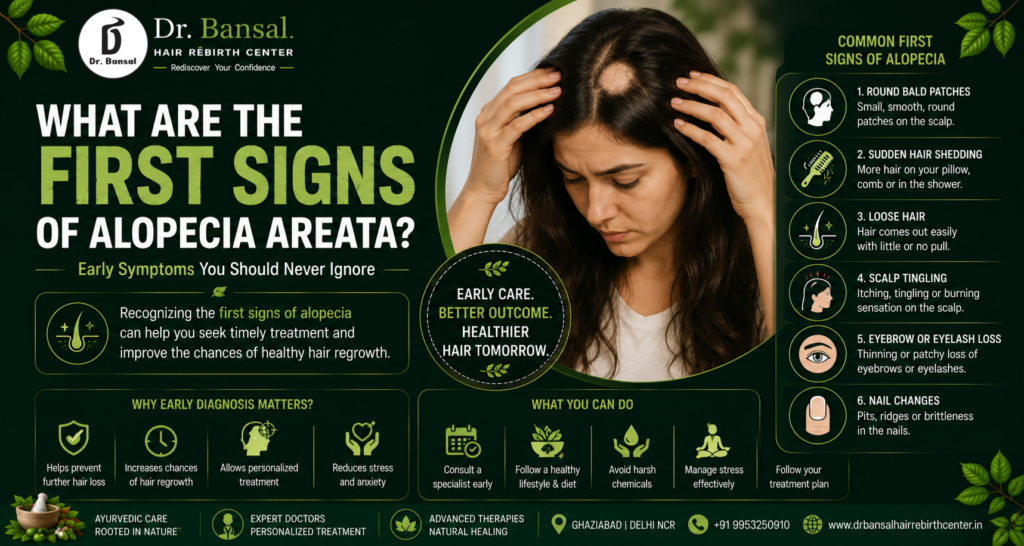
1. Small Round Bald Patches
The most recognizable First Signs of Alopecia are smooth, round or oval bald patches on the scalp.
These patches:
- Usually appear suddenly
- Have smooth skin without scarring
- May be the size of a coin initially
- Can gradually increase in size
Some people develop only one patch, while others notice multiple patches within a short period.
2. Sudden Increase in Hair Shedding
Most people naturally lose around 50–100 hairs each day.
If you suddenly notice significantly more hair:
- On your pillow
- While washing your hair
- On your hairbrush
- On your clothes
it may indicate the beginning of Alopecia Areata.
Unlike gradual thinning, Alopecia often develops quite rapidly.
3. Hair Feels Loose Before Falling Out
Many patients report that hair becomes unusually easy to pull out before visible bald patches appear.
You may notice hair coming out with very little pressure while combing or washing your scalp.
This can be one of the earliest warning signs that the immune system is affecting your hair follicles.
4. Tingling or Mild Itching on the Scalp
Although Alopecia Areata is usually painless, some individuals experience unusual sensations before hair loss becomes visible.
These may include:
- Mild itching
- Tingling
- Burning sensation
- Increased scalp sensitivity
These symptoms don’t occur in every patient but can sometimes precede bald patch formation.
5. Eyebrow or Eyelash Hair Loss
The First Signs of Alopecia aren’t always limited to the scalp.
Some people first notice thinning of:
- Eyebrows
- Eyelashes
- Beard hair
If these areas begin losing hair without an obvious reason, it’s important to seek professional evaluation.
6. Nail Changes
A lesser-known symptom of Alopecia Areata involves the nails.
Some patients develop:
- Tiny pits
- Rough nail surfaces
- Brittle nails
- Longitudinal ridges
Although nail changes don’t occur in everyone, they may support the diagnosis when combined with patchy hair loss.
What Causes Alopecia Areata?
The exact cause isn’t fully understood, but several factors are believed to contribute.
Autoimmune Activity
The immune system mistakenly attacks healthy hair follicles, interrupting normal hair production.
Genetics
Individuals with a family history of autoimmune diseases may have a higher risk.
Stress
Stress isn’t considered the direct cause, but emotional or physical stress may trigger flare-ups in susceptible individuals.
Other Autoimmune Conditions
People with thyroid disorders, vitiligo, or type 1 diabetes may have an increased likelihood of developing Alopecia Areata.
How Is Alopecia Areata Different from Normal Hair Fall?
Many people confuse Alopecia Areata with everyday hair shedding.
| Normal Hair Fall | Alopecia Areata |
|---|---|
| Hair sheds evenly | Hair falls in patches |
| Gradual thinning | Sudden bald spots |
| Usually temporary | May progress if untreated |
| Limited to scalp | Can affect eyebrows, beard, eyelashes, and body hair |
Understanding these differences helps you know when to seek professional care.
When Should You Visit Dr. Bansal Hair Rebirth Centre?
You should schedule a consultation if you notice:
- One or more round bald patches
- Sudden excessive hair shedding
- Eyebrow or eyelash hair loss
- Repeated episodes of patchy hair loss
- Nail changes with hair loss
- A family history of autoimmune disorders
At Dr. Bansal Hair Rebirth Centre, we perform a comprehensive scalp assessment to determine the exact cause of your hair loss and recommend a personalized treatment plan based on your condition
Contact us. https://drbansalhairrebirthcenter.in/contact-us/.
How We Help Patients with Alopecia
Our treatment philosophy focuses on identifying the root cause rather than simply addressing visible hair loss.
Our personalized approach includes:
- Detailed scalp and hair analysis
- Customized Ayurvedic treatment plans
- Herbal scalp therapies
- Lifestyle and nutritional counseling
- Advanced hair restoration therapies
- Regular progress monitoring
Our goal is to help improve scalp health, encourage healthy hair growth, and support patients throughout their recovery journey.
Tips for Protecting Your Hair
If you’ve noticed the First Signs of Alopecia, these healthy habits may help support your treatment:
- Avoid scratching or rubbing bald patches.
- Follow a balanced, protein-rich diet.
- Manage stress through meditation or yoga.
- Avoid harsh chemical hair treatments.
- Don’t self-medicate using unverified internet remedies.
- Follow your hair specialist’s treatment plan consistently.
These steps won’t cure alopecia on their own, but they can support overall scalp health.
Final Thoughts
Recognizing the First Signs of Alopecia can make a significant difference in how quickly you receive the right diagnosis and treatment. Small bald patches, sudden hair shedding, loose hair, eyebrow thinning, and nail changes are all symptoms that should never be ignored.
At Dr. Bansal Hair Rebirth Centre, we understand that every patient’s experience with alopecia is unique. Our experienced team combines Ayurvedic expertise with advanced hair restoration approaches to provide personalized care for Alopecia Areata and other hair loss conditions.
If you’ve recently noticed unusual hair loss, don’t wait for it to progress. Early evaluation can help you understand the cause and begin the most appropriate treatment for healthier hair and greater confidence.
Frequently Asked Questions (FAQs)
What is the earliest sign of Alopecia Areata?
The earliest sign is usually a small, smooth, round bald patch on the scalp, often accompanied by sudden hair shedding.
Can Alopecia Areata start suddenly?
Yes. Many people notice hair loss appearing over just a few days or weeks without any warning.
Is Alopecia Areata permanent?
Not always. Many patients experience hair regrowth with appropriate treatment, although the condition can sometimes recur.
When should I see a specialist?
You should consult a hair specialist as soon as you notice patchy hair loss, rapid shedding, eyebrow thinning, or repeated episodes of unexplained hair loss.
Contact Details
Dr. Bansal Hair Rebirth Center
MZ-07/08, Sumedha Tower, RDC, Raj Nagar, Ghaziabad
Phone: +91-9953250910
Website: https://drbansalhairrebirthcenter.in/
know more about us – https://vedantamayurveda.in/