
Hair loss can affect anyone, regardless of age or gender. While some people dismiss it as a temporary issue, others may delay seeking professional help because they hope the problem will resolve on its own. One of the most common questions patients ask is, “What happens if you don’t treat alopecia?”
Thank you for reading this post, don't forget to subscribe!The answer depends on the type of alopecia you have, how active the condition is, and how your body responds. Some individuals experience mild hair loss that remains stable, while others notice rapid progression that affects larger areas of the scalp or even the entire body.
At Dr. Bansal Hair Rebirth Centre, we encourage early diagnosis because understanding the cause of hair loss is the first step toward effective management. In this article, we’ll explain what happens if you don’t treat alopecia, the possible risks of delaying care, and how timely treatment may help support healthier hair growth.
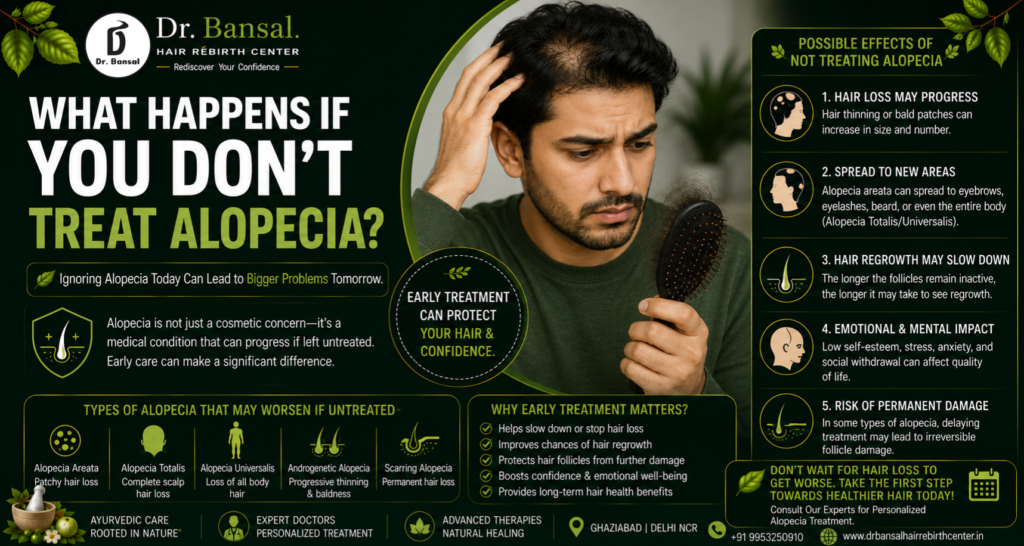
Understanding Alopecia
Alopecia is a general term that refers to hair loss. It includes several different conditions, such as:
- Alopecia Areata
- Alopecia Totalis
- Alopecia Universalis
- Androgenetic Alopecia (pattern baldness)
- Scarring Alopecia
Each type behaves differently, which is why professional evaluation is important before deciding whether treatment is needed.
Can Alopecia Go Away on Its Own?
Some forms of alopecia, especially mild cases of Alopecia Areata, may improve without extensive treatment. However, there is no reliable way to predict whether this will happen.
Waiting without proper evaluation can allow the condition to progress unnoticed.
This is why specialists recommend monitoring hair loss rather than simply hoping it improves and you Don’t Treat Alopecia.
What Happens If You Don’t Treat Alopecia?
Hair Loss May Continue
One of the most common outcomes of untreated alopecia is continued hair loss.
Depending on the underlying cause, you may notice:
- Bald patches becoming larger
- Hair thinning becoming more noticeable
- Additional areas of hair loss
- Slower natural regrowth
Not every patient experiences rapid progression, but delaying treatment and thinking to Don’t Treat Alopecia makes it harder to monitor changes.
Alopecia Areata May Spread
If you have Alopecia Areata, untreated autoimmune activity may cause:
- Multiple bald patches
- Hair loss in new areas
- Eyebrow thinning
- Eyelash loss
- Beard hair loss
In a small percentage of patients, the condition may progress to Alopecia Totalis or Alopecia Universalis.
Although these advanced forms are uncommon, early assessment helps specialists monitor disease activity.
Hair Regrowth May Take Longer
Hair follicles often remain alive during many types of alopecia, but prolonged inflammation or ongoing hair follicle damage can make recovery slower and less predictable.
Seeking treatment early provides an opportunity to support scalp health before hair loss progresses further.
Emotional Well-Being May Be Affected
Hair loss often affects much more than appearance.
Many patients experience:
- Lower self-confidence
- Anxiety
- Social withdrawal
- Stress
- Reduced quality of life
Addressing these concerns early is an important part of comprehensive hair care.
Daily Life Can Become More Challenging
Untreated alopecia may gradually affect everyday activities.
Some individuals become uncomfortable during:
- Workplace meetings
- Family gatherings
- Public events
- School or college
- Social occasions
Professional guidance can help patients understand their condition and feel more confident throughout treatment.
Why Early Diagnosis Matters
One of the biggest advantages of seeking treatment early is obtaining an accurate diagnosis.
Hair loss can result from:
- Autoimmune disorders
- Hormonal imbalance
- Nutritional deficiencies
- Genetic factors
- Medical conditions
- Certain medications
Without identifying the underlying cause, choosing the right treatment becomes much more difficult.
Can Untreated Alopecia Become Permanent?
The answer depends on the specific type of alopecia.
Many forms of Alopecia Areata are non-scarring, meaning the hair follicles remain capable of producing new hair.
However, some types of scarring alopecia permanently damage hair follicles if not managed promptly.
This is another reason why professional evaluation should not be delayed.
How Dr. Bansal Hair Rebirth Centre Helps Patients
At Dr. Bansal Hair Rebirth Centre, we believe that successful hair restoration begins with understanding the root cause rather than simply treating visible symptoms.
Our comprehensive approach includes:
- Detailed scalp examination
- Hair and follicle assessment
- Personalized Ayurvedic treatment plans
- Herbal scalp therapies
- Lifestyle and nutritional counseling
- Advanced hair restoration therapies
- Regular follow-up consultations
Every patient receives an individualized treatment plan based on their condition, age, medical history, and hair loss pattern.
Contact us. https://drbansalhairrebirthcenter.in/contact-us/.
Healthy Habits That Support Hair Recovery
Although lifestyle changes cannot cure alopecia on their own, they can complement professional treatment.
Helpful habits include:
- Eating a balanced, protein-rich diet
- Managing stress through yoga or meditation
- Getting sufficient sleep
- Avoiding excessive chemical treatments
- Following your specialist’s advice consistently
- Attending regular follow-up appointments
These practices help maintain overall scalp and hair health.
When Should You See a Hair Specialist?
Don’t wait until hair loss becomes severe.
You should consult a specialist if you notice:
- Sudden patchy hair loss
- Increasing hair thinning
- Bald spots
- Hair loss affecting eyebrows or beard
- Excessive daily hair shedding
- Repeated episodes of hair loss
Early diagnosis provides the best opportunity for effective treatment planning.
Final Thoughts
If you’re wondering what happens if you don’t treat alopecia, the answer varies depending on the type of hair loss you have. While some people experience stable or temporary hair loss, others may notice gradual progression, additional bald patches, or more extensive involvement over time.
The safest approach is not to ignore unexplained hair loss. Early diagnosis helps determine the underlying cause and allows specialists to recommend the most appropriate treatment plan before the condition progresses further.
At Dr. Bansal Hair Rebirth Centre, we combine Ayurvedic principles with advanced hair restoration therapies to provide personalized care for patients experiencing alopecia. If you’ve noticed unusual hair loss, seeking professional guidance today can help you make informed decisions about your long-term hair health.
Frequently Asked Questions (FAQs)
Can alopecia get worse if left untreated?
Yes. Depending on the type of alopecia, hair loss may remain stable, progress slowly, or spread to additional areas. Early evaluation helps monitor changes.
Is all alopecia permanent?
No. Many forms of alopecia, including Alopecia Areata, may experience partial or complete hair regrowth. However, some scarring forms can cause permanent hair loss.
Should I wait for my hair to grow back naturally?
Some mild cases improve on their own, but it’s best to seek professional advice so the cause of hair loss can be accurately identified.
Why is early treatment recommended?
Early diagnosis allows specialists to determine the type of alopecia, monitor progression, and develop a personalized treatment plan that supports healthier hair and scalp conditions.
Contact Details
Dr. Bansal Hair Rebirth Center
MZ-07/08, Sumedha Tower, RDC, Raj Nagar, Ghaziabad
Phone: +91-9953250910
Website: https://drbansalhairrebirthcenter.in/
know more about us – https://vedantamayurveda.in/