
Hair loss can happen for many reasons, but when hair suddenly falls out in smooth, round patches, it may be a sign of Alopecia Areata. One of the first questions patients ask is, “What Triggers Alopecia Areata?” Understanding the possible causes can help reduce uncertainty and encourage early medical evaluation.
Thank you for reading this post, don't forget to subscribe!At Dr. Bansal Hair Rebirth Centre, we regularly treat patients who are concerned about sudden patchy hair loss. Although researchers have learned a great deal about this condition, there isn’t one single factor that Triggers Alopecia Areata in every individual. Instead, it usually develops due to a combination of immune system activity, genetics, and environmental influences.
In this article, we’ll explain what Triggers Alopecia Areata, discuss the most common risk factors, and share how early diagnosis can help you manage the condition more effectively.
What Is Alopecia Areata?
Alopecia Areata is an autoimmune condition in which the body’s immune system mistakenly attacks healthy hair follicles.
Instead of protecting the body, immune cells temporarily interrupt the normal hair growth cycle, leading to sudden patchy hair loss.
Hair commonly falls from the:
- Scalp
- Beard
- Eyebrows
- Eyelashes
In some cases, larger areas of the body may also be affected.
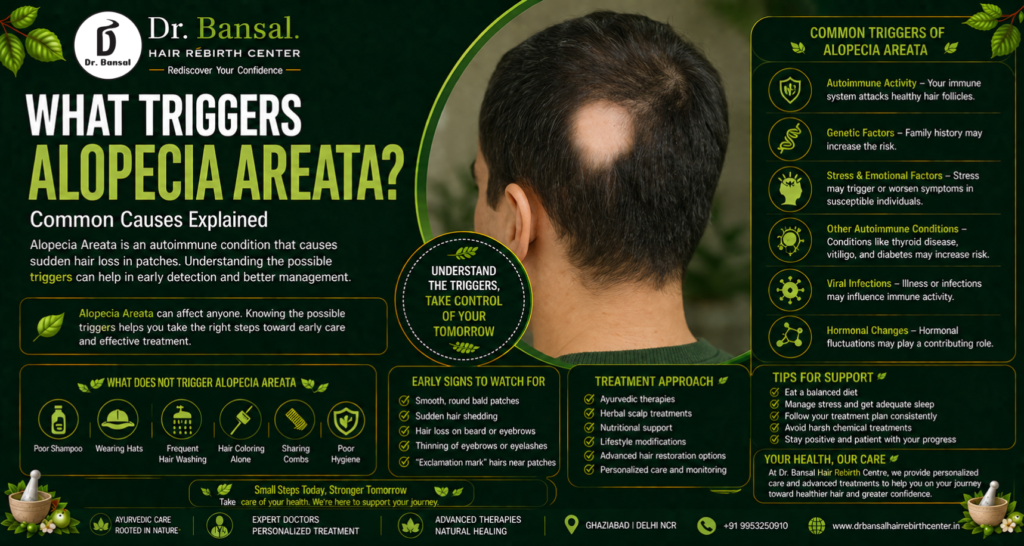
What Triggers Alopecia Areata?
Many patients believe there must be one exact cause that Triggers Alopecia Areata, but the reality is more complex.
Several different factors may contribute.
1. Autoimmune Activity
The primary reason that Triggers Alopecia Areata is an abnormal immune response.
The immune system mistakenly identifies healthy hair follicles as foreign and attacks them.
Importantly, the follicles often remain alive, which is why hair regrowth is possible in many patients.
2. Genetic Factors
Genetics play an important role in determining who may develop Alopecia Areata.
People with family members who have autoimmune disorders or Alopecia Areata may have a higher risk.
However, having a family history does not guarantee that you will develop the condition.
3. Emotional or Physical Stress
Many people ask whether stress Triggers Alopecia Areata.
Current research suggests that stress is not considered the direct cause, but it may act as a contributing factor in individuals who are already genetically susceptible.
Major life events, illness, surgery, or emotional stress may coincide with the onset of symptoms in some patients.
4. Other Autoimmune Conditions
People living with autoimmune disorders may have a greater likelihood of developing Alopecia Areata.
Examples include:
- Thyroid disorders
- Vitiligo
- Type 1 diabetes
- Rheumatoid arthritis
This does not mean everyone with these conditions will develop Alopecia Areata, but the association is recognized.
5. Viral Illnesses and Infections
Some patients notice hair loss after recovering from certain illnesses.
Although infections do not directly Triggers Alopecia Areata in every case, they may influence immune system activity in susceptible individuals.
Researchers continue studying this relationship.
6. Hormonal Changes
Hormonal fluctuations may influence overall hair health.
While hormones alone do not usually Triggers Alopecia Areata, changes in the body’s internal balance may contribute alongside other risk factors.
What Does NOT Trigger Alopecia Areata?
There are several myths surrounding Alopecia Areata.
The following are not proven causes:
- Poor shampoo
- Wearing hats
- Frequent hair washing
- Hair coloring alone
- Sharing combs
- Poor hygiene
Understanding these myths helps prevent unnecessary worry and misinformation.
Early Signs to Watch For
Recognizing symptoms early allows prompt evaluation.
Common signs include:
- Smooth, round bald patches
- Sudden hair shedding
- Hair loss on the beard
- Eyebrow thinning
- Eyelash loss
- “Exclamation mark” hairs near bald patches
If you notice these changes, consult a qualified hair specialist.
Can Alopecia Areata Be Prevented?
Because no single factor Triggers Alopecia Areata, there is currently no guaranteed way to prevent it.
However, maintaining overall health may support your hair and immune system.
Helpful habits include:
- Eating a balanced diet
- Managing stress
- Sleeping adequately
- Exercising regularly
- Avoiding smoking
- Following medical advice for existing autoimmune conditions
These practices promote overall well-being, although they cannot completely eliminate the risk.
How Dr. Bansal Hair Rebirth Centre Helps Patients
At Dr. Bansal Hair Rebirth Centre, we understand that every patient’s condition is unique.
Our comprehensive evaluation includes:
- Detailed scalp examination
- Hair loss pattern assessment
- Medical history review
- Personalized Ayurvedic treatment plans
- Herbal scalp therapies
- Nutritional counseling
- Lifestyle guidance
- Advanced hair restoration therapies
- Regular follow-up monitoring
Rather than treating only visible hair loss, we focus on identifying contributing factors and creating individualized care plans.
Why Early Diagnosis Matters
Early evaluation offers several benefits.
It allows specialists to:
- Confirm the diagnosis.
- Rule out other causes of hair loss.
- Monitor disease progression.
- Develop a personalized treatment strategy.
- Support long-term scalp health.
Seeking advice early also helps reduce unnecessary anxiety caused by uncertainty.
Healthy Lifestyle Tips for Patients
Although lifestyle alone cannot cure Alopecia Areata, healthy habits complement professional treatment.
Consider:
- Consuming protein-rich foods
- Staying hydrated
- Managing stress through yoga or meditation
- Avoiding harsh chemical treatments
- Following your treatment plan consistently
- Attending regular follow-up appointments
Healthy routines support overall scalp health and general wellness.
Final Thoughts
Many people wonder what Triggers Alopecia Areata, but there is rarely one simple answer. The condition usually develops because of a combination of autoimmune activity, genetic susceptibility, and environmental influences. While stress, illness, or hormonal changes may contribute in some cases, they are generally not the sole cause.
Understanding the factors that Triggers Alopecia Areata empowers patients to seek early medical advice rather than relying on myths or misinformation. Prompt evaluation allows specialists to identify the condition, recommend appropriate treatment, and provide ongoing support throughout the recovery journey.
At Dr. Bansal Hair Rebirth Centre, we combine Ayurvedic expertise with advanced hair restoration techniques to deliver personalized care for every patient. If you’ve noticed sudden patchy hair loss or have concerns about your scalp health, our experienced team is here to guide you with compassionate and evidence-informed care.
Frequently Asked Questions (FAQs)
What triggers Alopecia Areata?
The primary factor is an autoimmune response in which the immune system attacks healthy hair follicles. Genetics and environmental influences may also contribute.
Can stress trigger Alopecia Areata?
Stress is not considered the direct cause, but it may contribute to flare-ups in individuals who are already susceptible.
Is Alopecia Areata contagious?
No. Alopecia Areata cannot spread from one person to another.
Can hair grow back after Alopecia Areata?
Yes. Many patients experience partial or complete hair regrowth because the hair follicles often remain alive.
Contact Details
Dr. Bansal Hair Rebirth Center
MZ-07/08, Sumedha Tower, RDC, Raj Nagar, Ghaziabad
Phone: +91-9953250910
Website: https://drbansalhairrebirthcenter.in/
know more about us – https://vedantamayurveda.in/