
Scheduling your first Hair Consultation is an important step toward understanding the cause of your hair loss and finding the right treatment. Whether you’re experiencing excessive hair fall, Alopecia Areata, thinning hair, or a receding hairline, asking the right questions during your appointment can help you feel informed and confident about your treatment plan.
Thank you for reading this post, don't forget to subscribe!At Dr. Bansal Hair Rebirth Centre, we believe every patient deserves clear answers and personalized guidance. A Hair Consultation is not just about examining your scalp—it is an opportunity to understand your condition, discuss treatment options, and create a plan that fits your needs.
In this guide, we’ll explain what happens during a Hair Consultation, the essential questions you should ask, and how to get the most from your visit.
Why Is a Hair Consultation Important?
Many people begin using oils, supplements, or home remedies without knowing the real cause of their hair loss.
A professional Hair Consultation helps identify factors such as:
- Pattern hair loss
- Alopecia Areata
- Alopecia Universalis
- Nutritional deficiencies
- Hormonal imbalances
- Scalp conditions
- Lifestyle-related hair problems
Understanding the underlying cause allows specialists to recommend the most appropriate treatment rather than relying on guesswork.
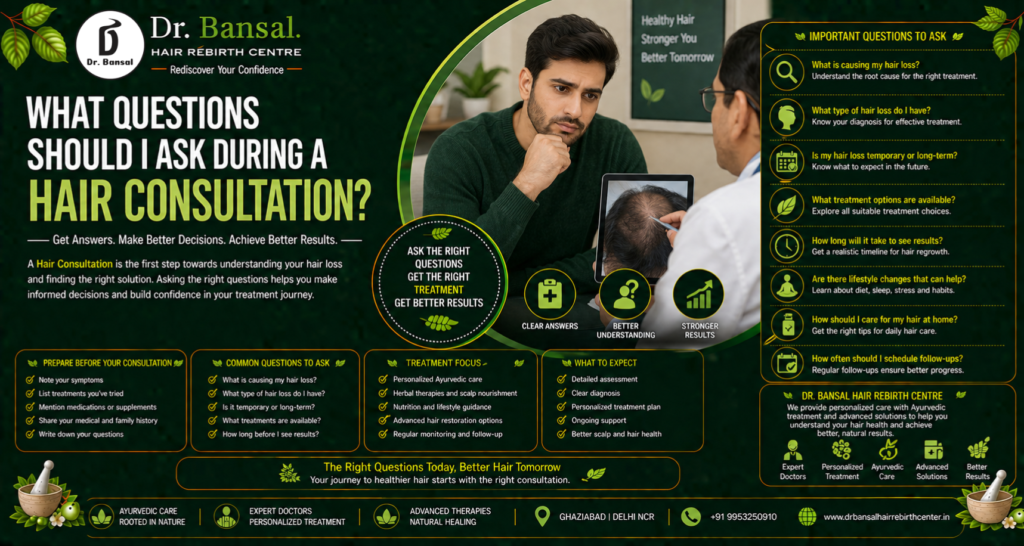
What Happens During a Hair Consultation?
Every Hair Consultation is different, but most appointments include:
- Discussion of your medical history
- Hair loss history
- Scalp examination
- Hair density assessment
- Review of previous treatments
- Lifestyle and dietary evaluation
- Personalized treatment recommendations
The goal is to understand not only what is causing your hair loss but also why it is happening.
Questions You Should Ask During a Hair Consultation
1. What Is Causing My Hair Loss?
This should be your first question.
Hair loss can occur due to:
- Genetics
- Autoimmune conditions
- Stress
- Hormonal changes
- Nutritional deficiencies
- Scalp disorders
Knowing the cause helps determine the most suitable treatment approach.
2. What Type of Hair Loss Do I Have?
Not every patient experiences the same condition.
Ask whether you have:
- Male Pattern Baldness
- Female Pattern Hair Loss
- Alopecia Areata
- Alopecia Universalis
- Telogen Effluvium
- Scalp-related hair loss
An accurate diagnosis is the foundation of effective treatment.
3. Is My Hair Loss Temporary or Long-Term?
Many patients worry their hair will never grow back.
During your Hair Consultation, ask your specialist whether your condition is expected to be temporary, manageable, or likely to require long-term care.
Understanding realistic expectations helps reduce unnecessary anxiety.
4. What Treatment Options Are Available?
Every patient responds differently to treatment.
Ask about:
- Personalized Ayurvedic therapies
- Herbal scalp treatments
- Lifestyle modifications
- Nutritional guidance
- Advanced hair restoration options
Your treatment plan should be tailored to your individual condition rather than following a standard approach.
5. How Long Will It Take to See Results?
Hair regrowth is usually gradual.
Ask your specialist:
- When improvement may begin
- What early signs to expect
- How progress will be monitored
Having realistic expectations helps you stay patient and consistent throughout treatment.
6. Are There Lifestyle Changes That Can Help?
Healthy habits often support treatment outcomes.
Ask whether you should make changes to:
- Diet
- Sleep routine
- Stress management
- Exercise
- Hair care routine
These recommendations can complement your personalized treatment plan.
7. How Should I Care for My Hair at Home?
Proper home care is an important part of maintaining scalp health.
Ask your specialist about:
- Hair washing frequency
- Suitable hair products
- Heat styling
- Hair coloring
- Hairstyles to avoid
Simple adjustments may help reduce unnecessary hair damage.
8. How Often Should I Schedule Follow-Up Visits?
Hair growth takes time.
Regular follow-up appointments allow your specialist to:
- Monitor progress
- Adjust treatment if necessary
- Address new concerns
- Evaluate scalp health
Consistent follow-up often leads to better long-term management.
How to Prepare Before Your Hair Consultation
To get the most from your appointment:
- Write down your symptoms.
- Note when hair loss started.
- List current medications.
- Mention previous treatments.
- Record any family history of hair loss.
- Prepare a list of questions.
Being prepared helps your specialist understand your condition more accurately.
Mistakes to Avoid During a Hair Consultation
Many patients unintentionally make these common mistakes:
- Forgetting to mention previous treatments
- Hiding supplement use
- Expecting overnight results
- Comparing themselves to others
- Not asking questions
- Stopping treatment too early
Open communication helps your specialist provide the best possible care.
How Dr. Bansal Hair Rebirth Centre Helps
At Dr. Bansal Hair Rebirth Centre, every Hair Consultation is personalized because no two patients experience hair loss in exactly the same way.
Our comprehensive consultation includes:
- Detailed scalp examination
- Hair density analysis
- Individualized diagnosis
- Personalized Ayurvedic treatment plans
- Herbal scalp therapies
- Nutritional counseling
- Lifestyle recommendations
- Advanced hair restoration support
- Regular follow-up monitoring
We focus on identifying the root cause of hair loss rather than simply treating visible symptoms.
Contact us. https://drbansalhairrebirthcenter.in/contact-us/.
When Should You Book a Hair Consultation?
Don’t delay scheduling a Hair Consultation if you notice:
- Excessive daily hair fall
- Sudden bald patches
- Receding hairline
- Hair thinning
- Eyebrow or eyelash loss
- Persistent scalp irritation
- Family history of early hair loss
Early diagnosis often provides more treatment options and better long-term outcomes.
Final Thoughts
A Hair Consultation is much more than a routine appointment—it is the first step toward understanding your hair loss and creating a treatment plan that fits your individual needs. Asking the right questions helps you understand your diagnosis, set realistic expectations, and actively participate in your hair restoration journey.
At Dr. Bansal Hair Rebirth Centre, we believe informed patients make confident decisions. Our experienced team provides personalized Ayurvedic care, advanced hair restoration support, and ongoing guidance to help you achieve healthier hair and a healthier scalp. If you’ve been postponing your first Hair Consultation, now is the perfect time to take that first step toward understanding your hair health.
Frequently Asked Questions (FAQs)
What happens during a Hair Consultation?
A Hair Consultation usually includes a scalp examination, review of your medical and hair loss history, assessment of your hair density, and personalized treatment recommendations.
Should I wash my hair before a Hair Consultation?
Yes. Arriving with a clean scalp allows your specialist to examine your hair and scalp more accurately unless you’ve been given different instructions.
How long does a Hair Consultation take?
The duration varies depending on your condition, but the appointment typically includes enough time to discuss your symptoms, perform an examination, and answer your questions.
Is a Hair Consultation necessary before starting treatment?
Yes. A professional consultation helps identify the underlying cause of hair loss and ensures that treatment is appropriate for your specific condition.
Contact Details
Dr. Bansal Hair Rebirth Center
MZ-07/08, Sumedha Tower, RDC, Raj Nagar, Ghaziabad
Phone: +91 8595340077
Website: https://drbansalhairrebirthcenter.in/
know more about us – https://vedantamayurveda.in/