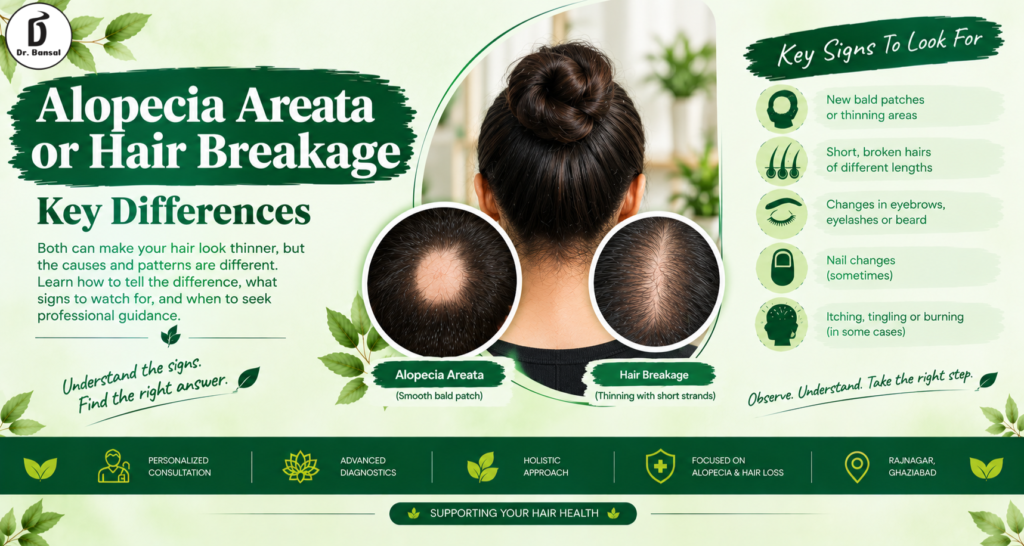
Finding a thin area or an unexpected bald spot can be worrying. You may wonder whether your hair is breaking because of everyday styling habits or whether something else is affecting your scalp. Understanding Alopecia Areata or Hair Breakage can help you recognise the differences and decide when to seek professional guidance.
Thank you for reading this post, don't forget to subscribe!Although both concerns can make hair look thinner, they do not happen in exactly the same way. Hair breakage occurs when strands snap along their length, while alopecia areata is an immune-related condition that affects hair follicles and can cause sudden hair loss.
Knowing the possible signs of Alopecia Areata or Hair Breakage is useful, but appearance alone cannot confirm a diagnosis. This guide explains the differences, common contributing factors, warning signs, and when to consider a scalp assessment.
What Is Alopecia Areata?
Alopecia areata is a condition in which the immune system mistakenly targets hair follicles. It often causes smooth, round or oval patches of hair loss on the scalp, although other hair-bearing areas can also be affected.
The condition can develop suddenly, sometimes without pain or other noticeable symptoms. Some people experience one small patch, while others develop several patches over time.
When considering Alopecia Areata or Hair Breakage, remember that alopecia areata does not usually cause scarring in the affected areas. Hair may regrow, but the course varies from person to person, and new patches can sometimes appear while earlier areas recover.
What Is Hair Breakage?
Hair breakage happens when a hair strand becomes weakened and snaps before completing its normal growth cycle. Unlike hair loss caused by changes at the follicle, breakage primarily affects the hair shaft itself.
Common contributing factors include:
- Frequent heat styling or excessive use of heated tools.
- Repeated chemical processing or harsh hair treatments.
- Rough brushing, especially when hair is tangled.
- Tight hairstyles that repeatedly pull on the strands.
- Friction from clothing, accessories, or other everyday activities.
- Dryness and damage that make strands more fragile.
When comparing Alopecia Areata or Hair Breakage, the presence of short strands of different lengths may suggest breakage. However, broken hairs can also occur around areas affected by alopecia areata, so this sign should not be used alone.
Alopecia Areata or Hair Breakage: Key Differences
Several clues may help explain what you are noticing.
1. The appearance of the affected area
Alopecia areata often produces a smooth patch where hair is noticeably absent. Hair breakage may leave short strands scattered across an area, making the surface appear uneven rather than completely bare.
However, these patterns can overlap. A close examination may be needed to distinguish Alopecia Areata or Hair Breakage accurately.
2. The length of the remaining hair
With breakage, you may see hairs of different lengths because strands have snapped at different points. With alopecia areata, a patch may have little visible hair, although short or broken hairs can sometimes appear near its edges.
The length of the hair provides a clue, not a definite answer.
3. The location of thinning
Breakage may be more noticeable in areas exposed to repeated pulling, brushing, heat, or friction. Alopecia areata can appear in unexpected places, including the scalp, beard, eyebrows, or eyelashes.
If you notice new, clearly defined patches without an obvious styling-related explanation, seek professional assessment.
4. Changes over time
Hair breakage may continue if the damaging habit or source of friction remains. Alopecia areata can follow an unpredictable pattern, with hair loss and regrowth occurring at different times.
Tracking the affected areas can help when discussing Alopecia Areata or Hair Breakage with a qualified professional.
Warning Signs You Should Not Ignore
Pay attention if you notice:
- A new, smooth bald patch.
- Several patches appearing within a short period.
- Hair loss involving the eyebrows, eyelashes, or beard.
- Short, broken hairs around the edges of a bald area.
- Changes in the nails, such as tiny dents or an unusually rough surface.
- Persistent or rapidly increasing hair loss.
- Scalp discomfort, itching, or burning alongside other changes.
These signs can have different explanations. In particular, itching or burning does not automatically mean that alopecia areata is present.
If you are unsure whether you have Alopecia Areata or Hair Breakage, avoid diagnosing yourself based only on online images. Other scalp and hair conditions can look similar and may require different approaches.
What Should You Do If You Notice Hair Loss?
Start by observing when the change began and whether it affects one area or several. Occasional photographs taken under similar lighting may help you track visible changes.
In the meantime, handle your hair gently. Avoid excessive pulling, rough brushing, and hairstyles that create repeated tension. Maintain balanced meals and a regular sleep routine to support your general wellbeing.
These habits may help reduce avoidable hair damage, but they cannot prevent every cause of hair loss or treat the underlying immune response associated with alopecia areata.
If a bald patch appears suddenly, the affected area expands, or thinning continues despite gentler hair care, arrange a professional assessment. Correctly identifying Alopecia Areata or Hair Breakage is more useful than trying multiple hair-care changes without understanding the cause.
How Can a Professional Assessment Help?
A professional may ask when the hair loss began, whether you have changed your styling habits, and whether similar changes have occurred elsewhere. The scalp, remaining hair strands, and nails may also be examined.
Depending on the findings, magnified scalp examination or additional tests may help distinguish alopecia areata from breakage and other conditions.
The assessment is particularly important when hair loss is sudden, spreading, or accompanied by other symptoms. Identifying the likely cause helps guide the next steps rather than treating every type of thinning as the same problem.
Why You Need to Visit Dr. Bansal Hair Rebirth Centre
If you are concerned about Alopecia Areata or Hair Breakage, understanding the reason for the change is an important first step. At Dr. Bansal Hair Rebirth Centre, the focus is on personalised hair and scalp assessment for people experiencing alopecia and other hair-loss concerns.
A consultation gives you an opportunity to discuss the pattern of thinning, when it started, your hair-care habits, and any changes you have noticed in other areas. These details can help determine what further assessment may be appropriate.
Rather than assuming that every bald spot has the same cause, seek guidance based on your individual findings. Hair recovery depends on the underlying condition, and no particular outcome can be guaranteed.
Contact Dr. Bansal Hair Rebirth Centre
- Address: MZL 07/08, Sumedha Tower, Ansal Building, Raj Nagar, Ghaziabad, Uttar Pradesh 201002
- Phone: +91-9953250910
- Website: https://drbansalhairrebirthcenter.in/
- Contact us. https://drbansalhairrebirthcenter.in/contact-us/.
Frequently Asked Questions
1. Can hair breakage look like alopecia areata?
Yes. Breakage can create uneven or thin-looking areas, while alopecia areata may produce smooth bald patches. An examination can help distinguish the two.
2. Does alopecia areata always cause completely smooth patches?
No. Short or broken hairs can sometimes appear around affected areas, so the pattern may not always look perfectly smooth.
3. Can tight hairstyles cause hair loss?
Repeated tension from tight hairstyles can damage hair and contribute to traction-related hair loss. Persistent thinning should be assessed to identify the cause.
4. Will hair grow back after alopecia areata?
Hair can regrow in many cases, but the timing and extent vary. Some people experience recurring episodes, so individual outcomes cannot be predicted with certainty.
5. When should I seek professional guidance?
Seek an assessment if you notice sudden bald patches, spreading thinning, repeated hair loss, or changes affecting your eyebrows, eyelashes, or beard.
Conclusion
Understanding Alopecia Areata or Hair Breakage can help you make sense of unexpected changes in your hair. Breakage affects the strands, while alopecia areata affects the follicles through an immune-related process. Although some visible signs overlap, the causes and appropriate next steps can differ.
Pay attention to new patches, handle your hair gently, and seek professional guidance when thinning is sudden or persistent. Identifying the cause is the first step towards making informed decisions about your hair and scalp health.
Contact Details
Dr. Bansal Hair Rebirth Center
MZ-07/08, Sumedha Tower, RDC, Raj Nagar, Ghaziabad
Phone: +91 8595340077
Website: https://drbansalhairrebirthcenter.in/
know more about us – https://vedantamayurveda.in/