
Noticing a bald patch on your child’s scalp can be worrying, especially when the hair loss appears suddenly. Parents may wonder whether it is caused by poor nutrition, stress, a scalp problem or something more serious. One possible explanation is Alopecia Areata in Children, an immune-related condition that can cause hair to fall out in small patches or, in some cases, across larger areas.
Thank you for reading this post, don't forget to subscribe!Although sudden hair loss can be upsetting for both children and parents, it is important not to jump to conclusions. Understanding the possible signs, causes and patterns can help families decide when professional guidance is needed.
This guide explains Alopecia Areata in Children, how it may appear, what parents should observe and how to support a child experiencing hair loss.
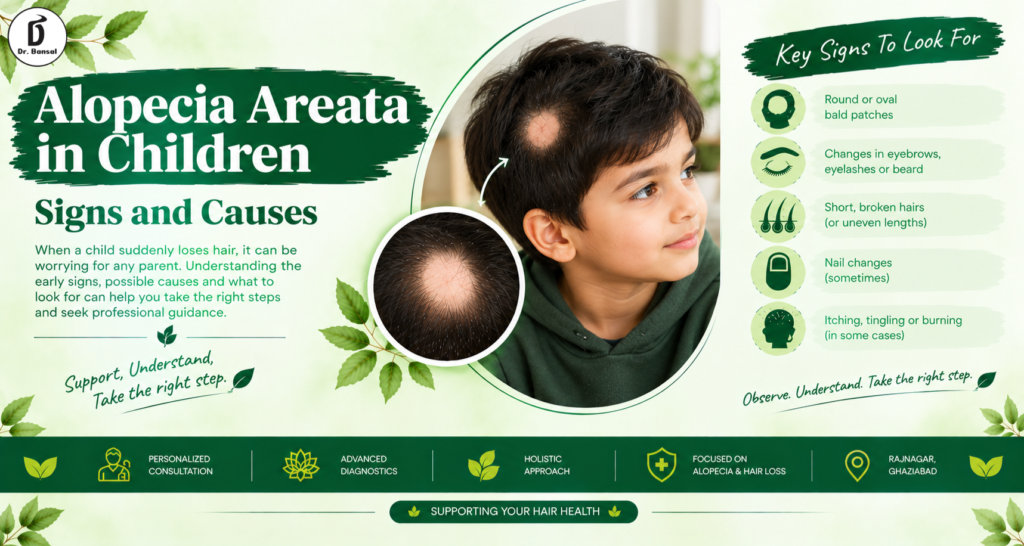
What Is Alopecia Areata in Children?
Alopecia Areata in Children is a condition in which the immune system mistakenly targets structures associated with hair growth. This can interrupt the normal hair-growth cycle and cause hair to fall out unexpectedly.
The condition often produces smooth, round or oval patches without visible scarring. It may affect one small area or several parts of the scalp. In some children, hair loss can also involve the eyebrows, eyelashes or other hair-bearing areas.
Importantly, alopecia areata is not caused simply by dirty hair or inadequate shampooing. It is also not contagious, meaning children cannot catch it from classmates through ordinary contact.
The pattern and severity of Alopecia Areata in Children can vary considerably. Some children experience limited hair loss, while others develop more extensive changes or repeated episodes.
What Are the Early Signs Parents Should Notice?
Recognising the early signs of Alopecia Areata in Children can help parents seek an appropriate assessment without unnecessary delay.
Common signs include:
- Sudden bald patches: One or more smooth areas may appear on the scalp.
- Round or oval hairless areas: The patches may have clearly defined edges.
- Changes in eyebrows or eyelashes: Hair loss may affect areas beyond the scalp.
- Short, broken hairs: Small hairs near the edges of affected areas may look different from surrounding strands.
- Nail changes: Some children develop tiny dents or an uneven nail surface.
- Changing hair-loss patterns: New patches may appear even when earlier areas begin showing regrowth.
These signs do not automatically confirm Alopecia Areata in Children. Other conditions, including hair-shaft damage and scalp disorders, can also cause patchy hair loss. A professional assessment helps distinguish between possible explanations.
Why Does Alopecia Areata Develop in Children?
The exact reason Alopecia Areata in Children develops is not fully understood. The condition involves an immune response that disrupts normal hair-follicle activity.
Several factors may be relevant:
Family history: Some children with alopecia areata have relatives with the condition or other immune-related conditions. However, family history does not mean a child will necessarily develop it.
Immune-system activity: Changes in immune regulation play an important role in alopecia areata. It is not simply a problem with hair care.
Genetic susceptibility: Inherited factors may influence a child’s likelihood of developing the condition, but genetics alone do not determine the outcome.
Stress and life changes: Emotional stress may be associated with some episodes, but it is not the sole established cause. Parents should avoid blaming a child or themselves for the condition.
Understanding these factors helps families approach Alopecia Areata in Children with patience rather than guilt or fear.
Is Sudden Hair Loss Always Alopecia Areata?
No. Sudden hair loss in children can have several explanations, and identifying the correct cause is essential.
For example, hair may break because of repeated pulling, friction or rough handling. Certain scalp conditions can produce scaling, irritation and patchy loss. Temporary shedding may also occur after illness or other changes affecting the body.
With Alopecia Areata in Children, the affected areas often appear smooth, but appearance alone is not enough to establish a diagnosis.
Parents should arrange an assessment if bald patches appear suddenly, hair loss spreads, the scalp becomes uncomfortable or the child develops other unexplained symptoms. Avoid trying random home remedies before understanding what is causing the hair loss.
Can Hair Grow Back in Children?
Hair regrowth is possible in many cases of Alopecia Areata in Children, particularly when hair loss is limited to a few patches. However, recovery is unpredictable, and no particular timeline applies to every child.
New hair may initially appear fine, soft or lighter than the surrounding hair. Its colour and texture may gradually change as it grows.
Sometimes, hair returns in one area while another patch develops elsewhere. In other cases, hair loss continues for longer periods or returns after an earlier improvement.
Parents should therefore avoid comparing their child’s progress with another child’s experience. Regular observations and appropriate follow-up provide a more useful understanding of changes over time.
How Can Parents Support a Child Emotionally?
The emotional effects of Alopecia Areata in Children can be just as important as the visible changes. Children may feel embarrassed, worried about questions from classmates or anxious about attending school.
Parents can help by creating a supportive environment.
- Listen calmly when your child talks about hair loss.
- Explain the condition using simple, age-appropriate language.
- Reassure your child that hair loss is not their fault.
- Avoid teasing, comparisons or comments that make appearance seem more important than wellbeing.
- Speak with teachers when appropriate if your child is experiencing unwanted attention.
- Encourage activities and friendships that help your child feel included.
Most importantly, allow your child to express their feelings without pressuring them to appear confident all the time. Alopecia Areata in Children affects hair, but it does not define a child’s personality, abilities or future.
Why You Need to Visit Dr. Bansal Hair Rebirth Centre
When parents notice unexplained hair loss, understanding its cause is an important first step. Alopecia Areata in Children requires careful consideration because different conditions can produce similar-looking patches.
At Dr. Bansal Hair Rebirth Centre, families can discuss their concerns about hair loss, changes in the scalp and patterns of regrowth. An individual assessment can help clarify what should be investigated and what further guidance may be appropriate.
Parents should share when the hair loss began, whether it is spreading, and whether the child has experienced similar episodes before. Avoid assuming that every bald patch has the same cause or that a particular outcome can be guaranteed.
Contact Dr. Bansal Hair Rebirth Centre
- Address: MZL 07/08, Sumedha Tower, Ansal Building, Raj Nagar, Ghaziabad, Uttar Pradesh 201002
- Phone: +91-9953250910
- Website: https://drbansalhairrebirthcenter.in/
- Contact us. https://drbansalhairrebirthcenter.in/contact-us/.
Frequently Asked Questions
1. Is alopecia areata in children contagious?
No. Alopecia areata is not contagious and does not spread through ordinary contact, sharing a classroom or playing together.
2. Can young children develop alopecia areata?
Yes. It can develop during childhood, although the age at onset and severity vary between individuals.
3. Does hair always grow back?
No outcome can be guaranteed. Some children experience regrowth, while others may have persistent or recurring hair loss.
4. Should parents wait if a bald patch appears suddenly?
It is sensible to arrange a professional assessment rather than assume the cause. Sudden or spreading hair loss deserves particular attention.
5. Can stress alone cause alopecia areata?
Stress may be associated with some episodes, but it is not considered the sole cause. Parents should not blame their child or themselves.
Conclusion
Alopecia Areata in Children can be concerning, but understanding the condition helps parents respond calmly and thoughtfully. Recognising unusual hair-loss patterns, seeking appropriate guidance and offering emotional support are important steps.
Every child’s experience is different. Rather than relying on assumptions or comparing recovery timelines, focus on understanding the cause, monitoring changes and helping your child feel supported throughout the process.
Contact Details
Dr. Bansal Hair Rebirth Center
MZ-07/08, Sumedha Tower, RDC, Raj Nagar, Ghaziabad
Phone: +91 8595340077
Website: https://drbansalhairrebirthcenter.in/
know more about us – https://vedantamayurveda.in/