
Losing all the hair on your scalp, eyebrows, eyelashes, and body can be emotionally overwhelming. For many people living with Alopecia Universalis, the condition affects far more than appearance—it can influence confidence, social interactions, mental well-being, and daily life. Because of these challenges, many patients wonder, “Is Alopecia Universalis considered a disability?”
Thank you for reading this post, don't forget to subscribe!The answer is not always straightforward. Whether Alopecia Universalis is legally recognized as a disability depends on the country, workplace policies, insurance regulations, and how significantly the condition affects an individual’s daily life.
At Dr. Bansal Hair Rebirth Centre, we understand that Alopecia impacts both emotional and physical well-being. In this article, we’ll explain what Alopecia is, when it may be considered a disability, the challenges patients face, and the treatment options available to help manage the condition.
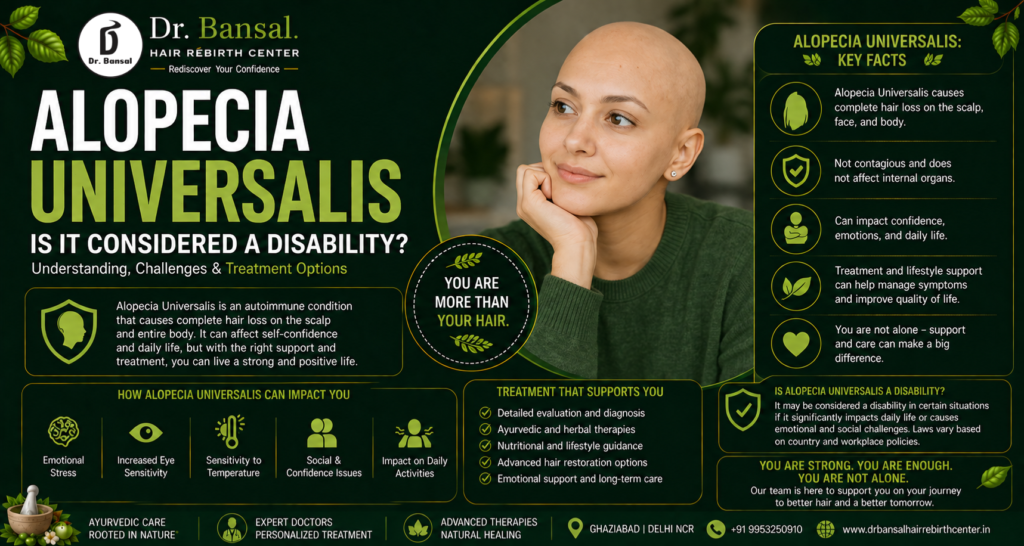
What Is Alopecia Universalis?
Alopecia Universalis is the most extensive form of Alopecia Areata, an autoimmune condition in which the immune system mistakenly attacks healthy hair follicles.
Unlike patchy hair loss seen in Alopecia Areata, Alopecia Universalis causes complete or nearly complete loss of hair across the entire body, including:
- Scalp hair
- Eyebrows
- Eyelashes
- Beard
- Facial hair
- Arm and leg hair
- Chest and body hair
Although Alopecia Universalis changes a person’s appearance dramatically, it is not contagious and does not damage internal organs.
Is Alopecia Universalis Considered a Disability?
Whether Alopecia is considered a disability depends on the circumstances.
From a medical perspective, Alopecia is an autoimmune disease rather than a physical disability that limits movement or organ function. However, in some countries and workplaces, it may qualify for legal protection if it substantially affects daily activities or leads to discrimination.
For example, some employers or educational institutions may provide reasonable accommodations for individuals with Alopecia , especially if the condition causes emotional distress, sensitivity to sunlight, or challenges related to appearance.
Because disability laws vary between countries, it’s important to understand the regulations that apply in your region.
How Alopecia Universalis Can Affect Daily Life
Although Alopecia Universalis is not physically painful, it can have a significant impact on everyday living.
Some common challenges include:
Emotional Well-Being
Complete hair loss can affect self-confidence and body image.
Many patients report feelings of:
- Anxiety
- Low self-esteem
- Social withdrawal
- Embarrassment
- Stress
Seeking emotional support alongside medical treatment can make a meaningful difference.
Eye Protection
Without eyelashes, people with Alopecia Universalis may experience increased exposure to dust, wind, and other environmental particles.
This can lead to:
- Eye irritation
- Dry eyes
- Increased sensitivity
Protective eyewear may be helpful in certain situations.
Temperature Regulation
Hair provides a small amount of natural insulation.
Individuals with Alopecia may notice increased sensitivity to:
- Cold weather
- Direct sunlight
- Wind
Using hats, scarves, or sunscreen can help improve comfort.
Social Confidence
Many people living with Alopecia Universalis worry about how others may react to their appearance.
This concern can affect:
- School
- Workplace interactions
- Public speaking
- Dating
- Social events
Building confidence and receiving support from healthcare professionals, family, and friends is an important part of managing the condition.
Can People with Alopecia Universalis Live Normal Lives?
Absolutely.
Most individuals with Alopecia continue to work, study, travel, participate in sports, and enjoy fulfilling personal relationships.
The condition changes physical appearance but does not reduce intelligence, ability, or personal potential.
Many patients choose to wear wigs, scarves, hats, or embrace their natural appearance based on their own preferences.
What Causes Alopecia Universalis?
Like other forms of Alopecia Areata, Alopecia Universalis develops when the immune system mistakenly attacks healthy hair follicles.
Researchers believe several factors may contribute, including:
- Autoimmune activity
- Genetic predisposition
- Family history
- Environmental triggers
- Emotional or physical stress in susceptible individuals
The exact cause is still being studied.
Can Hair Grow Back?
Hair regrowth is possible in some individuals with Alopecia Universalis, although recovery varies from person to person.
Some patients experience:
- Partial regrowth
- Fine white hair growth
- Gradual return of natural hair color
Others may have recurring episodes of hair loss because the condition is autoimmune in nature.
Early consultation with a hair specialist helps determine the most appropriate treatment strategy.
How Dr. Bansal Hair Rebirth Centre Helps Patients
At Dr. Bansal Hair Rebirth Centre, we understand that every patient experiences Alopecia Universalis differently.
Our personalized approach focuses on both scalp health and emotional well-being.
Our treatment plans may include:
- Comprehensive scalp assessment
- Personalized Ayurvedic treatment plans
- Herbal scalp therapies
- Nutritional counseling
- Lifestyle guidance
- Advanced hair restoration therapies where appropriate
- Regular follow-up and progress monitoring
Our goal is to help patients manage Alopecia Universalis with compassionate, individualized care.
Contact us. https://drbansalhairrebirthcenter.in/contact-us/.
Practical Tips for Living with Alopecia Universalis
Managing Alopecia Universalis involves caring for both your physical and emotional health.
Helpful tips include:
- Protect your scalp from direct sunlight with sunscreen or hats.
- Wear protective glasses if your eyes become sensitive.
- Maintain a healthy, balanced diet.
- Manage stress through yoga, meditation, or relaxation techniques.
- Join support groups or connect with others experiencing alopecia.
- Follow your treatment plan consistently.
- Schedule regular follow-up appointments with your specialist.
When Should You Consult a Hair Specialist?
If you notice:
- Rapid progression of hair loss
- Complete scalp hair loss
- Loss of eyebrows or eyelashes
- Hair loss affecting your confidence
- Recurring episodes of Alopecia Areata
you should consult a qualified hair specialist for a detailed evaluation.
Early diagnosis allows for personalized treatment planning and ongoing monitoring.
Final Thoughts
Alopecia Universalis is an autoimmune condition that causes complete hair loss across the body. While it is not always legally classified as a disability, it can significantly affect confidence, emotional health, and everyday life. Depending on where you live and your personal circumstances, legal protections or workplace accommodations may be available.
The most important thing to remember is that Alopecia Universalis does not define your abilities or your future. With the right medical guidance, emotional support, and personalized care, many individuals continue to lead confident, successful, and fulfilling lives.
At Dr. Bansal Hair Rebirth Centre, we are committed to helping every patient understand their condition and receive individualized treatment designed to support long-term hair and scalp health.
Frequently Asked Questions (FAQs)
Is Alopecia Universalis permanent?
Not always. Some individuals experience partial or complete hair regrowth, while others may have recurring episodes because it is an autoimmune condition.
Is Alopecia Universalis contagious?
No. Alopecia Universalis is not contagious and cannot spread from one person to another.
Can people with Alopecia Universalis work normally?
Yes. Most people with Alopecia Universalis continue to work, study, and participate in everyday activities without limitations.
Should I seek treatment for Alopecia Universalis?
Yes. Early consultation with a hair specialist can help assess your condition, discuss appropriate treatment options, and provide ongoing support.
Contact Details
Dr. Bansal Hair Rebirth Center
MZ-07/08, Sumedha Tower, RDC, Raj Nagar, Ghaziabad
Phone: +91-9953250910
Website: https://drbansalhairrebirthcenter.in/
know more about us – https://vedantamayurveda.in/