
Can Stress Cause Alopecia? Understanding the Link Between Stress and Hair Loss
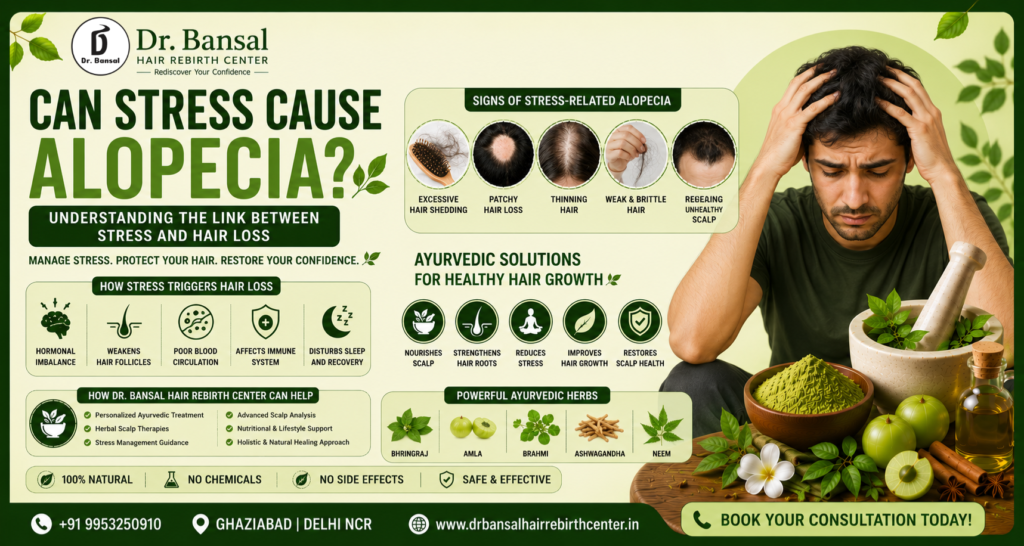
Modern lifestyles have made stress a common part of everyday life. Work pressure, academic challenges, financial concerns, lack of sleep, and emotional imbalance can affect both mental and physical health. One of the most noticeable effects of long-term stress is hair fall.
Thank you for reading this post, don't forget to subscribe!Many people today ask, “Can stress cause alopecia?” because they notice sudden hair shedding or bald patches after stressful situations. While occasional stress may not always lead to serious hair problems, long-term emotional and physical stress can disturb the normal hair growth cycle and weaken scalp health.
At Dr. Bansal Hair Rebirth Center, many patients visit with stress-related hair fall and alopecia concerns. Personalized Ayurvedic treatment focuses on improving scalp health naturally while supporting healthier hair regrowth.
What Is Alopecia?
Alopecia is a condition that causes hair loss from the scalp or other areas of the body. It can appear in different forms, including:
- Alopecia Areata – patchy hair loss
- Alopecia Totalis – complete scalp hair loss
- Alopecia Universalis – loss of body hair
In many cases, hair loss appears suddenly and may continue gradually if proper scalp care is not followed.
Can Stress Really Cause Alopecia?
Can Stress Cause Alopecia , Yes, stress may contribute to alopecia and excessive hair fall in many individuals. Emotional stress affects hormone balance, blood circulation, sleep quality, and overall body function, which may disturb healthy hair growth.
When stress levels remain high for a long time, the body may push hair follicles into a resting phase, causing increased Stress Cause Alopeciaand weakening hair roots.
In some cases, stress may also trigger immune system imbalance, which is commonly associated with Alopecia Areata.
How Stress Affects Hair Health
Stress affects the body in several ways that may influence scalp health and hair growth.
1. Disturbs Hair Growth Cycle
Hair naturally grows in cycles. Stress may interrupt this cycle and increase hair shedding.
2. Weakens Hair Follicles
Poor blood circulation and stress-related hormonal changes may weaken hair roots over time.
3. Increases Inflammation
Long-term stress may negatively affect scalp condition and follicle health.
4. Affects Sleep and Nutrition
Stress often leads to poor sleep, unhealthy eating habits, and dehydration, all of which affect healthy hair growth.
Common Symptoms of Stress-Related Alopecia
Recognizing the symptoms early may help improve scalp recovery and treatment planning.
Common signs include:
- Sudden hair fall
- Small bald patches
- Excessive hair shedding while combing or washing
- Hair thinning
- Weak and brittle hair
- Dry or unhealthy scalp
- Receding hairline in some cases
Ignoring these signs may gradually worsen scalp health over time.
Other Factors That May Increase Hair Loss
Although stress is a major trigger, other factors may also contribute to alopecia and hair fall.
Poor Nutrition
Hair requires nutrients such as protein, iron, zinc, and vitamins for healthy growth.
Excessive Chemical Use
Frequent hair coloring, rebonding, and harsh shampoos may weaken hair roots.
Pollution and Dust
Environmental pollution may affect scalp hygiene and follicle health.
Lack of Sleep
The body repairs damaged cells during sleep, which is important for healthy scalp recovery.
Family History
Genetics may also increase the chances of alopecia in some individuals.
Can Stress Cause Alopecia Stress-Related Hair Loss Be Managed Naturally?
Many people prefer natural treatment approaches because they focus on long-term scalp health rather than temporary cosmetic improvement.
Natural treatment may help:
- Improve scalp nourishment
- Strengthen weak hair roots
- Support healthy blood circulation
- Reduce stress naturally
- Improve overall scalp condition
Although recovery varies depending on the severity of the condition, healthy scalp care and stress management often support better hair regrowth results.
Ayurvedic Treatment for Stress-Related Alopecia
Ayurveda follows a holistic approach toward hair care and wellness. Instead of focusing only on visible hair loss, Ayurvedic treatment aims to improve internal balance and scalp nourishment naturally.
At Dr. Bansal Hair Rebirth Center, Ayurvedic treatment plans may include:
Herbal Scalp Therapies
Natural herbal oils and therapies help nourish hair roots and improve scalp circulation.
Stress Management Support
Meditation, yoga, and healthy routines may help reduce emotional stress naturally.
Nutritional Guidance
Balanced nutrition supports healthy scalp recovery and stronger hair growth.
Healthy Lifestyle Support
Hydration, proper sleep, and reduced chemical exposure may improve long-term scalp health.
Ayurvedic Herbs Commonly Used for Hair Care
Bhringraj
Bhringraj is widely known for supporting healthier hair growth naturally.
Amla
Amla contains nutrients and antioxidants that help nourish the scalp.
Brahmi
Brahmi may support stress management and scalp relaxation.
Neem
Neem helps maintain healthy scalp hygiene and cleanliness.
Ashwagandha
Ashwagandha is commonly used for stress relief and overall wellness support.
Healthy Habits That May Help Reduce Hair Fall
Manage Stress Naturally
Yoga, meditation, breathing exercises, and physical activity may help improve emotional balance.
Eat a Balanced Diet
Include:
- Green vegetables
- Fruits
- Protein-rich foods
- Nuts and seeds
- Plenty of water
Sleep Properly
Healthy sleep routines support better body recovery and scalp function.
Avoid Excessive Heat Styling
Reducing chemical exposure may help protect weak hair roots.
Maintain Scalp Hygiene
Clean scalp care helps improve scalp condition and reduce buildup.
Importance of Early Treatment
Many people ignore Stress Cause Alopecia during the early stages, assuming it will stop automatically. However, untreated scalp problems may gradually worsen over time.
Early scalp analysis and proper care may help:
- Detect the root cause
- Improve scalp recovery
- Reduce excessive hair fall
- Support healthier hair regrowth
Timely treatment often improves long-term scalp health.
How Dr. Bansal Hair Rebirth Center Helps
Dr. Bansal Hair Rebirth Center offers personalized Ayurvedic treatment for Stress Cause Alopecia and hair fall. The clinic focuses on natural scalp care through herbal therapies, advanced scalp analysis, healthy lifestyle guidance, and holistic treatment solutions.
Patients from Ghaziabad, Delhi NCR, and nearby areas visit the clinic for alopecia treatment, scalp care, and natural hair regrowth support.
Contact us on – https://drbansalhairrebirthcenter.in/contact-us/
Final Thoughts
So, can stress cause alopecia? In many cases, yes. Long-term stress may disturb healthy hair growth, weaken scalp health, and increase excessive hair fall over time.
The good news is that healthy lifestyle habits, stress management, proper scalp care, and Ayurvedic treatment may help support healthier hair growth naturally. Early attention and consistent scalp care often play an important role in maintaining stronger hair roots and improving long-term scalp health.
Contact Details
Dr. Bansal Hair Rebirth Center
MZ-07/08, Sumedha Tower, RDC, Raj Nagar, Ghaziabad
Phone: +91-9953250910
Website:https://drbansalhairrebirthcenter.in/
know more about us on – https://vedantamayurveda.in/