
How to Identify Alopecia in Its Early Stages: Signs You Shouldn’t Ignore
Thank you for reading this post, don't forget to subscribe!Hair loss often develops gradually, making it easy to overlook the earliest warning signs. Many people only seek treatment after significant hair thinning or noticeable bald patches appear. However, understanding the early stage alopecia signs can make a big difference in managing hair loss and maintaining scalp health.
Alopecia affects people of all ages and can impact confidence, self-esteem, and emotional well-being. While every individual experiences hair loss differently, recognizing symptoms early may help individuals take better care of their scalp and hair health.
At Dr. Bansal Hair Rebirth Center, many patients report that they noticed subtle changes months before their hair loss became more obvious. Learning to recognize these signs may help you understand when professional guidance is needed.
What Is Alopecia?
Alopecia is a condition that causes hair loss from the scalp and, in some cases, other parts of the body. The condition can develop suddenly or gradually depending on the type of alopecia and the individual’s overall health.
Common forms include:
- Alopecia Areata
- Alopecia Totalis
- Alopecia Universalis
Some individuals experience patchy hair loss, while others notice overall thinning or increased hair shedding.
Why Early Detection Matters
One reason early stage alopecia signs are important is that hair loss often progresses over time. When changes are noticed early, individuals can focus on improving scalp care, lifestyle habits, and overall wellness.
Early attention may help:
- Monitor hair loss patterns
- Improve scalp health
- Support stronger hair follicles
- Reduce avoidable triggers
- Encourage healthier hair growth conditions
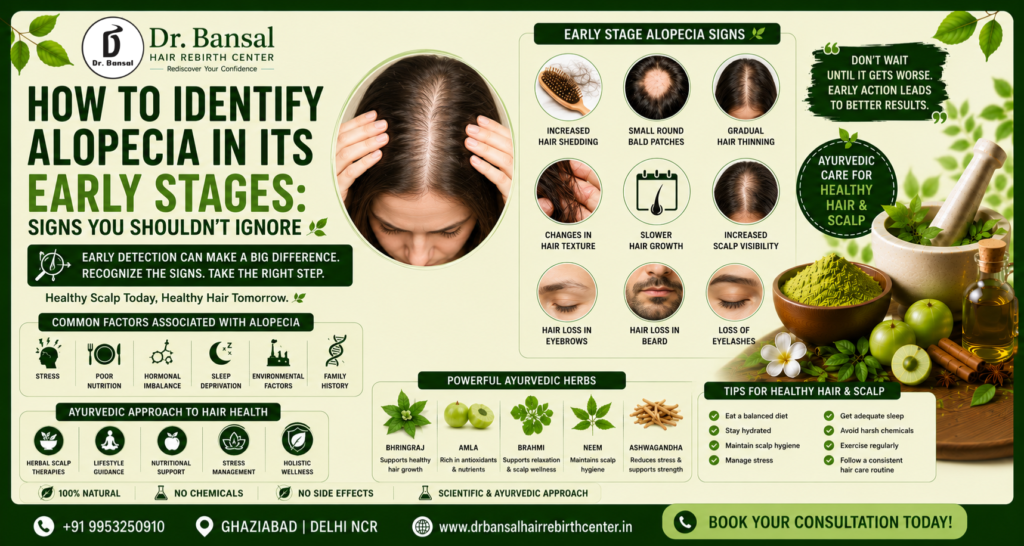
1. Increased Hair Shedding
One of the most common early stage alopecia signs is an increase in daily hair shedding.
You may notice:
- More hair on your pillow
- Hair collecting in the shower
- Excess strands on your comb
- Hair shedding during washing
While some daily shedding is normal, a sudden increase should not be ignored.
2. Small Round Bald Patches
Alopecia Areata often begins with one or more small bald patches.
These patches are usually:
- Round or oval
- Smooth to the touch
- Noticeable on the scalp
- Painless
Many people discover these patches unexpectedly while brushing or styling their hair.
3. Gradual Hair Thinning
Hair thinning may develop slowly and can be difficult to detect in the beginning.
Signs may include:
- Reduced hair volume
- Less density near the crown
- A wider hair parting
- More visible scalp areas
Gradual thinning is one of the most overlooked early stage alopecia signs.
4. Changes in Hair Texture
Hair may feel different before noticeable hair loss occurs.
You may observe:
- Finer hair strands
- Increased breakage
- Dry or brittle hair
- Reduced thickness
These changes may indicate that hair follicles are becoming weaker.
5. Slower Hair Growth
Many people report that their hair no longer grows as quickly as it once did.
Slow growth may occur when hair follicles are not functioning at their optimal level.
6. Increased Scalp Visibility
If your scalp becomes easier to see under normal lighting conditions, it may indicate a reduction in hair density.
This is especially noticeable:
- Around the hairline
- Near the crown
- Along the central part line
7. Hair Loss in Eyebrows or Beard
Although scalp hair is most commonly affected, some individuals notice thinning in other areas.
This may include:
- Eyebrows
- Beard hair
- Eyelashes
These changes should be evaluated alongside other symptoms.
Common Factors Associated with Alopecia
Several factors may contribute to hair loss and follicle weakness.
Stress
Long-term stress may affect the natural hair growth cycle.
Poor Nutrition
Hair follicles require adequate nutrients to support healthy growth.
Sleep Deprivation
Poor sleep may affect body recovery and scalp wellness.
Environmental Factors
Pollution and harsh environmental conditions may influence scalp health.
Family History
Genetic factors may increase susceptibility to certain forms of hair loss.
Can Early Alopecia Be Managed?
While outcomes vary between individuals, maintaining healthy scalp care habits may help support stronger hair and healthier follicles.
Management often focuses on:
- Improving scalp health
- Supporting overall wellness
- Maintaining balanced nutrition
- Managing stress levels
- Following healthy daily routines
Consistency is often important when addressing hair and scalp concerns.
Ayurvedic Approach to Hair and Scalp Health
Ayurveda focuses on maintaining balance within the body while supporting scalp nourishment naturally.
Rather than concentrating solely on visible hair loss, Ayurvedic care considers overall wellness and scalp condition.
At Dr. Bansal Hair Rebirth Center, Ayurvedic approaches may include:
Herbal Scalp Therapies
Natural therapies designed to support scalp nourishment and circulation.
Lifestyle Guidance
Healthy routines that support long-term scalp wellness.
Nutritional Recommendations
Balanced nutrition helps support follicle health.
Stress Management Practices
Yoga, meditation, and wellness habits may support emotional balance.
Ayurvedic Herbs Commonly Used in Hair Care
Bhringraj
Traditionally associated with healthy hair support.
Amla
Known for its antioxidant and nutritional properties.
Brahmi
Often used to support relaxation and scalp wellness.
Neem
Supports scalp hygiene and cleanliness.
Ashwagandha
Commonly used to support stress management and overall well-being.
Healthy Habits That Support Hair Growth
To maintain healthier hair and scalp:
- Eat nutrient-rich foods
- Stay hydrated
- Maintain scalp hygiene
- Sleep adequately
- Manage stress effectively
- Avoid excessive chemical treatments
- Exercise regularly
These habits may help create a healthier environment for hair follicles.
When Should You Seek Professional Guidance?
Consider seeking professional evaluation if you notice:
- Persistent hair fall
- Bald patches
- Progressive thinning
- Reduced hair density
- Family history of hair loss
Early assessment may help identify contributing factors and support better long-term scalp care.
How Dr. Bansal Hair Rebirth Center Helps
Dr. Bansal Hair Rebirth Center provides personalized Ayurvedic care for individuals experiencing alopecia and hair fall concerns.
The clinic focuses on:
- Scalp analysis
- Herbal therapies
- Hair root strengthening
- Natural scalp care
- Holistic wellness support
Patients from Ghaziabad, Delhi NCR, and nearby regions visit the clinic for individualized hair and scalp care solutions.
Contact us. https://drbansalhairrebirthcenter.in/contact-us/
Final Thoughts
Recognizing early stage alopecia signs can make it easier to understand changes in your hair and scalp before hair loss becomes more noticeable. Increased shedding, thinning hair, small bald patches, and changes in hair texture should not be ignored.
With proper scalp care, healthy lifestyle habits, balanced nutrition, and Ayurvedic support, many individuals can work toward maintaining healthier hair and scalp wellness. Paying attention to early signs is often the first step toward better long-term hair care.
Contact Details
Dr. Bansal Hair Rebirth Center
MZ-07/08, Sumedha Tower, RDC, Raj Nagar, Ghaziabad
Phone: +91-9953250910
Website: https://drbansalhairrebirthcenter.in/
know more about us – https://vedantamayurveda.in/