
Discovering a small bald patch or noticing excessive hair shedding can be alarming. One of the first questions people ask after being diagnosed with Alopecia Areata is, “How quickly does hair fall out with alopecia?” The answer isn’t the same for everyone, as the condition progresses differently from person to person.
Thank you for reading this post, don't forget to subscribe!At Dr. Bansal Hair Rebirth Centre, we understand how stressful sudden hair loss can be. Our specialists have helped many patients with Alopecia Areata, Alopecia Totalis, and Alopecia Universalis through personalized Ayurvedic and advanced hair restoration treatments. Recognizing the early signs and understanding how hair fall out with alopecia progresses can help you seek timely care and improve your treatment journey.
In this article, we’ll explain how fast Alopecia Areata can develop, what factors influence the speed of hair loss, and when you should consult a hair specialist.
What Is Alopecia Areata?
Alopecia Areata is an autoimmune disorder in which the immune system mistakenly attacks healthy hair follicles. This disrupts the normal hair growth cycle, causing sudden patchy hair loss.
Unlike common hair fall caused by nutritional deficiencies or seasonal changes, Alopecia Areata often appears without warning and can affect:
- Scalp
- Beard
- Eyebrows
- Eyelashes
- Other body hair
The condition is not contagious, and poor hair care does not cause it.
How Quickly Does Hair Fall Out with Alopecia?
The speed at which hair fall out with alopecia occurs varies from one individual to another.
Some patients notice a small bald patch that remains unchanged for months, while others experience rapid progression over just a few weeks.
In many cases:
- Hair loss begins suddenly.
- One or more smooth, round bald patches appear.
- The patches may enlarge over several days or weeks.
- New patches may develop in different areas of the scalp.
The progression depends on how active the immune response is and how each person’s body reacts.
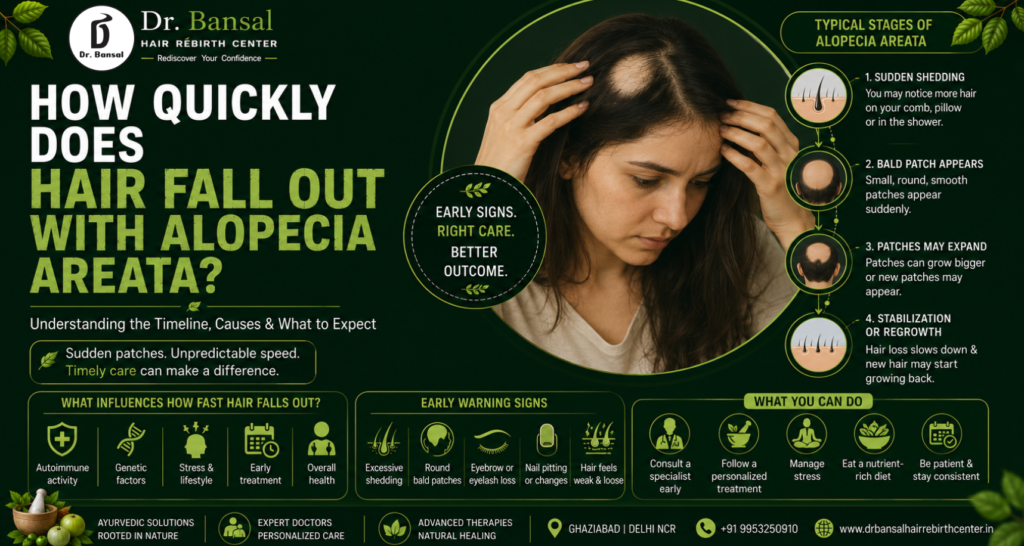
The Typical Stages of Hair Loss in Alopecia Areata
Stage 1: Sudden Hair Shedding
Many patients first notice excessive hair while combing, washing, or waking up in the morning.
Unlike normal daily shedding, this hair loss is more noticeable and often occurs over a short period.
Stage 2: Small Bald Patches Appear
Soon after increased shedding, one or more coin-sized bald spots develop.
These patches are usually:
- Smooth
- Round or oval
- Free from redness or scaling
This is often the earliest visible sign of Alopecia Areata.
Stage 3: Patches May Expand
Without treatment, some patches gradually become larger.
Nearby patches may also merge together, creating larger areas of hair loss.
Not everyone experiences this stage, but early evaluation is recommended if hair loss continues.
Stage 4: Stabilization or Regrowth
Many people eventually reach a stage where hair loss slows down or stops.
Tiny soft hairs may begin appearing on bald patches, indicating that the follicles are becoming active again.
What Determines How Fast Hair Loss Progresses?
Several factors influence how quickly hair fall out with alopecia occurs.
Severity of the Autoimmune Response
A stronger immune attack on the hair follicles generally leads to faster hair loss.
Individual Health
Each person’s immune system behaves differently, making the progression highly unpredictable.
Previous Episodes
People who have experienced Alopecia Areata before may notice different progression rates during future episodes.
Early Treatment
Prompt diagnosis and professional treatment may help manage disease activity and support healthier hair regrowth.
Can Hair Fall Out Overnight?
Hair does not literally disappear overnight, but many patients feel that it happened suddenly.
This is because the autoimmune process often begins beneath the skin before visible hair loss becomes noticeable.
As a result, a bald patch may seem to appear within a day or two.
Does Alopecia Always Get Worse?
No.
Many cases remain limited to one or two patches and eventually improve.
Others may progress to:
- Alopecia Totalis (complete scalp hair loss)
- Alopecia Universalis (loss of all body hair)
Because the condition is unpredictable, regular monitoring by experienced hair specialists is important.
Early Warning Signs You Shouldn’t Ignore
You should schedule a professional evaluation if you notice:
- Sudden bald patches
- Rapid hair shedding
- Hair becoming loose before falling out
- Multiple patches developing
- Eyebrow or eyelash thinning
- Nail pitting or brittle nails
Early diagnosis can help determine whether the condition is Alopecia Areata or another form of hair loss.
Can Hair Grow Back After Alopecia Areata?
Yes.
Many people experience hair regrowth, although the timeline varies.
Early regrowth often appears as:
- Soft white hairs
- Thin, fine strands
- Hair growing around patch edges
Over time, these hairs may become thicker and regain their natural color.
Recovery depends on several factors, including the severity of the condition and the individual’s response to treatment.
How Dr. Bansal Hair Rebirth Centre Helps Patients with Alopecia
At Dr. Bansal Hair Rebirth Centre, we believe that effective alopecia treatment begins with understanding the root cause rather than simply treating the symptoms.
Our personalized treatment approach includes:
- Comprehensive scalp examination
- Detailed hair analysis
- Personalized Ayurvedic treatment plans
- Herbal scalp therapies
- Lifestyle and dietary guidance
- Advanced hair restoration therapies
- Regular follow-up to monitor progress
Every treatment plan is tailored to the patient’s age, condition, and stage of alopecia.
Contact us. https://drbansalhairrebirthcenter.in/contact-us/
Tips for Managing Alopecia During Hair Loss
While receiving treatment, these healthy habits may support your hair and scalp:
- Avoid scratching or rubbing bald patches.
- Eat a balanced, protein-rich diet.
- Manage stress through yoga, meditation, or regular exercise.
- Avoid harsh chemical hair treatments.
- Follow your specialist’s advice consistently.
- Attend scheduled follow-up appointments.
Consistency is essential because hair recovery often takes time.
When Should You Visit a Hair Specialist?
You should consult a specialist if:
- Hair loss appears suddenly.
- Bald patches increase in size.
- Hair loss spreads beyond the scalp.
- You have repeated episodes of patchy hair loss.
- Hair loss affects your confidence or daily life.
Seeking professional guidance early provides the best opportunity for accurate diagnosis and personalized treatment.
Final Thoughts
If you’re wondering how quickly hair fall out with alopecia occurs, the answer depends on your individual condition. Some people notice only one small patch that remains stable, while others experience rapid progression over weeks.
The most important step is not to ignore sudden or unusual hair loss. Early evaluation allows specialists to identify the type of alopecia, monitor its progression, and recommend the most appropriate treatment plan.
At Dr. Bansal Hair Rebirth Centre, we combine Ayurvedic expertise with advanced hair restoration approaches to help patients manage Alopecia Areata and regain confidence. If you’ve noticed patchy hair loss or rapid shedding, schedule a consultation and let our experienced team guide you toward healthier hair.
Contact Details
Dr. Bansal Hair Rebirth Center
MZ-07/08, Sumedha Tower, RDC, Raj Nagar, Ghaziabad
Phone: +91-9953250910
Website: https://drbansalhairrebirthcenter.in/
know more about us – https://vedantamayurveda.in/