
Starting a conversation with your employer about a personal health condition can feel intimidating. If you’ve recently been diagnosed with alopecia areata or are experiencing noticeable hair loss, you may be wondering how much you should share at work. Many people think, “I Have Alopecia, but do I really need to tell my boss?”
Thank you for reading this post, don't forget to subscribe!The truth is that there is no single right answer. Some individuals choose to keep their condition private, while others feel more comfortable being open about it, especially if visible hair loss begins affecting workplace interactions or confidence.
If you’re unsure how to approach the conversation about I Have Alopecia, this guide will help you understand when it may be appropriate to speak with your employer, how to prepare, and how to communicate with confidence.
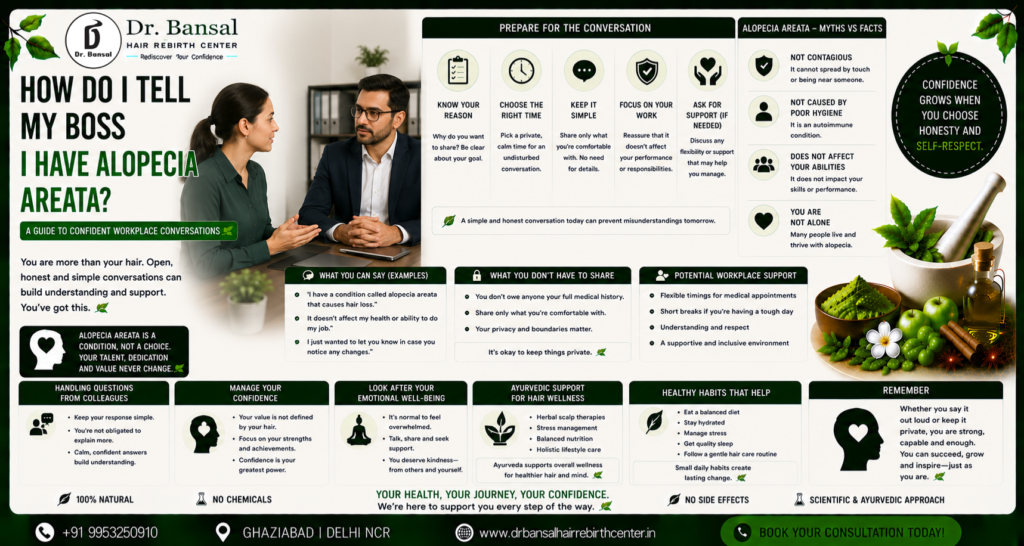
Do You Have to Tell Your Boss?
The first thing to know is that in many situations, you are not required to disclose your medical condition simply because I Have Alopecia.
Whether you choose to share your diagnosis depends on factors such as:
- Your comfort level
- Your workplace culture
- Whether your condition affects your work
- Whether you need support or accommodations
For some people, keeping the information private feels right. Others prefer openness to avoid misunderstandings when hair loss becomes noticeable.
Why Some People Choose to Share
People often decide to tell their employer for different reasons.
You may choose to explain that I Have Alopecia if:
- Your appearance has changed significantly.
- Colleagues have started asking questions.
- You wear wigs, scarves, or head coverings.
- You require flexibility for medical appointments.
- You simply want to reduce anxiety about hiding your condition.
Sharing your situation can sometimes create a more supportive and understanding work environment.
Prepare Before the Conversation
Before meeting your manager, spend some time deciding what you want to say.
Ask yourself:
- Why am I sharing about I Have Alopecia ?
- What information am I comfortable discussing?
- Do I need any workplace support?
- What outcome am I hoping for?
Having clear answers can help you feel more confident.
Choose the Right Time
A private meeting is usually the best setting to tell I Have Alopecia.
Avoid discussing sensitive topics:
- During busy office hours
- In front of colleagues
- During stressful work situations
Instead, request a short one-on-one conversation when both of you have enough time to talk without interruptions.
Keep the Conversation Simple
You don’t need to provide every medical detail.
A simple explanation is often enough.
For example, you might say:
“I wanted to let you know that I have a condition called alopecia areata. It causes hair loss, but it doesn’t affect my ability to perform my job. I simply wanted to make you aware in case you notice changes in my appearance.”
This communicates the essential information while maintaining your privacy.
Explain That Alopecia Is Not Contagious
Some people are unfamiliar with alopecia areata.
If needed, briefly explain that:
- It is not contagious.
- It cannot spread through contact.
- It does not affect your ability to work.
- It only changes hair growth.
Providing this reassurance may prevent unnecessary misunderstandings.
Focus on Your Work
One helpful message to communicate is that although I Have Alopecia, your professional abilities remain unchanged.
You might emphasize:
- Your commitment to your role
- Your ongoing productivity
- Your ability to perform your responsibilities
- Your enthusiasm for your work
This helps keep the discussion focused on your performance rather than your appearance.
Decide How Much You Want Others to Know
After speaking with your manager, consider whether you would like colleagues to know about your condition.
Some people prefer:
- Complete privacy
- Informing only close coworkers
- Allowing the manager to answer questions
- Openly discussing the condition
There is no right or wrong choice.
Handling Questions from Colleagues
If coworkers notice changes, they may ask questions out of curiosity rather than judgment.
Simple responses may include:
- “It’s a medical condition that causes hair loss.”
- “I’m doing well, thank you for asking.”
- “It doesn’t affect my work.”
You are never obligated to explain more than you feel comfortable sharing.
Managing Workplace Confidence
Visible hair loss can sometimes affect self-confidence.
Remember that your value at work comes from:
- Your skills
- Your knowledge
- Your professionalism
- Your attitude
- Your experience
Hair does not define your abilities or your career.
Should You Request Workplace Accommodations?
Most people with alopecia areata continue working without any changes to their duties.
However, if your situation requires flexibility, you might discuss:
- Time off for medical appointments
- Temporary scheduling adjustments
- Other reasonable workplace arrangements
Approach these conversations professionally and focus on practical solutions.
Looking After Your Emotional Well-Being
Living with alopecia areata can affect emotional health as well as appearance.
It’s important to:
- Talk with trusted family or friends.
- Practice stress management.
- Seek professional support if needed.
- Remember that you’re not alone.
Taking care of your emotional well-being can help you feel more confident in both your personal and professional life.
Ayurvedic Perspective on Hair Wellness
Ayurveda views hair health as part of overall wellness.
Traditional Ayurvedic care often emphasizes:
- Balanced nutrition
- Healthy sleep
- Stress management
- Herbal scalp therapies
- Daily self-care routines
While every individual is different, a holistic approach aims to support both scalp health and general well-being.
Supporting Yourself During Your Hair Journey
Whether I Have Alopecia is something you choose to share or keep private, focusing on healthy habits can support your overall wellness.
Helpful practices include:
- Eating a balanced diet
- Staying physically active
- Managing stress
- Following gentle hair-care routines
- Maintaining regular medical follow-ups
These habits contribute to better overall health and confidence.
How Dr. Bansal Hair Rebirth Center Helps
At Dr. Bansal Hair Rebirth Center, every patient receives a personalized approach based on their individual condition and concerns.
The clinic offers:
- Comprehensive scalp assessments
- Personalized Ayurvedic consultations
- Herbal scalp therapies
- Lifestyle guidance
- Long-term hair wellness support
The goal is to help patients understand their condition while supporting both physical and emotional well-being.
Contact us. https://drbansalhairrebirthcenter.in/contact-us/
Final Thoughts
If you’re thinking, “I Have Alopecia, but I’m worried about telling my boss,” remember that the decision is entirely yours. You are not defined by your hair, and you deserve to feel respected and supported in the workplace. If you choose to have the conversation, keeping it honest, simple, and professional can help reduce anxiety and build understanding.
Most importantly, remember that alopecia areata does not diminish your talent, dedication, or potential. With the right support, healthy self-care, and confidence in your abilities, you can continue to thrive both personally and professionally.
Contact Details
Dr. Bansal Hair Rebirth Center
MZ-07/08, Sumedha Tower, RDC, Raj Nagar, Ghaziabad
Phone: +91-9953250910
Website: https://drbansalhairrebirthcenter.in/
know more about us – https://vedantamayurveda.in/