
Is Alopecia Hereditary? Understanding the Role of Genetics in Hair Loss
Thank you for reading this post, don't forget to subscribe!Hair loss can be frustrating, especially when it seems to run in families. Many people who experience thinning hair or alopecia often ask the same question: “Is alopecia hereditary?”
If a parent, grandparent, or close relative has struggled with hair loss, it is natural to wonder whether genetics may also affect your hair health. While genetics can play a role in certain types of alopecia, they are not always the only factor involved. Lifestyle habits, stress, nutrition, scalp health, and overall wellness also contribute to how healthy your hair remains over time.
At Dr. Bansal Hair Rebirth Center, many patients seek guidance regarding hereditary hair loss and alopecia. Understanding the causes behind hair loss is often the first step toward healthier scalp care and better long-term hair management.
What Is Alopecia?
Alopecia is a condition that causes partial or complete hair loss. It can affect the scalp, beard, eyebrows, or other areas of the body.
Common forms of alopecia include:
- Alopecia Areata (patchy hair loss)
- Alopecia Totalis (complete scalp hair loss)
- Alopecia Universalis (loss of hair across the body)
The severity and progression of alopecia can vary from person to person.
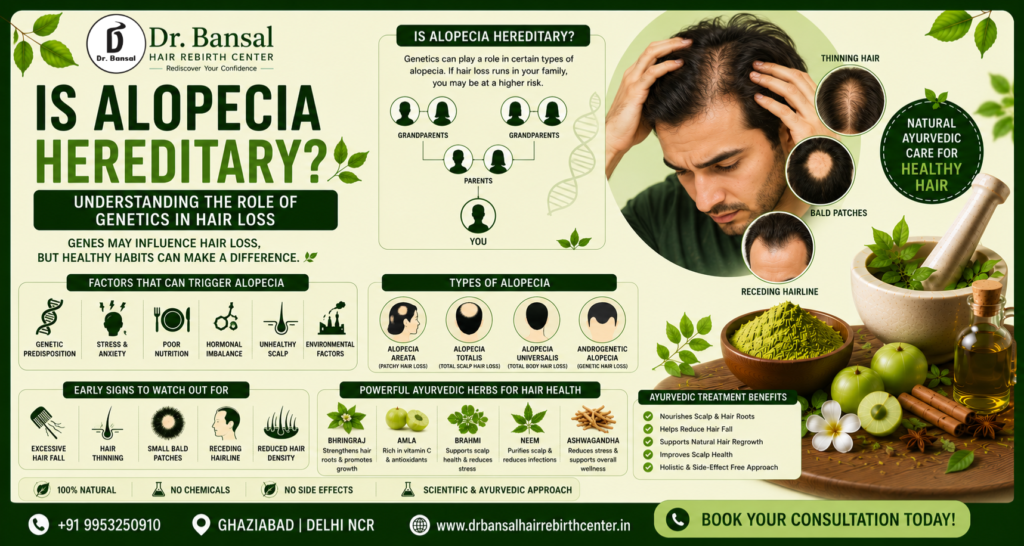
Is Alopecia Hereditary?
The answer depends on the type of alopecia involved.
Some forms of hair loss have a stronger genetic component than others. If multiple family members have experienced hair thinning or hair loss, genetics may increase the likelihood of developing similar concerns.
However, hereditary factors alone do not guarantee that someone will develop alopecia. Environmental influences and lifestyle choices often play an important role as well.
How Genetics Influence Hair Loss
Genes affect many aspects of hair growth, including:
- Hair follicle sensitivity
- Hair growth cycles
- Hair density
- Hair thickness
- Hormonal responses
When certain genetic traits are inherited, hair follicles may become more vulnerable to weakening over time.
This can result in gradual thinning, reduced hair density, or increased susceptibility to hair loss.
Can Alopecia Areata Be Genetic?
Research suggests that genetics may contribute to Alopecia Areata in some individuals.
People with a family history of autoimmune conditions or alopecia may have a slightly higher risk of developing the condition. However, many people diagnosed with Alopecia Areata have no known family history at all.
This indicates that genetics is only one piece of a much larger picture.
Other Factors That May Trigger Alopecia
Even when hereditary factors are present, several additional influences may contribute to hair loss.
Stress
Chronic stress may disrupt normal hair growth cycles and increase shedding.
Poor Nutrition
Hair follicles require adequate nutrients to function properly. Deficiencies in protein, iron, zinc, and vitamins may affect hair health.
Hormonal Changes
Hormonal fluctuations may influence hair growth and follicle activity.
Poor Scalp Health
An unhealthy scalp environment may weaken hair roots and affect healthy growth.
Environmental Factors
Pollution, chemical treatments, and excessive heat exposure may contribute to hair damage over time.
Early Signs That May Indicate Genetic Hair Loss
Some warning signs include:
- Gradual hair thinning
- Increased hair shedding
- Reduced hair density
- A widening part line
- Receding hairline
- Smaller hair strands over time
Recognizing these changes early may help individuals seek professional guidance before the condition progresses.
Can Genetic Hair Loss Be Managed?
Although genetic factors cannot be changed, healthy scalp care and lifestyle improvements may help support stronger hair and a healthier scalp environment.
Management often focuses on:
- Maintaining scalp health
- Improving nutrition
- Supporting healthy hair follicles
- Reducing avoidable triggers
- Encouraging healthy hair growth cycles
Early intervention is often beneficial.
Ayurvedic Perspective on Hair Health
Ayurveda takes a holistic approach to hair care by focusing on overall wellness rather than only visible hair loss.
The goal is to improve internal balance, scalp nourishment, and follicle strength naturally.
At Dr. Bansal Hair Rebirth Center, Ayurvedic treatment plans may include:
Herbal Scalp Therapies
Natural therapies may help support scalp nourishment and circulation.
Lifestyle Guidance
Healthy daily routines may support overall hair and scalp wellness.
Nutritional Support
Balanced nutrition is essential for maintaining healthy hair follicles.
Stress Management
Yoga, meditation, and wellness practices may help support emotional balance and overall health.
Ayurvedic Herbs Commonly Used for Hair Care
Bhringraj
Traditionally used to support healthy hair growth.
Amla
Known for its nutritional and antioxidant properties.
Brahmi
Often used to support relaxation and scalp wellness.
Neem
Helps maintain scalp cleanliness and hygiene.
Ashwagandha
Commonly used for stress management and overall wellness support.
Healthy Habits for Long-Term Hair Care
To support healthier hair naturally:
- Eat a balanced diet
- Stay hydrated
- Maintain scalp hygiene
- Avoid excessive heat styling
- Get adequate sleep
- Manage daily stress
- Follow a consistent hair care routine
These habits may help create a healthier environment for hair growth.
When Should You Seek Professional Help?
If you notice:
- Persistent hair fall
- Thinning hair
- Bald patches
- Reduced hair density
- Family history of significant hair loss
it may be beneficial to seek professional scalp evaluation and guidance.
Early assessment often helps identify contributing factors and create an appropriate care plan.
How Dr. Bansal Hair Rebirth Center Helps
Dr. Bansal Hair Rebirth Center provides personalized Ayurvedic care for individuals experiencing alopecia, hair thinning, and scalp concerns.
The clinic focuses on:
- Scalp analysis
- Herbal therapies
- Natural hair care solutions
- Hair root strengthening
- Holistic wellness support
Patients from Ghaziabad, Delhi NCR, and surrounding areas visit the clinic for individualized hair and scalp care.
Contact us. https://drbansalhairrebirthcenter.in/contact-us/
Final Thoughts
So, is alopecia hereditary? Genetics may influence certain types of hair loss, but they are rarely the only factor involved. Stress, nutrition, scalp health, lifestyle habits, and overall wellness also contribute significantly to hair health.
The encouraging news is that healthy scalp care, balanced nutrition, stress management, and Ayurvedic support may help improve overall hair wellness and support healthier hair growth over time. Understanding the causes behind hair loss is the first step toward making informed decisions about long-term hair care.
Contact Details
Dr. Bansal Hair Rebirth Center
MZ-07/08, Sumedha Tower, RDC, Raj Nagar, Ghaziabad
Phone: +91-9953250910
Website: https://drbansalhairrebirthcenter.in/
know more about us – https://vedantamayurveda.in/