
When people begin experiencing hair loss, one of the first questions they often ask is, “Why is this happening?” While genetics, hormones, and medical conditions are common contributors, many individuals wonder whether their work environment could also be playing a role. If you’ve recently noticed increased hair fall or have been diagnosed with Alopecia, it’s natural to question whether your job could be connected.
Thank you for reading this post, don't forget to subscribe!Modern workplaces can place significant demands on both physical and mental health. Long working hours, high-pressure deadlines, irregular sleep schedules, and chronic stress can affect overall well-being. While a job may not directly cause every form of Alopecia, workplace-related factors can sometimes contribute to conditions that influence scalp and hair health.
Understanding these connections can help you make informed decisions about both your health and your daily habits.
What Is Alopecia?
Alopecia is a general term used to describe hair loss. It can affect the scalp, eyebrows, beard area, and sometimes other parts of the body.
Common forms include:
- Alopecia Areata
- Alopecia Totalis
- Alopecia Universalis
- Pattern Hair Loss
- Diffuse Hair Thinning
Each type has different causes and characteristics. Some forms of Alopecia are associated with genetics or immune system activity, while others may be influenced by lifestyle and environmental factors.
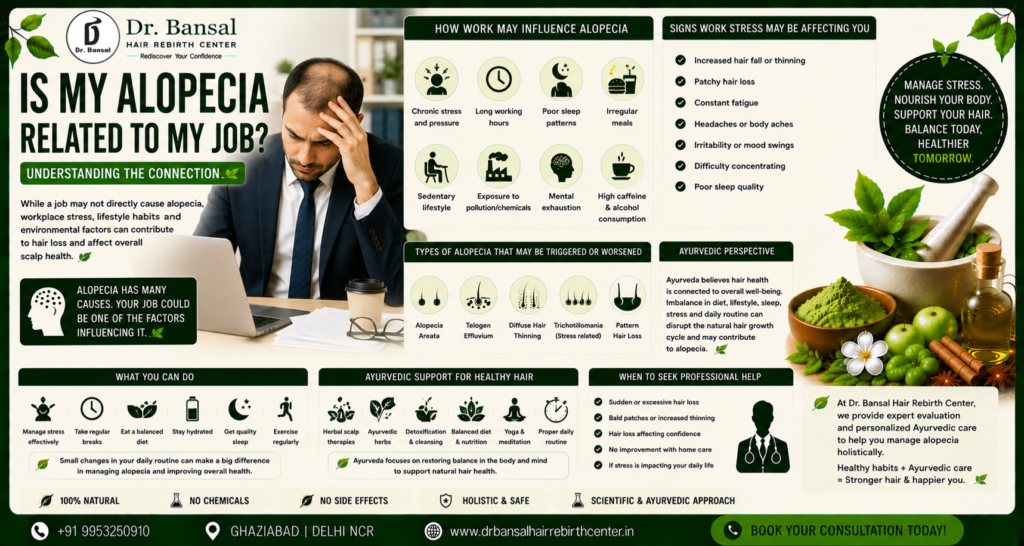
Can Your Job Directly Cause Alopecia?
In most cases, a job does not directly cause Alopecia. However, certain workplace conditions may contribute to factors that affect hair health.
Examples include:
- Chronic stress
- Sleep deprivation
- Poor dietary habits
- Physical exhaustion
- Irregular daily routines
These issues may not be the sole cause of hair loss, but they can sometimes influence overall wellness and scalp health.
The Link Between Stress and Alopecia
One of the most discussed workplace factors is stress.
Many modern professionals experience:
- Tight deadlines
- Performance pressure
- Financial concerns
- Long work hours
- Job insecurity
Chronic stress can affect various systems within the body. This is why many people ask whether their Alopecia could be linked to their work environment.
While stress does not automatically cause every form of hair loss, it can contribute to conditions that may affect the normal hair growth cycle.
Long Working Hours and Hair Health
Working extended hours often impacts lifestyle habits.
People with demanding careers may experience:
- Reduced sleep
- Irregular meals
- Less physical activity
- Increased fatigue
Over time, these habits can influence overall wellness.
Since healthy hair relies on a healthy body, maintaining balance is important for individuals managing Alopecia or other hair concerns.
Could Poor Sleep Affect Hair Wellness?
Sleep is often overlooked when discussing Alopecia, yet it plays an important role in overall health.
During sleep, the body performs essential recovery and repair processes.
Poor sleep habits may contribute to:
- Increased stress
- Reduced energy
- Difficulty concentrating
- General health challenges
This is one reason many hair specialists encourage consistent sleep schedules as part of a healthy lifestyle.
Workplace Eating Habits Matter Too
Busy schedules sometimes lead to skipped meals or reliance on processed foods.
Hair follicles require nutrients to function properly.
Important nutrients include:
- Protein
- Iron
- Zinc
- Vitamins
- Healthy fats
Although nutrition alone may not resolve every case of Alopecia, balanced eating habits support overall wellness and scalp health.
High-Stress Careers and Hair Concerns
Some professions naturally involve higher stress levels than others.
Examples may include:
- Corporate leadership roles
- Healthcare professions
- Customer service positions
- Emergency services
- Financial sectors
People in demanding careers often wonder whether their work is affecting their Alopecia.
While stress levels vary from person to person, learning stress-management techniques can be beneficial regardless of profession.
Working Night Shifts and Hair Health
Shift workers frequently experience disruptions in their normal daily routines.
Night shifts may affect:
- Sleep patterns
- Meal timing
- Energy levels
- Lifestyle consistency
Maintaining healthy habits becomes especially important for individuals working outside traditional schedules.
Emotional Impact of Workplace Hair Loss
Visible Alopecia can sometimes create additional workplace concerns.
Individuals may worry about:
- Professional appearance
- Client interactions
- Confidence levels
- Colleague questions
These concerns are understandable and often contribute to emotional stress.
It is important to remember that your professional abilities, experience, and skills are not defined by hair loss.
Signs Your Lifestyle May Need Attention
While workplace responsibilities are often unavoidable, certain signs may suggest that lifestyle adjustments could be beneficial.
These include:
- Constant fatigue
- Poor sleep quality
- Persistent stress
- Frequent skipped meals
- Lack of physical activity
Addressing these areas may support overall wellness and potentially improve your ability to manage Alopecia more effectively.
Ayurvedic Perspective on Alopecia and Work Stress
Ayurveda emphasizes the connection between lifestyle and overall health.
According to Ayurvedic principles, healthy hair may be influenced by:
- Balanced nutrition
- Emotional well-being
- Proper digestion
- Consistent routines
- Adequate rest
Rather than focusing solely on the scalp, Ayurveda views Alopecia as part of a broader picture involving the entire body.
Ayurvedic Practices That Support Wellness
Many individuals incorporate Ayurvedic habits into their daily routine.
These may include:
Stress Management
Yoga, meditation, and mindfulness practices may help encourage emotional balance.
Healthy Nutrition
Balanced meals support overall wellness and energy levels.
Herbal Scalp Care
Traditional herbal therapies are often used to support scalp comfort and wellness.
Daily Routine Consistency
Maintaining regular sleeping and eating schedules is emphasized in Ayurvedic practice.
What Can You Do If You Think Work Is Affecting Your Hair?
If you believe your job may be influencing your Alopecia, consider the following steps:
Evaluate Stress Levels
Identify sources of ongoing pressure and explore healthy coping strategies.
Improve Sleep Quality
Aim for consistent, restorative sleep whenever possible.
Prioritize Nutrition
Eat balanced meals and stay hydrated throughout the day.
Take Regular Breaks
Short breaks can help reduce mental fatigue and improve focus.
Seek Professional Guidance
A personalized assessment can help identify factors contributing to hair loss.
How Dr. Bansal Hair Rebirth Center Helps
At Dr. Bansal Hair Rebirth Center, patients receive individualized care designed to support both scalp wellness and overall health.
The clinic focuses on:
- Detailed scalp assessments
- Personalized Ayurvedic consultations
- Herbal scalp therapies
- Lifestyle guidance
- Long-term wellness support
Every treatment approach is tailored according to the individual’s unique concerns and goals.
Contact us. https://drbansalhairrebirthcenter.in/contact-us/
Final Thoughts
While a job may not directly cause every form of Alopecia, workplace stress, poor sleep, unhealthy routines, and lifestyle imbalances can influence overall wellness and potentially contribute to hair concerns. Understanding these connections allows individuals to take proactive steps toward healthier habits and improved well-being.
If you are experiencing Alopecia, remember that addressing both scalp health and lifestyle factors can be an important part of your journey. With proper guidance, balanced routines, and a focus on overall wellness, it is possible to support healthier living while managing hair-loss concerns.
Contact Details
Dr. Bansal Hair Rebirth Center
MZ-07/08, Sumedha Tower, RDC, Raj Nagar, Ghaziabad
Phone: +91-9953250910
Website: https://drbansalhairrebirthcenter.in/
know more about us – https://vedantamayurveda.in/