
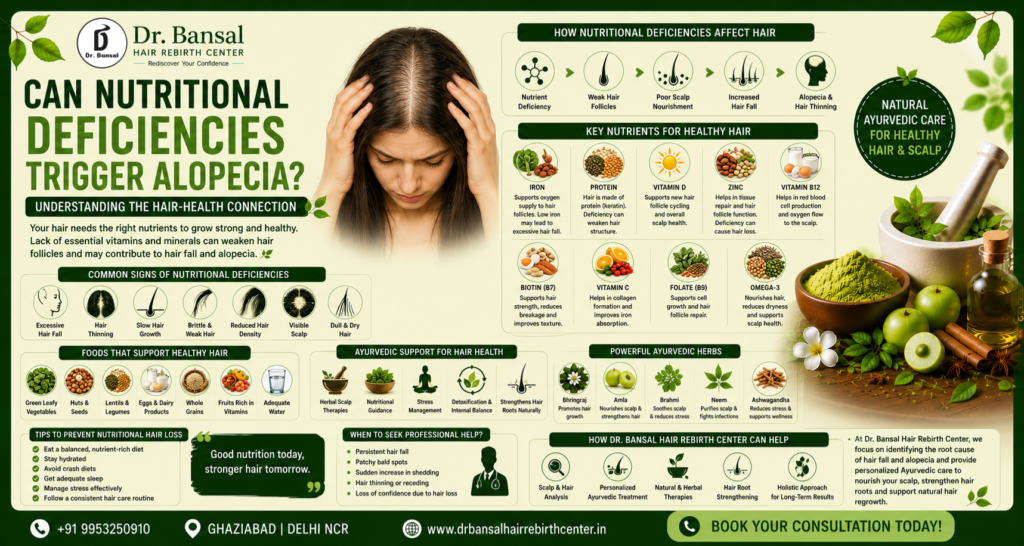
Healthy hair is often a reflection of overall health. While many people focus on external hair care products, one of the most important factors influencing hair growth comes from within the body. Hair follicles require a steady supply of nutrients to remain healthy and support strong hair growth.
Thank you for reading this post, don't forget to subscribe!When the body lacks essential vitamins, minerals, and proteins, hair follicles may become weaker over time. This is why the connection between nutritional deficiencies and alopecia has become an important topic among individuals experiencing excessive hair fall and patchy hair loss.
At Dr. Bansal Hair Rebirth Center, many patients dealing with hair thinning and alopecia are surprised to learn that nutritional imbalances may be contributing to their hair concerns. Understanding this connection can help individuals take proactive steps toward improving scalp health and supporting natural hair growth.
What Is Alopecia?
Alopecia is a condition that causes hair loss from the scalp or other parts of the body. The severity can vary from mild thinning to more noticeable bald patches.
Common types of alopecia include:
- Alopecia Areata
- Alopecia Totalis
- Alopecia Universalis
Although genetics, stress, and immune-related factors may contribute to alopecia, nutritional deficiencies and alopecia are increasingly being studied together because proper nutrition plays a major role in maintaining healthy hair follicles.
Why Nutrition Matters for Hair Growth
Hair follicles are among the most active structures in the body. To produce healthy hair strands continuously, follicles require adequate nutrients and oxygen.
A balanced diet helps support:
- Hair follicle strength
- Scalp health
- Hair growth cycles
- Hair thickness
- Overall hair quality
When nutritional deficiencies develop, hair follicles may not receive the support they need to function optimally.
Understanding the Link Between Nutritional Deficiencies and Alopecia
The relationship between nutritional deficiencies and alopecia is based on how nutrients support follicle activity.
Hair follicles depend on nutrients for:
- Cell growth
- Tissue repair
- Protein production
- Blood circulation
- Scalp nourishment
Without sufficient nutrients, follicles may become weaker, resulting in increased shedding, slower growth, and reduced hair density.
Iron Deficiency and Hair Loss
Iron is one of the most important minerals for healthy hair.
Iron helps transport oxygen throughout the body, including to the hair follicles. When iron levels become low, follicles may receive less oxygen and nourishment.
Possible signs include:
- Increased hair shedding
- Fatigue
- Weakness
- Hair thinning
Many individuals experiencing hair loss due to nutritional deficiency are found to have inadequate iron levels.
Protein Deficiency and Hair Health
Hair is primarily made of a protein called keratin.
If the body does not receive enough dietary protein, it may prioritize essential organs over hair production. As a result, hair growth may slow down and hair fall may increase.
Protein-rich foods often play an important role in maintaining healthy hair structure.
Vitamin D and Hair Follicles
Vitamin D supports several biological functions related to cell growth and tissue maintenance.
Research suggests that healthy vitamin D levels may support normal follicle function and overall scalp health.
Low vitamin D levels have been associated with various hair concerns in some individuals.
Zinc and Hair Growth
Zinc helps support:
- Cell repair
- Tissue growth
- Immune function
- Follicle maintenance
Insufficient zinc intake may contribute to brittle hair and increased shedding.
Vitamin B12 and Hair Wellness
Vitamin B12 supports healthy red blood cells and oxygen transport throughout the body.
Low B12 levels may affect scalp nourishment and overall hair health.
Maintaining adequate B12 levels may support healthy follicle function.
Common Symptoms of Nutritional Deficiencies and Alopecia
People experiencing nutritional deficiencies and alopecia may notice:
- Excessive hair fall
- Hair thinning
- Slow hair growth
- Reduced hair density
- Weak hair strands
- Brittle hair
- Increased scalp visibility
- Dull hair appearance
These symptoms often develop gradually over time.
Who Is More Likely to Develop Nutritional Deficiencies?
Certain individuals may be more vulnerable to nutritional imbalances.
This may include:
- People following restrictive diets
- Individuals with poor eating habits
- People experiencing chronic stress
- Those with digestive concerns
- Individuals recovering from illness
Regular attention to nutrition can help support overall wellness and hair health.
Ayurvedic Perspective on Hair and Nutrition
Ayurveda has long emphasized the importance of proper nourishment for healthy hair growth.
According to Ayurvedic principles, strong hair is often supported by balanced nutrition, healthy digestion, and overall body wellness.
At Dr. Bansal Hair Rebirth Center, Ayurvedic approaches focus on supporting scalp health naturally while encouraging healthy lifestyle practices.
Ayurvedic Therapies That Support Hair Wellness
Herbal Scalp Therapies
Natural therapies help support scalp nourishment and healthy circulation.
Personalized Lifestyle Guidance
Healthy routines may contribute to long-term scalp wellness.
Nutritional Recommendations
Balanced eating habits help support healthy follicles and overall health.
Stress Management Support
Yoga, meditation, and relaxation practices may support emotional well-being.
Ayurvedic Herbs Commonly Used for Hair Care
Bhringraj
Traditionally associated with healthy hair support.
Amla
Rich in nutrients and antioxidants that support scalp wellness.
Brahmi
Often used to support relaxation and overall wellness.
Ashwagandha
Commonly associated with stress management support.
Neem
Supports scalp cleanliness and hygiene.
Foods That Support Healthy Hair
A balanced diet may include:
- Green leafy vegetables
- Fresh fruits
- Nuts and seeds
- Lentils and legumes
- Protein-rich foods
- Whole grains
- Adequate water intake
Consistent healthy eating habits may support stronger hair over time.
When Should You Seek Professional Guidance?
Consider professional evaluation if you notice:
- Persistent hair fall
- Patchy hair loss
- Progressive thinning
- Sudden increase in shedding
- Reduced hair density
Early assessment may help identify contributing factors and support better scalp care planning.
How Dr. Bansal Hair Rebirth Center Helps
Dr. Bansal Hair Rebirth Center provides personalized Ayurvedic care for individuals experiencing alopecia, hair thinning, and scalp-related concerns.
The clinic focuses on:
- Scalp analysis
- Ayurvedic therapies
- Hair root strengthening
- Natural scalp care
- Holistic wellness support
Patients from Ghaziabad, Delhi NCR, and surrounding regions visit the clinic for individualized hair care solutions.
Contact us. https://drbansalhairrebirthcenter.in/contact-us/
Final Thoughts
The connection between nutritional deficiencies and alopecia highlights the importance of looking beyond external hair care products. Hair follicles require proper nourishment to remain healthy and support consistent hair growth.
By maintaining a balanced diet, supporting scalp health, managing stress, and following healthy lifestyle habits, individuals can create a stronger foundation for healthier hair. Combined with personalized Ayurvedic care, these steps may help support long-term scalp wellness and natural hair growth.
Contact Details
Dr. Bansal Hair Rebirth Center
MZ-07/08, Sumedha Tower, RDC, Raj Nagar, Ghaziabad
Phone: +91-9953250910
Website: https://drbansalhairrebirthcenter.in/
know more about us – https://vedantamayurveda.in/