
Modern lifestyles have changed sleeping habits for many people. Late-night screen time, work pressure, stress, irregular schedules, and unhealthy routines are affecting sleep quality more than ever before. While many people know that poor sleep affects energy and mental health, very few realize that it may also affect hair health significantly.
Thank you for reading this post, don't forget to subscribe!Today, many individuals experiencing excessive hair fall and alopecia ask whether poor sleep could be one of the hidden reasons behind their scalp problems. The answer is yes — unhealthy sleep patterns may disturb body recovery, weaken hair roots, and affect the natural hair growth cycle over time.
At Dr. Bansal Hair Rebirth Center, many patients dealing with alopecia and hair thinning also report poor sleep habits and high stress levels. Personalized Ayurvedic scalp care focuses on improving overall wellness while supporting natural hair regrowth and healthier scalp recovery.
What Is Alopecia?
Alopecia is a condition that causes excessive hair loss from the scalp or other areas of the body. It may appear in different forms such as:
- Alopecia Areata – patchy hair loss
- Alopecia Totalis – complete scalp hair loss
- Alopecia Universalis – loss of body hair
Some individuals experience gradual hair thinning, while others may suddenly notice bald patches or rapid hair shedding.
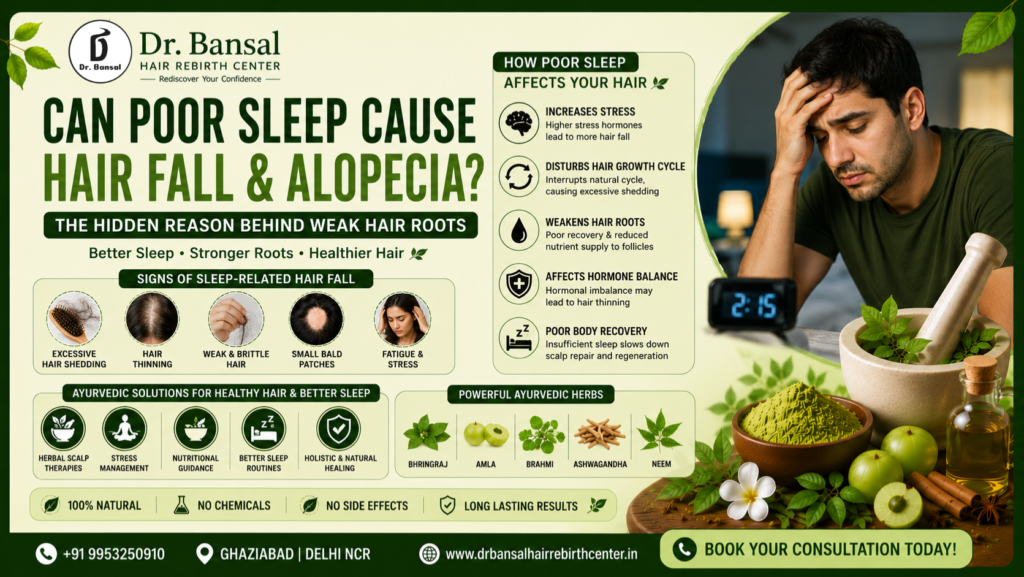
How Sleep Affects Hair Growth
Hair growth is closely connected with the body’s recovery system. During sleep, the body repairs damaged cells, balances hormones, improves blood circulation, and supports healthy tissue function.
When sleep quality becomes poor for long periods, the body may struggle to maintain healthy scalp function and proper hair growth cycles.
Healthy sleep supports:
- Hair follicle nourishment
- Hormonal balance
- Stress control
- Blood circulation
- Scalp recovery
Lack of proper sleep may weaken these functions and gradually affect hair health.
Can Poor Sleep Cause Hair Fall?
Yes, poor sleep and hair fall are often connected. Lack of quality sleep may affect both physical and emotional health, which can indirectly weaken scalp condition and hair roots.
1. Increased Stress Hormones
Poor sleep increases stress-related hormones in the body. Long-term stress may disturb the hair growth cycle and increase excessive shedding.
2. Weak Body Recovery
The body repairs damaged cells during sleep. Insufficient sleep may slow down scalp recovery and follicle repair.
3. Hormonal Imbalance
Sleep affects hormone regulation. Imbalanced hormones may contribute to thinning hair and hair fall.
4. Reduced Blood Circulation
Poor sleep may negatively affect blood circulation, reducing the supply of nutrients to hair follicles.
5. Nutritional Impact
People with poor sleep often develop unhealthy eating habits, dehydration, and nutritional deficiencies that may weaken hair roots.
Common Symptoms Linked with Poor Sleep and Hair Fall
People experiencing sleep-related hair problems may notice:
- Excessive hair shedding
- Hair thinning
- Weak hair roots
- Dry scalp
- Dull hair texture
- Increased stress and fatigue
- Slow hair recovery
- Small bald patches in some cases
Ignoring these symptoms may gradually worsen scalp condition over time.
Other Lifestyle Factors That Affect Hair Health
Although poor sleep is a major factor, other unhealthy habits may also contribute to alopecia and hair fall.
Stress and Anxiety
Emotional stress is one of the biggest triggers behind hair fall today.
Poor Nutrition
Hair requires nutrients such as protein, iron, zinc, and vitamins for healthy growth.
Excessive Chemical Use
Frequent coloring, rebonding, and heat styling may damage weak hair roots.
Pollution and Dust
Environmental pollution may affect scalp hygiene and follicle health.
Lack of Scalp Care
Ignoring scalp cleanliness and hydration may weaken hair follicles gradually.
Can Hair Fall from Poor Sleep Be Managed Naturally?
Many people today prefer natural scalp care because it focuses on improving long-term hair health instead of temporary cosmetic solutions.
Natural treatment approaches may help:
- Improve scalp nourishment
- Strengthen weak hair roots
- Support stress management
- Improve blood circulation
- Support healthier hair growth naturally
Although results vary depending on individual scalp condition, healthy routines and consistent care often improve recovery.
Ayurvedic Treatment for Hair Fall and Alopecia
Ayurveda follows a holistic approach toward hair care and wellness. Instead of focusing only on visible hair fall, Ayurvedic treatment aims to improve internal balance and scalp nourishment naturally.
At Dr. Bansal Hair Rebirth Center, Ayurvedic treatment plans may include:
Herbal Scalp Therapies
Natural herbal oils and therapies help nourish follicles and improve scalp circulation.
Stress Management Support
Yoga, meditation, and healthy routines may help improve sleep quality and emotional balance.
Nutritional Guidance
Balanced nutrition supports healthier scalp recovery and stronger hair growth.
Lifestyle Improvement Support
Healthy daily habits, hydration, and reduced chemical exposure may improve long-term scalp health.
Ayurvedic Herbs Commonly Used for Hair Care
Bhringraj
Bhringraj supports healthy hair growth and scalp nourishment naturally.
Amla
Amla contains nutrients and antioxidants that help improve scalp condition.
Brahmi
Brahmi may support stress reduction and better mental relaxation.
Neem
Neem supports healthy scalp hygiene and cleanliness.
Ashwagandha
Ashwagandha is commonly used for stress management and overall wellness support.
Healthy Sleep Habits for Better Hair Health
Follow a Fixed Sleep Schedule
Sleeping and waking up at consistent times may improve body recovery.
Reduce Screen Time Before Bed
Excessive mobile or laptop use before sleep may affect sleep quality.
Stay Hydrated
Proper hydration supports healthy scalp function and circulation.
Eat Nutritious Food
Balanced meals support healthier hair roots and overall wellness.
Practice Relaxation Techniques
Meditation and breathing exercises may help improve sleep quality naturally.
Importance of Early Hair Treatment
Many people ignore hair fall during the early stages, assuming it is temporary. However, untreated scalp problems may gradually worsen over time.
Early scalp analysis and professional care may help:
- Identify the root cause
- Improve scalp recovery
- Reduce excessive hair fall
- Support healthier hair regrowth
Timely treatment often improves long-term scalp health.
How Dr. Bansal Hair Rebirth Center Helps
Dr. Bansal Hair Rebirth Center offers personalized Ayurvedic treatment for alopecia and hair fall designed to improve scalp health naturally. The clinic focuses on herbal scalp therapies, advanced scalp analysis, healthy lifestyle guidance, and holistic hair care solutions.
Patients from Ghaziabad, Delhi NCR, and nearby areas visit the clinic for scalp care, alopecia treatment, and natural hair regrowth support.
Contact us – https://drbansalhairrebirthcenter.in/contact-us/
Final Thoughts
Poor sleep and hair fall are more connected than many people realize. Lack of proper sleep may weaken body recovery, disturb hormone balance, increase stress, and gradually affect scalp health over time.
The good news is that healthy sleep routines, stress management, proper scalp care, balanced nutrition, and Ayurvedic treatment may help support healthier hair growth naturally. Early attention and consistent scalp care often play an important role in improving long-term scalp health and confidence.
Contact Details
Dr. Bansal Hair Rebirth Center
MZ-07/08, Sumedha Tower, RDC, Raj Nagar, Ghaziabad
Phone: +91-9953250910
Website: https://drbansalhairrebirthcenter.in/
Know more about us on – https://vedantamayurveda.in/