
One of the most common questions asked by people living with alopecia is whether their hair will grow back. It is a natural concern because hair loss often affects confidence, appearance, and emotional well-being. While some individuals notice visible improvement over time, others experience slower progress or continued hair loss.
The reality is that hair regrowth in alopecia varies from person to person. Several factors influence how hair follicles respond and whether healthy hair growth returns. Understanding these factors can help individuals set realistic expectations and focus on long-term scalp health.
At Dr. Bansal Hair Rebirth Center, many patients seek guidance regarding alopecia recovery and natural hair regrowth. Each person’s scalp condition is unique, which is why personalized evaluation and care are important.
Understanding Alopecia
Alopecia is a condition that causes hair loss from the scalp and, in some cases, other parts of the body.
Common forms include:
- Alopecia Areata
- Alopecia Totalis
- Alopecia Universalis
Some people experience small bald patches, while others may notice widespread hair loss. The extent of hair loss often influences the possibility and speed of hair regrowth in alopecia.
Can Hair Grow Back After Alopecia?
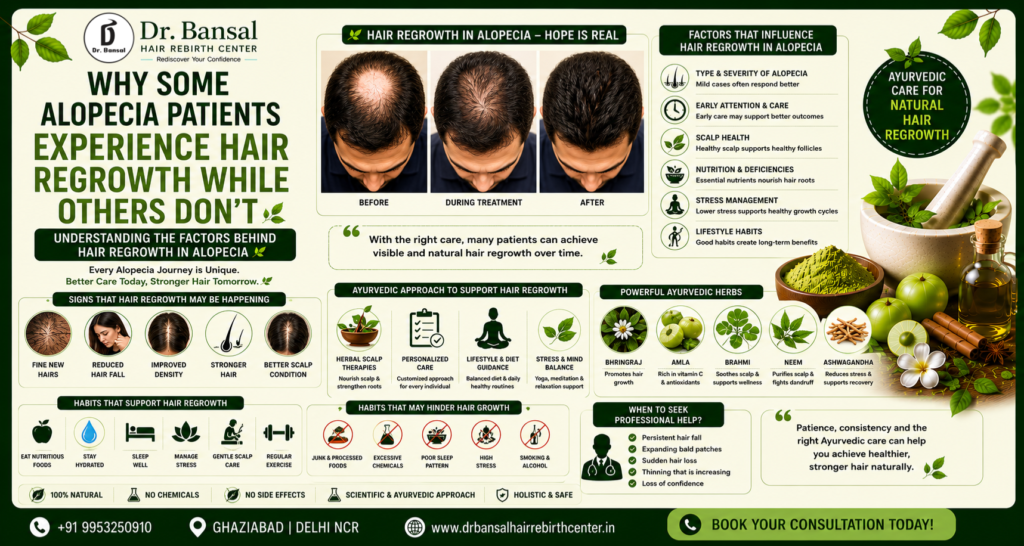
In many cases, hair regrowth in alopecia is possible. However, the process can vary significantly.
Some individuals notice hair returning within months, while others may experience a much longer recovery period. Hair may initially grow back as fine or lighter-colored strands before becoming thicker over time.
The response depends on several factors related to follicle health, scalp condition, and overall wellness.
Factor 1: Type of Alopecia
Different forms of alopecia affect hair follicles in different ways.
For example:
Alopecia Areata
This condition often appears as small bald patches. Some individuals with Alopecia Areata experience noticeable hair regrowth in alopecia when scalp health improves.
Alopecia Totalis
This form involves complete scalp hair loss and may require more extensive management.
Alopecia Universalis
This condition affects hair across the body and may have a different recovery pattern.
The type of alopecia plays a significant role in determining how hair follicles respond over time.
Factor 2: Early Attention to Hair Loss
People who seek guidance early often have a better understanding of their scalp condition.
Early evaluation may help:
- Monitor changes
- Improve scalp care
- Address contributing factors
- Support healthier follicles
Although every case is unique, paying attention to hair loss early may support better long-term scalp wellness.
Factor 3: Scalp Health
Healthy follicles require a healthy scalp environment.
Hair regrowth in alopecia may be influenced by:
- Scalp cleanliness
- Blood circulation
- Moisture balance
- Follicle nourishment
Poor scalp health may make it more difficult for follicles to function effectively.
Factor 4: Nutrition
Hair follicles require nutrients to support healthy growth.
Important nutrients include:
- Protein
- Iron
- Zinc
- Vitamin D
- Vitamin B12
Nutritional deficiencies may contribute to weaker follicles and slower hair recovery.
Factor 5: Stress Levels
Stress is frequently associated with changes in hair growth patterns.
Long-term emotional stress may affect:
- Hair growth cycles
- Hormonal balance
- Overall wellness
Managing stress may support healthier conditions for hair regrowth in alopecia.
Factor 6: Lifestyle Habits
Daily habits influence overall scalp and hair health.
Healthy routines may include:
- Adequate sleep
- Balanced nutrition
- Regular exercise
- Proper hydration
- Consistent scalp care
Small improvements in lifestyle often contribute to better long-term wellness.
Signs That Hair Regrowth May Be Occurring
People experiencing hair regrowth in alopecia may notice:
- Fine new hairs in bald areas
- Reduced hair shedding
- Improved hair density
- Stronger hair texture
- Better scalp condition
Hair growth often happens gradually, making patience important during the process.
Ayurvedic Perspective on Hair Regrowth
Ayurveda focuses on supporting overall wellness while encouraging scalp nourishment naturally.
Rather than concentrating solely on visible hair loss, Ayurvedic care considers:
- Internal balance
- Nutritional support
- Scalp health
- Lifestyle habits
- Stress management
This holistic approach aims to create a healthier environment for hair follicles.
Ayurvedic Therapies That Support Scalp Wellness
At Dr. Bansal Hair Rebirth Center, personalized Ayurvedic care may include:
Herbal Scalp Therapies
Designed to support scalp nourishment and circulation.
Lifestyle Guidance
Healthy daily routines that support long-term wellness.
Nutritional Recommendations
Balanced nutrition may support healthy follicle function.
Stress Management Support
Yoga, meditation, and relaxation practices may contribute to emotional well-being.
Ayurvedic Herbs Commonly Used for Hair Care
Bhringraj
Traditionally used to support healthy hair growth.
Amla
Known for its nutritional and antioxidant properties.
Brahmi
Often associated with relaxation and scalp wellness.
Neem
Supports scalp cleanliness and hygiene.
Ashwagandha
Commonly used to support overall wellness and stress management.
Daily Habits That Support Hair Regrowth
Individuals focusing on hair regrowth in alopecia may benefit from:
Maintaining a Balanced Diet
Include fruits, vegetables, protein-rich foods, and adequate hydration.
Protecting the Scalp
Avoid excessive chemical treatments and harsh hair products.
Getting Quality Sleep
Sleep supports normal body recovery and overall wellness.
Managing Stress
Regular relaxation practices may help maintain emotional balance.
Following Consistent Scalp Care
Healthy scalp habits support follicle wellness over time.
When Should You Seek Professional Guidance?
Consider professional evaluation if you experience:
- Persistent hair loss
- Bald patches
- Rapid thinning
- Reduced hair density
- Ongoing scalp concerns
Early assessment may help identify contributing factors and create a personalized care plan.
How Dr. Bansal Hair Rebirth Center Helps
Dr. Bansal Hair Rebirth Center provides personalized Ayurvedic care for individuals experiencing alopecia and hair fall concerns.
The clinic focuses on:
- Scalp analysis
- Herbal therapies
- Hair root strengthening
- Natural scalp care
- Holistic wellness support
Patients from Ghaziabad, Delhi NCR, and surrounding regions visit the clinic for individualized hair and scalp care solutions.
Contact us. https://drbansalhairrebirthcenter.in/contact-us/
Final Thoughts
Hair regrowth in alopecia depends on many factors, including the type of alopecia, scalp health, nutrition, stress levels, and lifestyle habits. While every person’s journey is different, maintaining healthy routines and supporting overall scalp wellness may help create better conditions for hair growth.
Understanding the factors that influence recovery can help individuals make informed decisions and focus on long-term hair and scalp health.
Contact Details
Dr. Bansal Hair Rebirth Center
MZ-07/08, Sumedha Tower, RDC, Raj Nagar, Ghaziabad
Phone: +91-9953250910
Website: https://drbansalhairrebirthcenter.in/
know more about us – https://vedantamayurveda.in/