
Discovering a bald patch on your scalp can be alarming. For many people, the first question that comes to mind is, “Will my hair grow back naturally?” If you have recently been diagnosed with Alopecia Areata, you are not alone in asking this question.
Thank you for reading this post, don't forget to subscribe!One of the unique aspects of Alopecia Areata is that it behaves differently from person to person. Some individuals experience a small patch of hair loss that improves over time, while others may notice recurring episodes or more extensive hair loss. Because of this unpredictability, understanding how Alopecia Areata works can help you set realistic expectations and make informed decisions about your hair health.
In this guide, we’ll explore whether Alopecia Areata can go away on its own, what factors may influence recovery, and when it is important to seek professional guidance.
What Is Alopecia Areata?
Alopecia Areata is a condition that causes hair loss, often appearing as round or oval patches on the scalp. In some cases, it may also affect:
- Eyebrows
- Eyelashes
- Beard area
- Other parts of the body
The condition can develop at any age and affects both men and women.
One reason Alopecia Areata receives so much attention is because the hair loss can occur suddenly, sometimes within a few days or weeks.
Can Alopecia Areata Go Away Naturally?
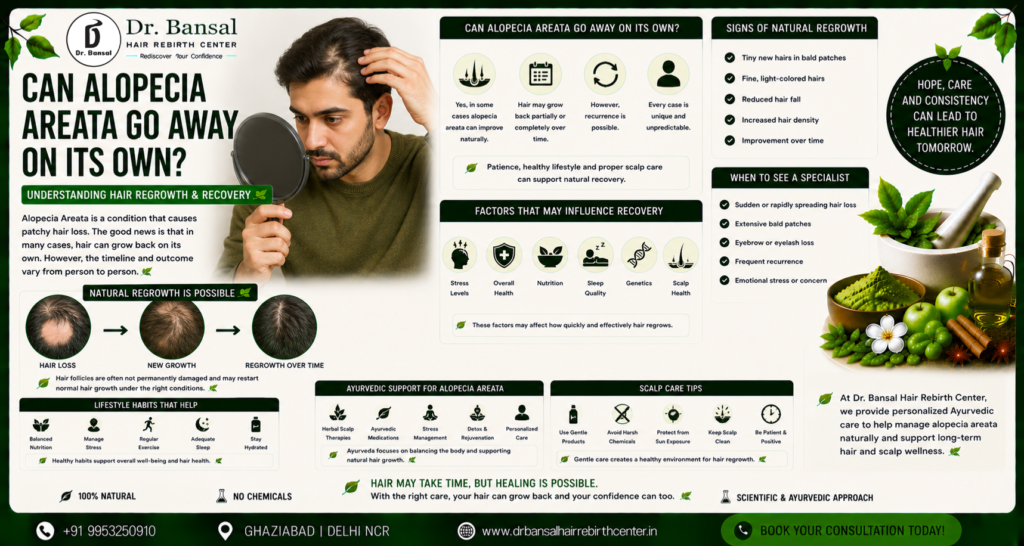
The simple answer is that in some cases, yes, Alopecia Areata may improve without active intervention.
Many individuals experience natural hair regrowth after a period of time. Hair may begin returning in affected areas, sometimes appearing as fine or lighter-colored strands before gradually becoming thicker.
However, it is important to understand that every case is different. While some people experience spontaneous regrowth, others may continue to experience hair loss or recurring episodes.
Why Does Hair Sometimes Grow Back?
Hair follicles affected by Alopecia Areata are often not permanently damaged.
This means that under certain circumstances, the follicles may resume normal hair production.
Many people notice:
- Partial regrowth
- Complete regrowth
- Regrowth followed by future shedding
- Cycles of improvement and recurrence
Because the condition behaves differently for each person, predicting exactly how hair will respond is difficult.
How Long Does Regrowth Take?
One of the most common questions about Alopecia Areata involves timing.
Unfortunately, there is no universal timeline.
Hair growth is naturally a slow process, and recovery can vary significantly between individuals.
Factors that may influence regrowth include:
- Extent of hair loss
- Overall health
- Lifestyle habits
- Stress levels
- Scalp condition
- Individual hair growth patterns
Patience is often an important part of managing Alopecia Areata.
Can Alopecia Areata Return After Hair Regrows?
Yes, it can.
One of the challenges associated with Alopecia Areata is that hair regrowth does not always mean the condition is permanently resolved.
Some individuals experience:
- One isolated episode
- Occasional recurrence
- Multiple episodes over time
Because recurrence is possible, ongoing scalp care and monitoring are often recommended.
Signs That Hair May Be Growing Back
People managing Alopecia Areata often look closely for signs of improvement.
Potential indicators of regrowth may include:
- Fine hairs appearing in bald patches
- Short new strands
- Reduced expansion of patches
- Increased hair density over time
Hair may initially appear lighter in color before gradually returning to its normal appearance.
What Factors May Affect Alopecia Areata?
Researchers continue studying the condition, but several factors are commonly discussed in relation to Alopecia Areata.
These may include:
Emotional Stress
Periods of significant stress are often reported before the onset of hair loss.
Family History
Some individuals may have a genetic predisposition.
Overall Health
General wellness can influence many aspects of hair and scalp health.
Lifestyle Habits
Sleep, nutrition, hydration, and stress management may contribute to overall well-being.
Can Lifestyle Changes Help?
While lifestyle changes alone may not determine whether Alopecia Areata resolves, healthy habits can support overall wellness.
Helpful practices may include:
Balanced Nutrition
Focus on:
- Protein-rich foods
- Fruits
- Vegetables
- Healthy fats
- Adequate hydration
Quality Sleep
Sleep supports recovery and overall health.
Stress Management
Many individuals benefit from:
- Yoga
- Meditation
- Deep breathing exercises
- Regular physical activity
These habits contribute to emotional and physical well-being.
When Should You See a Specialist?
Even though some cases of Alopecia Areata may improve naturally, professional evaluation is still valuable.
Consider consulting a specialist if you experience:
- Sudden hair loss
- Expanding bald patches
- Eyebrow or eyelash loss
- Extensive shedding
- Recurrent episodes
- Concerns about scalp health
Early assessment can help you better understand your condition and available management options.
Ayurvedic Perspective on Alopecia Areata
Ayurveda approaches hair health from a holistic perspective.
According to Ayurvedic principles, healthy hair is influenced by:
- Nutrition
- Digestion
- Sleep
- Stress management
- Lifestyle balance
Rather than focusing only on visible symptoms, Ayurvedic care often aims to support overall wellness and scalp health.
This broader approach may help individuals develop sustainable habits that support long-term well-being.
Supporting Hair and Scalp Health Naturally
People living with Alopecia Areata can benefit from simple daily habits such as:
- Gentle hair care
- Scalp protection from excessive sun exposure
- Avoiding harsh chemical treatments
- Maintaining a balanced routine
- Managing stress effectively
These practices may help create a healthier environment for the scalp.
How Dr. Bansal Hair Rebirth Center Helps
At Dr. Bansal Hair Rebirth Center, patients receive personalized care tailored to their specific concerns and hair-loss patterns.
The clinic focuses on:
- Detailed scalp assessments
- Personalized Ayurvedic consultations
- Herbal scalp therapies
- Lifestyle recommendations
- Long-term hair wellness support
Every care plan is designed according to the individual’s needs and goals.
Contact us. https://drbansalhairrebirthcenter.in/contact-us/
Final Thoughts
One of the most encouraging aspects of Alopecia Areata is that hair regrowth can occur in some individuals, sometimes even without intervention. However, the condition remains unpredictable, and outcomes vary from person to person.
If you are experiencing Alopecia Areata, it is important to monitor changes carefully, maintain healthy lifestyle habits, and seek professional guidance when needed. Understanding your condition and taking a proactive approach to scalp health can help you navigate the journey with greater confidence and peace of mind.
Contact Details
Dr. Bansal Hair Rebirth Center
MZ-07/08, Sumedha Tower, RDC, Raj Nagar, Ghaziabad
Phone: +91-9953250910
Website: https://drbansalhairrebirthcenter.in/
know more about us – https://vedantamayurveda.in/