
Being diagnosed with Alopecia Areata can bring many emotions and even more questions. For some people, it begins with a small bald patch on the scalp. For others, hair loss may progress more quickly and create uncertainty about what happens next.
Thank you for reading this post, don't forget to subscribe!One of the most important steps after noticing symptoms or receiving a diagnosis is having an open conversation with a healthcare professional. However, many patients arrive at appointments unsure of what questions to ask. As a result, they may leave without fully understanding their condition or the options available to them.
If you are preparing for a consultation, this guide will help you understand the most important questions to ask about Alopecia Areata and how these discussions can help you make informed decisions about your hair and scalp health.
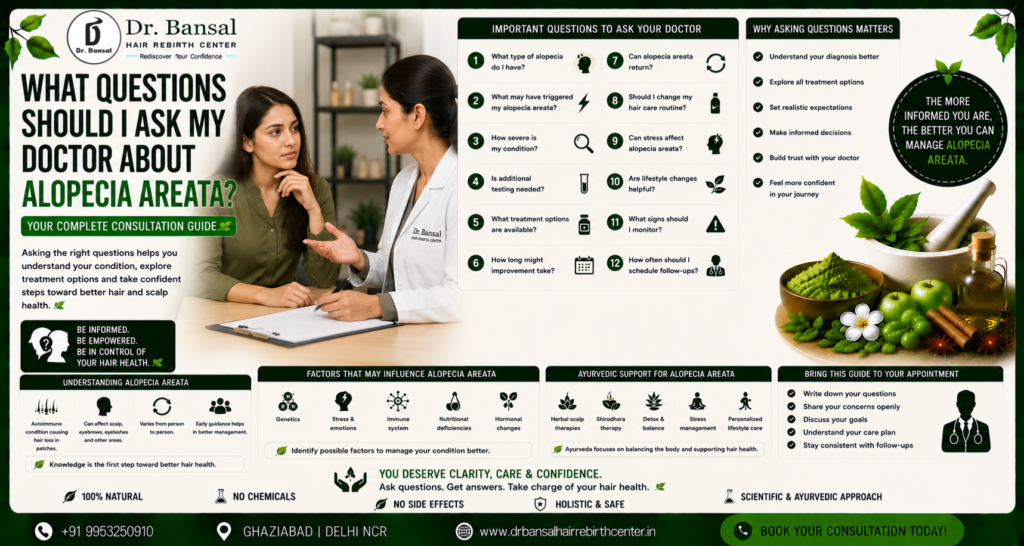
Understanding Alopecia Areata
Before discussing questions, it’s helpful to understand what Alopecia Areata is.
Alopecia Areata is a condition that causes hair loss, often appearing as round or patchy areas on the scalp. In some cases, it may also affect eyebrows, eyelashes, beard areas, or other parts of the body.
The condition affects people differently. Some experience limited hair loss, while others may notice more extensive changes over time.
Because every case is unique, asking the right questions can help you better understand your individual situation.
Question 1: What Type of Alopecia Do I Have?
Hair loss can occur for many reasons.
Ask your doctor:
“Is my condition definitely Alopecia Areata, or could it be another type of hair loss?”
This question is important because hair loss may also result from:
- Pattern hair loss
- Nutritional concerns
- Hormonal changes
- Scalp conditions
- Other medical factors
A proper diagnosis helps guide the most appropriate care plan.
Question 2: What May Have Triggered My Alopecia Areata?
Many patients want to know why their hair loss started.
You may ask:
“Are there any factors that may have contributed to my Alopecia Areata?”
Although every case is different, understanding possible contributing factors can help you better manage your overall health.
Question 3: How Severe Is My Condition?
Not all cases of Alopecia Areata progress in the same way.
Ask:
“How extensive is my hair loss, and what does it mean for my scalp health?”
This discussion can help establish realistic expectations and create a personalized management plan.
Question 4: Is Additional Testing Needed?
Sometimes your doctor may recommend further evaluation.
You might ask:
“Do I need any additional tests to better understand my Alopecia Areata?”
Additional assessments may help rule out other factors that could be affecting hair health.
Question 5: What Treatment Options Are Available?
One of the most common questions involves treatment.
Ask:
“What options are available for managing Alopecia Areata?”
This allows you to discuss:
- Professional treatments
- Scalp care strategies
- Lifestyle recommendations
- Long-term management approaches
Understanding all available options helps you make informed decisions.
Question 6: How Long Might Improvement Take?
Hair growth is often a gradual process.
Ask:
“How long should I expect before seeing changes?”
This question can help establish realistic expectations and reduce unnecessary frustration.
Question 7: Can Alopecia Areata Return?
Many patients are concerned about recurrence.
You may ask:
“If my hair improves, can Alopecia Areata return in the future?”
Understanding the possibility of recurrence can help you plan for long-term scalp care and monitoring.
Question 8: Should I Change My Hair Care Routine?
Daily habits can influence scalp comfort and hair wellness.
Ask:
“Are there any changes I should make to my hair care routine?”
Your doctor may provide guidance regarding:
- Hair products
- Styling habits
- Scalp care
- Protective measures
Question 9: Can Stress Affect Alopecia Areata?
Stress is one of the most commonly discussed topics among individuals experiencing hair loss.
Ask:
“Can stress influence my Alopecia Areata?”
Managing emotional well-being is often an important part of maintaining overall health.
Question 10: Are Lifestyle Changes Helpful?
Lifestyle factors often play a role in overall wellness.
You may ask:
“Are there any lifestyle changes that may support scalp and hair health?”
Potential topics include:
- Nutrition
- Sleep quality
- Exercise
- Stress management
- Hydration
Question 11: What Signs Should I Monitor?
Understanding what to watch for can help you stay informed about your condition.
Ask:
“What symptoms or changes should I report during follow-up visits?”
Monitoring changes may help guide future decisions.
Question 12: How Often Should I Schedule Follow-Ups?
Regular assessments can be valuable.
Ask:
“How often should my Alopecia Areata be monitored?”
This helps ensure appropriate ongoing care and evaluation.
Why Asking Questions Matters
Many people feel nervous during medical appointments and forget important concerns.
Preparing questions in advance can help you:
- Understand your diagnosis
- Feel more confident
- Participate in decision-making
- Develop realistic expectations
- Build a stronger relationship with your healthcare provider
The more informed you are about Alopecia Areata, the more empowered you may feel throughout your journey.
The Emotional Side of Alopecia Areata
Hair loss can affect more than appearance.
Many individuals experience:
- Anxiety
- Frustration
- Reduced confidence
- Emotional stress
Do not hesitate to discuss emotional concerns during consultations.
Supporting mental well-being is just as important as supporting scalp health.
Ayurvedic Perspective on Alopecia Areata
Ayurveda views hair health as part of overall wellness.
According to Ayurvedic principles, healthy hair may be influenced by:
- Nutrition
- Digestion
- Sleep quality
- Emotional balance
- Daily habits
For this reason, Ayurvedic care often focuses on supporting the whole person rather than only the visible symptoms.
How Dr. Bansal Hair Rebirth Center Helps
At Dr. Bansal Hair Rebirth Center, patients receive personalized care designed around their unique concerns and goals.
The clinic focuses on:
- Detailed scalp assessments
- Personalized Ayurvedic consultations
- Herbal scalp therapies
- Lifestyle recommendations
- Long-term hair wellness support
Every care plan is tailored according to the patient’s condition and needs.
Contact us. https://drbansalhairrebirthcenter.in/contact-us/
Final Thoughts
Receiving a diagnosis of Alopecia Areata can feel overwhelming, but asking the right questions can make a significant difference. Understanding your condition, discussing treatment options, exploring lifestyle factors, and addressing emotional concerns can help you feel more confident and informed.
Before your next appointment, consider writing down the questions discussed in this guide. A well-prepared consultation can help you gain clarity, reduce uncertainty, and take positive steps toward managing Alopecia Areata and supporting your overall hair and scalp health.
Contact Details
Dr. Bansal Hair Rebirth Center
MZ-07/08, Sumedha Tower, RDC, Raj Nagar, Ghaziabad
Phone: +91-9953250910
Website: https://drbansalhairrebirthcenter.in/
know more about us – https://vedantamayurveda.in/