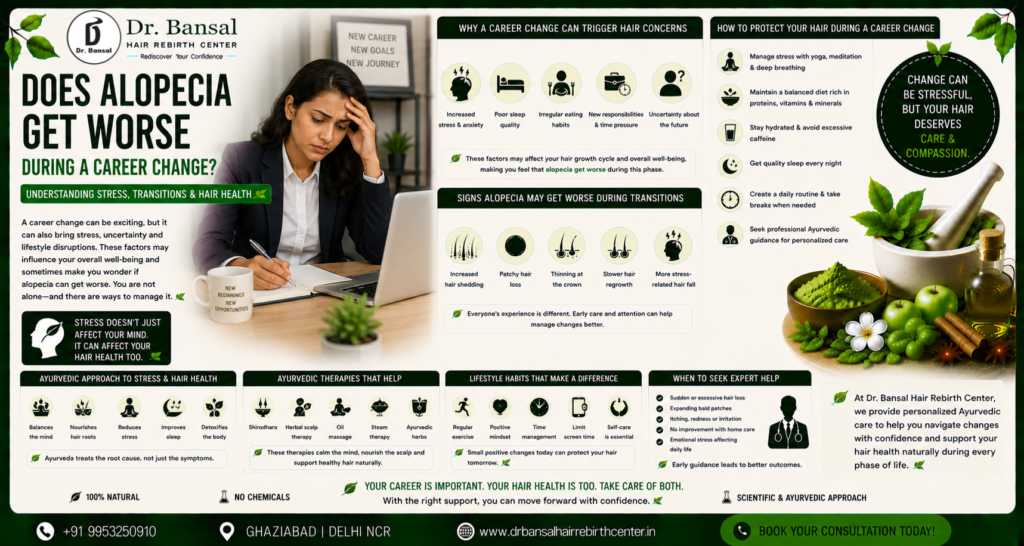
Changing careers can be one of the most exciting periods in a person’s life. A new job may bring better opportunities, higher income, personal growth, and a fresh start. However, career transitions can also create uncertainty, stress, and significant lifestyle changes. For people already experiencing hair loss, a common concern is whether Alopecia Get Worse during these major life events.
Thank you for reading this post, don't forget to subscribe!While a career change does not directly cause alopecia, the emotional and physical effects that often accompany transitions may influence overall well-being and scalp health. Increased stress levels, disrupted sleep patterns, dietary changes, and anxiety about the future can all affect the body in various ways.
Understanding the relationship between career changes and hair health can help individuals take proactive steps to support themselves during periods of transition.
Can Alopecia Really Get Worse During Major Life Changes?
Many people ask whether Alopecia Get Worse when they face significant life events. While the answer varies from person to person, emotional and lifestyle changes can sometimes influence hair health.
Major transitions such as:
- Starting a new job
- Relocating for work
- Changing industries
- Starting a business
- Returning to work after a break
can place additional demands on the body and mind.
For some individuals, these challenges may coincide with increased hair shedding or worsening hair concerns.
Why Career Changes Can Be Stressful
Even positive life changes can create stress.
When beginning a new career path, people often experience:
- Performance pressure
- Financial uncertainty
- Fear of failure
- New responsibilities
- Workplace adaptation
- Social adjustment
These factors may contribute to emotional strain, leading many to wonder whether Alopecia Get Worse during periods of elevated stress.
The Link Between Stress and Hair Health
Stress affects much more than emotions.
Chronic stress may influence:
- Sleep quality
- Eating habits
- Energy levels
- Daily routines
- Overall wellness
Because healthy hair depends on a healthy body, disruptions in these areas may affect scalp health and hair growth cycles.
This is one reason some individuals notice changes in hair condition during demanding career transitions.
Sleep Disruptions During Career Changes
Sleep often becomes one of the first habits affected during a career move.
People may stay awake thinking about:
- Interviews
- New responsibilities
- Relocation plans
- Financial concerns
Poor sleep can contribute to fatigue and reduced overall well-being.
When discussing whether Alopecia Get Worse, sleep quality is an important factor that should not be overlooked.
Changes in Daily Routine
Career changes frequently disrupt established routines.
Examples include:
- Different work schedules
- Longer commuting times
- Irregular meal patterns
- Reduced exercise
- Less personal time
Maintaining healthy routines can become challenging during periods of transition.
Since consistency supports overall wellness, these disruptions may indirectly influence hair health.
Emotional Impact of Career Transitions
A career change can bring mixed emotions.
Many people experience:
- Excitement
- Anxiety
- Uncertainty
- Self-doubt
- Increased pressure
Emotional well-being plays a significant role in overall health.
When individuals ask whether Alopecia Get Worse, emotional stress is often one of the most important contributing factors to consider.
Can Hair Shedding Increase Temporarily?
Some individuals notice increased shedding after particularly stressful periods.
This can sometimes occur:
- Weeks after a stressful event
- During major life transitions
- Following prolonged emotional strain
Not everyone experiences this, but it helps explain why people occasionally associate career changes with worsening hair concerns.
How to Support Hair Health During a Career Change
Fortunately, there are several ways to support overall wellness during periods of professional transition.
Prioritize Sleep
Aim for a regular sleep schedule whenever possible.
Quality sleep supports:
- Recovery
- Mental clarity
- Emotional balance
- Overall health
Maintain Balanced Nutrition
Nutritious meals help support the body’s natural processes.
Focus on:
- Protein-rich foods
- Fresh fruits
- Vegetables
- Healthy fats
- Adequate hydration
Manage Stress Effectively
Healthy stress-management techniques may include:
- Meditation
- Yoga
- Deep breathing exercises
- Walking
- Mindfulness practices
These habits can help maintain emotional well-being during change.
Avoid Comparing Yourself to Others
Career transitions often encourage comparison.
You may see colleagues advancing quickly or adapting faster than expected.
However, comparing your progress to others may increase unnecessary stress.
Protecting mental well-being is important for anyone concerned that Alopecia Get Worse during challenging periods.
Build a Sustainable Routine
A simple daily routine can provide stability during uncertain times.
Consider including:
- Consistent wake-up times
- Regular meals
- Exercise
- Relaxation practices
- Adequate sleep
Even small routines can help reduce stress and support overall health.
When Should You Seek Professional Advice?
If you notice:
- Sudden hair loss
- New bald patches
- Excessive shedding
- Eyebrow or eyelash loss
- Persistent scalp discomfort
it may be helpful to seek professional evaluation.
Not every case of worsening hair loss is related to stress or career changes.
A proper assessment can help identify possible contributing factors.
Ayurvedic Perspective on Stress and Alopecia
Ayurveda views hair health as closely connected to overall balance within the body.
According to Ayurvedic principles, stress may influence:
- Digestion
- Sleep
- Emotional wellness
- Daily routines
For this reason, Ayurvedic care often focuses on supporting the whole person rather than only the scalp.
This holistic approach can be particularly valuable during periods of life transition.
Ayurvedic Practices That May Support Wellness
Traditional Ayurvedic approaches often include:
Shirodhara
A therapy designed to encourage relaxation and mental calmness.
Herbal Scalp Therapies
Used to support scalp comfort and wellness.
Lifestyle Guidance
Personalized recommendations that encourage healthier daily habits.
Yoga and Meditation
Practices commonly recommended to support emotional balance.
These methods aim to improve overall well-being while supporting scalp health.
How Dr. Bansal Hair Rebirth Center Helps
At Dr. Bansal Hair Rebirth Center, every patient receives personalized care tailored to their specific concerns and goals.
The clinic focuses on:
- Detailed scalp assessments
- Personalized Ayurvedic consultations
- Herbal scalp therapies
- Lifestyle recommendations
- Long-term hair wellness support
Each treatment plan is designed according to the individual’s condition and lifestyle.
Contact us. https://drbansalhairrebirthcenter.in/contact-us/
Final Thoughts
A career change is a significant life event that can bring both opportunity and stress. While a new job does not directly cause hair loss, the emotional and lifestyle adjustments that accompany professional transitions may affect overall wellness and sometimes contribute to increased hair concerns.
If you are wondering whether Alopecia Get Worse during a career change, remember that maintaining healthy routines, managing stress, prioritizing sleep, and seeking professional guidance when needed can all support your hair and scalp health. By caring for both your emotional well-being and physical health, you can navigate career transitions with greater confidence and resilience.
Contact Details
Dr. Bansal Hair Rebirth Center
MZ-07/08, Sumedha Tower, RDC, Raj Nagar, Ghaziabad
Phone: +91-9953250910
Website: https://drbansalhairrebirthcenter.in/
know more about us – https://vedantamayurveda.in/