
Finding loose hair in the shower or noticing strands on a towel can be worrying, especially when hair loss starts unexpectedly. Many people begin questioning their washing routine and wonder whether shampooing too frequently, using hot water or rubbing the scalp could be responsible.
Thank you for reading this post, don't forget to subscribe!However, Alopecia Areata is different from ordinary hair shedding caused by breakage or other scalp-related problems. Understanding this distinction can help you avoid unnecessary fear and recognise when sudden hair loss needs professional attention.
In this guide, we will explore the connection between hair washing and hair loss, explain common misconceptions about Alopecia Areata, and discuss how to care for your scalp without making unsupported assumptions about the cause of shedding.
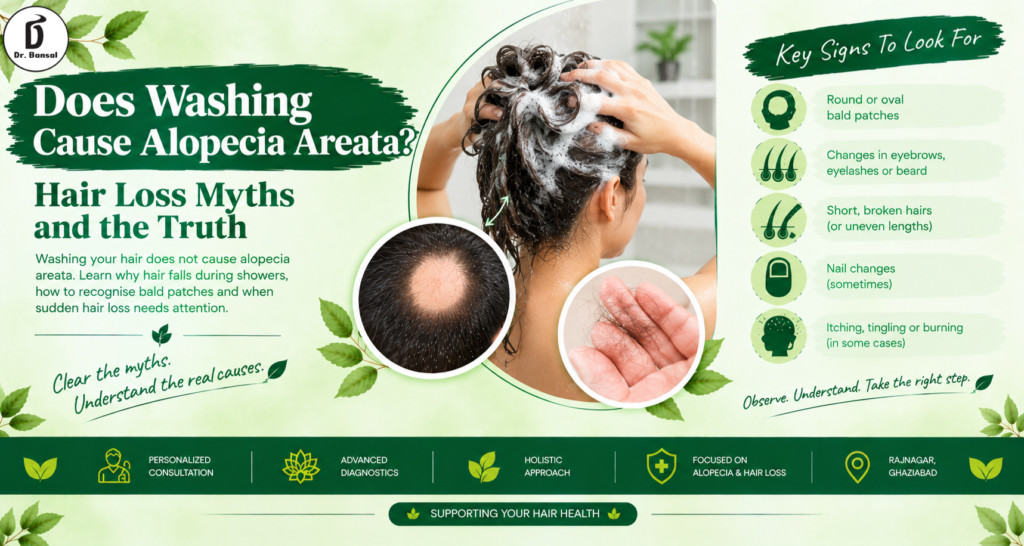
Does Washing Your Hair Cause Alopecia Areata?
The simple answer is no. Washing your hair does not cause Alopecia Areata. This condition develops when the immune system mistakenly targets hair follicles, disrupting the normal hair-growth process.
Hair washing may make loose strands more noticeable because hairs that have already detached or are ready to shed can come away during rinsing. This can create the impression that washing caused the loss, even when the process began earlier.
People with Alopecia Areata may notice hair coming away from affected areas, but the condition itself is not caused by shampooing, ordinary scalp massage or maintaining a regular washing schedule.
If you notice a new bald patch after washing, consider the pattern of hair loss rather than assuming the water or shampoo caused it. A professional assessment can help identify the likely explanation.
Why Does More Hair Seem to Fall Out During Washing?
Seeing hair in the shower does not automatically mean you have a hair-loss condition. Several factors can explain why shedding becomes more visible during washing.
1. Naturally shed hairs collect together
Hair does not shed evenly throughout the day in a way that is always easy to notice. Loose strands may remain caught among other hairs until washing or brushing removes them.
2. Hair tangles can increase visible shedding
Long, curly or easily tangled hair can hold loose strands. During washing, detangling may release several hairs together, making the amount appear greater than it actually is.
3. Rough handling can cause breakage
Pulling through knots, rubbing aggressively with a towel or brushing wet hair forcefully can damage fragile strands. This differs from Alopecia Areata, which involves an immune-related process affecting hair follicles.
4. An underlying condition may already be present
When hair loss continues outside the shower, forms distinct patches or affects other areas of the body, it deserves closer attention. Washing may simply reveal a problem that was already developing.
How Can You Tell Alopecia Areata Apart From Ordinary Shedding?
Recognising the pattern can help you decide whether to seek further guidance. Although symptoms vary, Alopecia Areata often looks different from general shedding.
Signs that may suggest alopecia areata
- One or more smooth, round or oval bald patches.
- Hair loss that appears relatively suddenly.
- New patches developing in different areas of the scalp.
- Changes affecting eyebrows, eyelashes or other body hair in some cases.
- Small changes in nail texture, such as tiny dents.
Signs that may indicate another type of hair loss
- Loose strands appearing throughout the scalp rather than in defined patches.
- Short, uneven strands suggesting hair breakage.
- Noticeable shedding following illness or another significant physical change.
- Scalp scaling, irritation or discomfort that may point towards another scalp problem.
These signs are not enough to make a diagnosis independently. Different conditions can look similar, and Alopecia Areata cannot always be identified from photographs or home observations alone.
Does Shampoo Choice Matter When You Have Hair Loss?
A suitable washing routine can support scalp hygiene, but changing shampoo cannot address every cause of hair loss.
Choose a product appropriate for your scalp and hair type. Wash gently, avoid scratching the scalp with your nails and use your fingertips rather than vigorous rubbing. Detangle carefully and minimise pulling, especially when your hair is wet and more vulnerable to mechanical damage.
If a product causes persistent itching, redness or irritation, stop using it and seek appropriate guidance if the symptoms continue.
Remember that Alopecia Areata is not caused by a dirty scalp. Washing less frequently will not prevent the immune process responsible for this condition, and excessive washing is not a reliable explanation for sudden bald patches.
What Should You Do If You Notice Sudden Hair Loss?
If you suspect Alopecia Areata, start by observing the changes calmly rather than repeatedly touching or pulling at the affected area.
- Note when the hair loss first appeared.
- Observe whether it forms a distinct patch or affects a broader area.
- Take occasional photographs under similar lighting to document changes.
- Notice whether the scalp has scaling, irritation or discomfort.
- Arrange a professional assessment if hair loss is sudden, persistent or spreading.
Avoid repeatedly testing the affected hair by pulling it. This can cause additional breakage and make it harder to understand what is happening.
A professional can review your history, examine the scalp and determine whether further assessment is needed. Early evaluation is particularly useful when bald patches appear quickly or the pattern continues to change.
Can Hair Washing Affect Hair Regrowth?
Normal, gentle washing does not stop healthy hair from growing. Hair growth takes place within follicles beneath the scalp surface, while washing mainly cleans the scalp and hair.
With Alopecia Areata, regrowth depends on the individual course of the condition. Some people experience regrowth in affected areas, while others may develop additional patches or recurring episodes.
Gentle handling can help protect existing strands from avoidable breakage, but it cannot guarantee regrowth or prevent the condition from returning. Be cautious of claims that a particular washing schedule can cure Alopecia Areata.
Why You Need to Visit Dr. Bansal Hair Rebirth Centre
When hair loss appears suddenly, identifying the underlying cause is more useful than repeatedly changing hair-care products. Alopecia Areata can resemble other conditions, so a careful assessment can help clarify what may be happening.
At Dr. Bansal Hair Rebirth Centre, individuals can discuss changes in their hair, scalp concerns and the pattern of their hair loss. The consultation can help determine what further evaluation or personalised hair-care guidance may be appropriate.
Bring details about when the hair loss began, whether you have noticed bald patches and whether similar episodes occurred previously. These observations can support a more informed discussion without assuming that every case has the same cause or outcome.
Contact Dr. Bansal Hair Rebirth Centre
- Address: MZL 07/08, Sumedha Tower, Ansal Building, Raj Nagar, Ghaziabad, Uttar Pradesh 201002
- Phone: +91-9953250910
- Website: https://drbansalhairrebirthcenter.in/
- Contact us. https://drbansalhairrebirthcenter.in/contact-us/.
Frequently Asked Questions
1. Can shampoo trigger alopecia areata?
Ordinary hair washing does not cause Alopecia Areata. However, an irritating product or rough handling may contribute to scalp irritation or hair breakage.
2. Should I stop washing my hair if it is falling out?
Not necessarily. Maintain a gentle routine suited to your scalp. If you notice sudden or unusual hair loss, seek an assessment instead of relying on washing changes alone.
3. Does seeing hair in the shower mean I have alopecia?
No. Some shedding is part of the normal hair cycle. Distinct bald patches or persistent changes need further evaluation to determine the cause.
4. Can alopecia areata affect eyebrows and eyelashes?
Yes. Although the scalp is commonly affected, Alopecia Areata can also involve eyebrows, eyelashes and other hair-bearing areas.
5. Will gentle hair care cure alopecia areata?
Gentle care can reduce avoidable breakage, but it does not cure the immune-related condition. Outcomes and regrowth patterns vary between individuals.
Conclusion
Seeing loose hair during a shower can be unsettling, but washing your hair does not cause Alopecia Areata. The important step is to understand the difference between ordinary shedding, breakage and sudden patchy hair loss.
Follow a gentle hair-care routine, observe changes without repeatedly pulling at your hair and seek professional guidance when hair loss is unusual or persistent. Understanding the cause is the first step towards making informed decisions about your scalp and hair health.
Contact Details
Dr. Bansal Hair Rebirth Center
MZ-07/08, Sumedha Tower, RDC, Raj Nagar, Ghaziabad
Phone: +91 8595340077
Website: https://drbansalhairrebirthcenter.in/
know more about us – https://vedantamayurveda.in/