
Have you noticed more hair on your pillow, comb or bathroom floor during a particular season? Changes in weather, daily routines and hair-care habits can make hair fall more noticeable. However, when shedding suddenly increases or bald patches appear, it is natural to wonder whether something else is happening.
Thank you for reading this post, don't forget to subscribe!Understanding Seasonal Hair Shedding and its differences from alopecia areata can help you decide when to monitor your hair and when to seek professional guidance. Although both concerns involve hair loss, they do not necessarily share the same cause or pattern.
This guide explains what Seasonal Hair Shedding means, how alopecia areata may appear, which warning signs deserve attention and how to care for your scalp without making assumptions.
What Is Seasonal Hair Shedding?
Seasonal Hair Shedding refers to an increase in noticeable hair shedding that some people associate with particular times of the year. Hair naturally moves through growth, transition and resting phases, after which individual strands are released.
Some people notice fluctuations in shedding throughout the year. However, seasonal changes do not explain every episode of increased hair fall, and evidence does not establish a predictable seasonal pattern for everyone.
Factors such as recent illness, nutritional deficiencies, physical stress and changes in routine may also contribute to increased shedding.
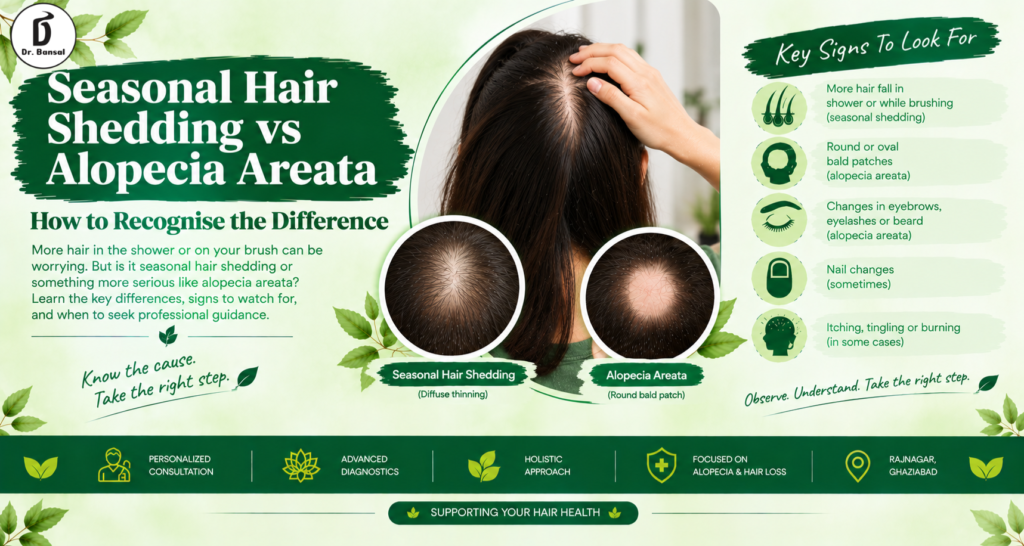
With Seasonal Hair Shedding, loose hairs are often noticed across different areas of the scalp rather than in one clearly defined bald patch. The actual pattern depends on the underlying cause, so persistent or significant changes should not automatically be attributed to the weather.
What Is Alopecia Areata?
Alopecia areata is an immune-related condition in which the body’s immune system mistakenly targets hair follicles. This can interrupt normal hair growth and cause hair to fall out in distinct areas.
Unlike typical Seasonal Hair Shedding, alopecia areata commonly produces smooth, round or oval patches of hair loss. It may affect one small area, several parts of the scalp or, in some cases, eyebrows, eyelashes and other hair-bearing areas.
The condition can develop suddenly, and its course varies from person to person. Some individuals experience regrowth, while others develop additional patches or recurring episodes.
Recognising the difference between Seasonal Hair Shedding and alopecia areata matters because the appearance of hair loss alone cannot always establish its cause.
Seasonal Hair Shedding vs Alopecia Areata: Key Differences
Although both concerns can cause distress, several features may help distinguish them.
1. Pattern of hair loss
Seasonal Hair Shedding is generally associated with loose strands appearing throughout the scalp. Alopecia areata more commonly creates clearly defined patches with noticeably reduced or absent hair.
2. Speed of onset
Mild fluctuations in Seasonal Hair Shedding may become apparent gradually. Alopecia areata can produce visible patches over a relatively short period, although its progression varies.
3. Appearance of the scalp
During Seasonal Hair Shedding, the scalp may look relatively unchanged even when more hairs are coming out. With alopecia areata, affected areas may appear smooth and distinct from the surrounding scalp.
4. Other affected areas
Ordinary shedding usually concerns scalp hair. Alopecia areata can also affect eyebrows, eyelashes, beard hair and other body hair.
5. Duration and recurrence
Seasonal Hair Shedding should not be assumed to be temporary simply because it begins during a particular season. Persistent shedding may have another explanation. Alopecia areata can also improve and recur, making continued observation important.
These differences are useful clues, not a substitute for professional assessment.
What Can Make Hair Shedding More Noticeable?
Not every increase in hair fall is caused by seasonal changes. Several factors can influence the hair-growth cycle or contribute to breakage.
- Recent illness: Hair shedding may increase after a significant physical illness.
- Nutritional deficiencies: Inadequate intake or absorption of certain nutrients can affect hair health.
- Physical or emotional stress: Significant stress may be associated with temporary increased shedding.
- Hair-care practices: Tight hairstyles, vigorous brushing and repeated pulling can contribute to breakage.
- Scalp conditions: Irritation or other scalp problems may cause symptoms that require separate assessment.
When investigating Seasonal Hair Shedding, consider when the changes began and whether anything significant happened during the preceding months. This information can help a professional understand the possible cause.
When Should You Be Concerned About Sudden Hair Loss?
Do not assume that sudden hair loss is simply Seasonal Hair Shedding. Certain changes deserve closer attention, particularly when they continue or become more noticeable.
Look out for:
- New, smooth bald patches on the scalp.
- Hair loss that spreads to additional areas.
- Changes affecting eyebrows or eyelashes.
- Persistent scalp redness, scaling, itching or discomfort.
- Hair shedding that continues or becomes progressively heavier.
- Noticeable hair loss accompanied by other unexplained symptoms.
If you experience these changes, arrange an appropriate assessment. Avoid repeatedly pulling at your hair to test whether it is loose, as this can contribute to breakage and make observations less reliable.
How Can You Support Your Hair and Scalp Health?
A gentle routine can help protect your existing hair, regardless of whether you are experiencing Seasonal Hair Shedding or another hair concern.
Wash your hair according to your scalp’s needs, avoid aggressive rubbing and detangle carefully. Maintain balanced meals, adequate sleep and regular daily routines. Avoid tight hairstyles that repeatedly pull on the roots.
You can also take occasional photographs under similar lighting to record changes in density or the appearance of bald patches.
However, healthy habits cannot guarantee that hair loss will stop. If Seasonal Hair Shedding persists, becomes severe or develops into distinct patches, identifying the underlying cause is more important than repeatedly changing hair-care products.
Why You Need to Visit Dr. Bansal Hair Rebirth Centre
When you notice unexplained hair loss, understanding its pattern and possible cause is an important first step. Seasonal Hair Shedding can resemble other forms of hair loss, while alopecia areata may require closer evaluation because its course can vary.
At Dr. Bansal Hair Rebirth Centre, individuals can discuss changes in hair density, sudden bald patches, scalp concerns and previous episodes of hair loss. A personalised assessment can help clarify what further evaluation or hair-care guidance may be appropriate.
Before your visit, note when the shedding began, whether it affects the whole scalp or particular areas, and whether you have experienced recent illness or other significant changes. This information can support a more informed discussion.
Contact Dr. Bansal Hair Rebirth Centre
- Address: MZL 07/08, Sumedha Tower, Ansal Building, Raj Nagar, Ghaziabad, Uttar Pradesh 201002
- Phone: +91-9953250910
- Website: https://drbansalhairrebirthcenter.in/
- Contact us. https://drbansalhairrebirthcenter.in/contact-us/.
Frequently Asked Questions
1. Is seasonal hair shedding normal?
Some fluctuations in shedding occur naturally, but substantial or persistent hair loss should not automatically be considered seasonal.
2. Can seasonal shedding cause bald patches?
General shedding typically produces a more widespread pattern. Distinct bald patches may indicate another condition, including alopecia areata, and deserve assessment.
3. Does alopecia areata always cause complete baldness?
No. It can affect a small area, multiple patches or larger portions of the scalp. Its severity differs between individuals.
4. How long does seasonal hair shedding last?
There is no single timeline because increased shedding can have different causes. Persistent hair loss should be assessed rather than attributed to a season.
5. Can hair grow back after alopecia areata?
Yes, regrowth is possible, but it cannot be guaranteed. Some people experience recurring hair loss, and outcomes vary.
Conclusion
Seasonal Hair Shedding and alopecia areata can both cause concern, but recognising their different patterns can help you take the right next step. Widespread shedding, distinct bald patches and changes affecting other hair-bearing areas provide useful clues, although they cannot confirm a diagnosis on their own.
Rather than blaming the weather or repeatedly changing your hair-care routine, pay attention to persistent changes and seek professional guidance when necessary. Understanding the cause is the foundation for making informed decisions about your hair and scalp health.
Contact Details
Dr. Bansal Hair Rebirth Center
MZ-07/08, Sumedha Tower, RDC, Raj Nagar, Ghaziabad
Phone: +91 8595340077
Website: https://drbansalhairrebirthcenter.in/
know more about us – https://vedantamayurveda.in/