
Hair loss can look different from one person to another. Some people notice a small, smooth bald patch, while others experience several areas of thinning that gradually become more noticeable. Skin tone, hair texture and existing hair-care habits can influence how easily these changes are noticed.
Thank you for reading this post, don't forget to subscribe!Understanding Alopecia Areata on Dark Skin is important because recognising hair loss should involve more than looking for redness or irritation. The pattern of missing hair, changes in the scalp and the appearance of individual strands can all provide useful clues.
Alopecia areata is an immune-related condition that can affect people of every skin tone. This guide explains the signs to look for, how to distinguish possible warning signs from other scalp concerns and when professional assessment may be helpful.
What Is Alopecia Areata?
Alopecia areata occurs when the immune system mistakenly targets hair follicles, interrupting the normal hair-growth process. It commonly causes sudden, smooth, round or oval patches of hair loss on the scalp, although other hair-bearing areas may also be affected.
Alopecia Areata on Dark Skin follows the same basic disease process as alopecia areata on lighter skin. The condition is not caused by skin colour, and people of every background can experience it.
The scalp within an affected patch may appear relatively smooth without obvious scaling or scarring. However, appearances vary, and other conditions can produce similar symptoms. A new bald patch should therefore not automatically be identified as alopecia areata based on a photograph alone.
How Can Alopecia Areata Look on Darker Skin?
When assessing Alopecia Areata on Dark Skin, it is useful to examine the pattern of hair loss alongside the skin itself.
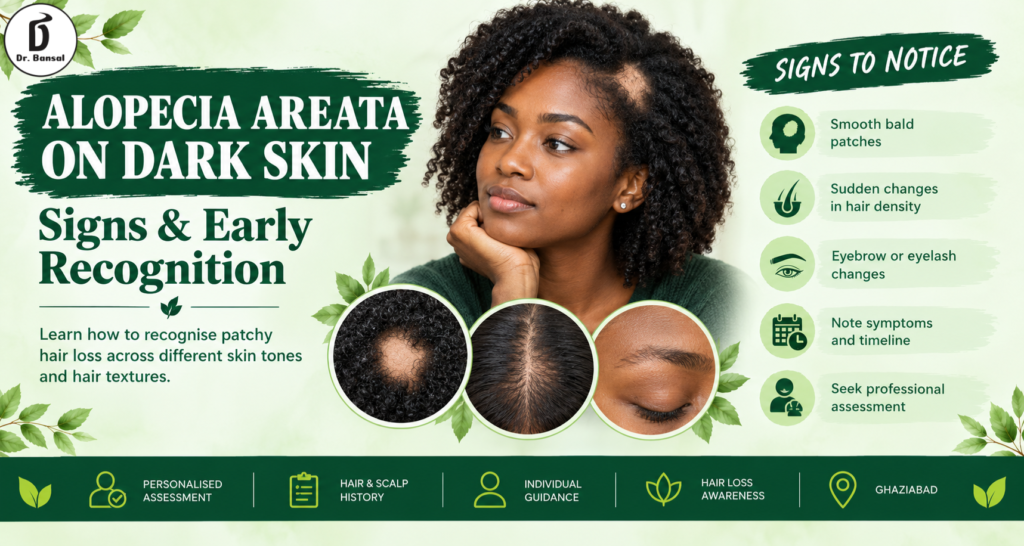
Some people develop clearly defined patches where hair is missing. The exposed skin may look similar to the surrounding scalp, or subtle differences in colour may be noticeable. Redness is not always prominent, so its absence does not rule out a hair-loss condition.
Look for these possible signs:
- Smooth bald patches: Round or oval areas may appear without the usual density of hair.
- Sudden changes: A patch may become noticeable over a short period.
- Multiple affected areas: Additional patches can appear in different parts of the scalp.
- Short or broken hairs: Some affected areas may have short hairs around their edges.
- Changes beyond the scalp: Eyebrows, eyelashes or beard hair may also be affected.
- Nail changes: Small dents or an uneven nail surface can occur in some people.
These features can help identify a reason to seek assessment, but they do not independently confirm a diagnosis.
Does Skin Tone Change the Symptoms?
The underlying condition is the same across skin tones, but the visibility of certain skin changes can differ.
For example, redness may be less obvious or may appear differently on more deeply pigmented skin. Changes in pigmentation can also be easier to notice in some areas than others.
For Alopecia Areata on Dark Skin, this means that focusing only on redness, irritation or a colour difference may cause important signs to be overlooked. The distribution of hair loss and the appearance of the affected follicles are also relevant.
Hair texture matters when interpreting changes, too. Curly, coily, wavy and straight hair can behave differently during washing and detangling. Breakage caused by mechanical stress may sometimes resemble thinning associated with a scalp condition.
A careful assessment considers these differences without assuming that one hair-care routine or one visual pattern applies to everyone.
How Can You Distinguish Alopecia Areata From Hair Breakage?
Hair breakage and alopecia areata can both leave areas looking less dense, but they affect hair differently.
With breakage, strands may snap at different lengths, leaving short hairs throughout an area. Repeated pulling, tight hairstyles, friction and rough detangling can contribute to this problem.
With Alopecia Areata on Dark Skin, a more characteristic pattern is one or more smooth patches where hair has been lost. However, the distinction is not always obvious, particularly when several problems occur together.
Other scalp conditions can cause scaling, itching, tenderness or broken hairs. These symptoms should not be ignored or automatically attributed to alopecia areata.
Avoid repeatedly pulling your hair to test whether it is loose. Instead, observe the affected area, note when the change began and arrange professional assessment if the loss is sudden, persistent or spreading.
Can Alopecia Areata Affect Different Hair Textures?
Yes. Alopecia areata can affect people with every hair texture.
Curly or coily hair may make a small patch less visible because surrounding strands can cover it. In other cases, a patch may become noticeable when styling, parting or washing the hair.
When observing Alopecia Areata on Dark Skin, check for changes in density rather than relying exclusively on how much hair appears in a comb or shower. Loose hairs can collect within textured hairstyles and become visible all at once during detangling.
Hair-care practices are also worth discussing during an assessment. Tight braids, extensions or styles that repeatedly pull on the roots may contribute to traction-related hair loss, which differs from alopecia areata.
The goal is not to blame a particular hairstyle or texture. It is to understand the pattern and identify the most likely explanation for the changes.
What Should You Do If You Notice a Bald Patch?
If you suspect Alopecia Areata on Dark Skin, a few practical steps can help you prepare for an assessment.
- Take an occasional photograph under consistent lighting.
- Record approximately when the patch first appeared.
- Notice whether the affected area is growing or new patches are appearing.
- Mention any itching, scaling, tenderness or changes in other hair-bearing areas.
- Avoid harsh handling and hairstyles that place repeated tension on the roots.
- Seek professional guidance instead of relying on photographs or home observations alone.
If the scalp is painful, significantly inflamed or developing scaling alongside hair loss, prompt assessment is especially important because other conditions may need to be considered.
Can Hair Grow Back?
Hair regrowth is possible with alopecia areata, but the outcome varies between individuals. Some people experience regrowth in affected areas, while others develop additional patches or recurring episodes.
The appearance of new hair may change over time, and regrowth in one area does not guarantee that other patches will not develop.
For Alopecia Areata on Dark Skin, skin tone alone cannot predict whether or when hair will return. The extent and course of the condition, along with individual factors, are more relevant than appearance alone.
Be cautious of promises that guarantee complete regrowth or claim that a particular hair-care routine works for everyone. Understanding the individual condition is a more reliable starting point.
Why You Need to Visit Dr. Bansal Hair Rebirth Centre
When you notice unexplained hair loss, an individual assessment can help clarify whether the pattern is consistent with alopecia areata or another scalp concern.
At Dr. Bansal Hair Rebirth Centre, you can discuss Alopecia Areata on Dark Skin, sudden bald patches, changes in hair density and concerns about regrowth. A personalised evaluation can help determine what further assessment or hair-care guidance may be appropriate.
Before your visit, note when the hair loss started, whether the affected areas have changed and whether you have noticed similar episodes before. Photographs taken under consistent lighting can also help document changes over time.
Contact Dr. Bansal Hair Rebirth Centre
- Address: MZL 07/08, Sumedha Tower, Ansal Building, Raj Nagar, Ghaziabad, Uttar Pradesh 201002
- Phone: +91-9953250910
- Website: https://drbansalhairrebirthcenter.in/
- Contact us. https://drbansalhairrebirthcenter.in/contact-us/.
Frequently Asked Questions
1. Can alopecia areata affect people with darker skin?
Yes. Alopecia areata can affect people of every skin tone. Skin colour does not prevent the condition from developing.
2. Is redness always present with alopecia areata?
No. Affected patches can appear relatively smooth without obvious redness. The absence of redness does not rule out alopecia areata.
3. Can curly or coily hair hide bald patches?
Yes. Surrounding hair can sometimes cover a small area of hair loss, making changes in density less noticeable until the hair is parted or styled differently.
4. Does a smooth bald patch always mean alopecia areata?
No. Other conditions can cause patchy hair loss. Professional assessment is important to establish the likely cause.
5. Can hair regrow after alopecia areata?
Yes, regrowth can occur, but it is not guaranteed. The course varies from person to person, and further patches may develop.
Conclusion
Alopecia Areata on Dark Skin deserves the same careful attention as hair loss on any other skin tone. Recognising changes in hair density, identifying smooth patches and understanding that redness may not always be obvious can help people seek appropriate guidance.
Hair texture, scalp appearance and styling habits all provide useful context, but no single sign confirms the condition. If you notice sudden, persistent or spreading hair loss, focus on understanding its cause rather than making assumptions based on appearance alone.
Contact Details
Dr. Bansal Hair Rebirth Center
MZ-07/08, Sumedha Tower, RDC, Raj Nagar, Ghaziabad
Phone: +91 8595340077
Website: https://drbansalhairrebirthcenter.in/
know more about us – https://vedantamayurveda.in/