
Hair loss can occur in many forms, but few conditions are as noticeable and emotionally challenging as Alopecia Universalis. Unlike common hair thinning or patchy bald spots, this condition causes complete hair loss from the scalp and the entire body. For many people, the journey begins with a few small patches of hair loss that gradually progress over time.
Thank you for reading this post, don't forget to subscribe!Understanding Alopecia Universalis is important because early recognition can help individuals seek guidance, improve scalp care habits, and better manage the emotional impact that often accompanies extensive hair loss. While every person’s experience is different, awareness remains one of the most valuable tools in dealing with the condition.
At Dr. Bansal Hair Rebirth Center, many patients visit the clinic looking for answers about complete hair loss, natural care approaches, and ways to support overall scalp wellness while living with Alopecia Universalis.
What Is Alopecia Universalis?
Alopecia Universalis is considered the most advanced form of alopecia. It is characterized by the complete loss of hair from the scalp, face, and body.
Hair loss may affect:
- Scalp hair
- Eyebrows
- Eyelashes
- Beard hair
- Arm and leg hair
- Chest and body hair
Unlike ordinary hair fall, Alopecia Universalis extends beyond the scalp and affects nearly every hair-bearing area of the body.
The condition can develop in both men and women and may appear at different stages of life.
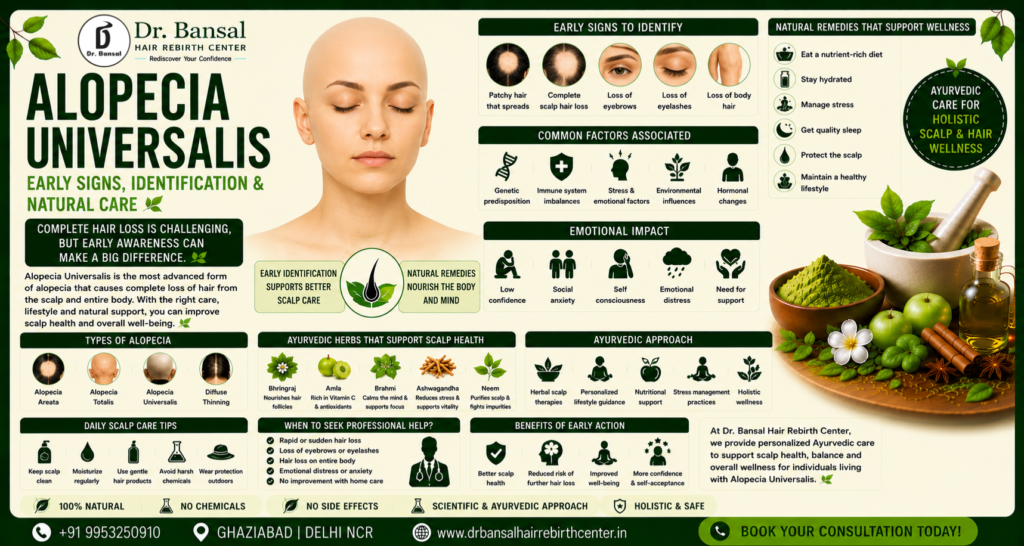
How Does Alopecia Universalis Begin?
Many people assume that complete hair loss occurs suddenly, but in reality, Alopecia Universalis often develops in stages.
Some individuals first experience:
- Small bald patches
- Uneven hair loss
- Thinning areas on the scalp
- Patchy beard hair loss
Over time, these patches may increase in size and eventually lead to more extensive hair loss.
Recognizing these early changes may help individuals understand what is happening before the condition progresses further.
Early Signs That May Help Identify Alopecia Universalis
1. Patchy Hair Loss That Continues to Spread
One of the earliest warning signs is the appearance of small, smooth bald patches.
Unlike normal hair shedding, these patches:
- Have clearly defined edges
- Are often round or oval
- May increase in size over time
2. Eyebrow Thinning
Many individuals notice thinning eyebrows before complete body hair loss occurs.
Eyebrow changes can be an important indicator that hair loss is extending beyond the scalp.
3. Loss of Eyelashes
Eyelashes help protect the eyes from dust and debris.
When Alopecia Universalis begins affecting eyelashes, individuals may notice:
- Sparse lashes
- Shorter lashes
- Complete eyelash loss
4. Hair Loss on Other Body Parts
A defining characteristic of Alopecia Universalis is hair loss beyond the scalp.
Hair may gradually disappear from:
- Arms
- Legs
- Chest
- Underarms
- Other body regions
5. Smooth Hair-Free Skin
Unlike some scalp conditions that cause redness or scarring, the affected areas often remain smooth and healthy-looking.
This smooth appearance is a common feature of Alopecia Universalis.
Possible Factors Associated with Alopecia Universalis
Although researchers continue to study the condition, several factors are believed to be associated with Alopecia Universalis.
Genetic Predisposition
Family history may increase the likelihood of developing certain forms of alopecia.
Immune-Related Factors
Many experts believe the condition involves immune-related activity that affects hair follicles.
Emotional Stress
Stress may not directly cause Alopecia Universalis, but it can influence overall wellness and hair-growth patterns.
Environmental Influences
Lifestyle habits and environmental factors may also contribute to scalp and hair health.
The Emotional Impact of Alopecia Universalis
Hair is often linked to self-image and confidence.
Because Alopecia Universalis affects the entire body, many individuals experience emotional challenges such as:
- Reduced self-confidence
- Social anxiety
- Emotional stress
- Self-consciousness
- Concerns about appearance
Recognizing these feelings is important because emotional well-being plays a significant role in overall quality of life.
Natural Remedies That May Support Overall Wellness
While every case is unique, healthy lifestyle habits may help support scalp health and general well-being.
Follow a Nutrient-Rich Diet
Hair follicles rely on nutrients to function effectively.
Focus on foods such as:
- Fresh fruits
- Green vegetables
- Nuts and seeds
- Lentils
- Protein-rich foods
Stay Hydrated
Proper hydration helps maintain healthy skin and scalp function.
Prioritize Quality Sleep
Sleep supports recovery, wellness, and overall body function.
Practice Stress Management
Stress management techniques may help support emotional balance.
Examples include:
- Yoga
- Meditation
- Deep breathing exercises
- Walking
Protect the Scalp
Without hair, the scalp becomes more exposed to environmental conditions.
Consider:
- Wearing protective head coverings
- Avoiding excessive sun exposure
- Keeping the scalp moisturized
Ayurvedic Perspective on Alopecia Universalis
Ayurveda emphasizes that healthy hair is connected to overall balance within the body.
According to Ayurvedic principles, factors affecting hair and scalp wellness include:
- Nutrition
- Digestion
- Lifestyle habits
- Emotional health
- Daily routines
Rather than focusing only on hair loss, Ayurveda seeks to support the body as a whole.
Ayurvedic Approaches That Support Scalp Wellness
At Dr. Bansal Hair Rebirth Center, Ayurvedic care is tailored to the individual.
Herbal Scalp Therapies
Traditional therapies may help nourish and support scalp comfort.
Personalized Lifestyle Guidance
Healthy routines can contribute to long-term wellness.
Nutritional Support
Balanced nutrition helps support overall health.
Stress-Management Practices
Mindfulness and relaxation techniques may encourage emotional balance.
Ayurvedic Herbs Commonly Used for Hair and Scalp Care
Bhringraj
Traditionally associated with healthy hair and scalp support.
Amla
Known for its antioxidant and nutritional properties.
Brahmi
Often used to support mental relaxation.
Ashwagandha
Commonly used to promote overall wellness.
Neem
Supports scalp cleanliness and skin care.
When Should You Seek Professional Guidance?
Consider professional evaluation if you notice:
- Rapid hair loss
- Multiple bald patches
- Eyebrow or eyelash thinning
- Significant body hair loss
- Emotional distress related to hair loss
Early assessment may help provide clarity and personalized recommendations.
Contact us. https://drbansalhairrebirthcenter.in/contact-us/
How Dr. Bansal Hair Rebirth Center Helps
Dr. Bansal Hair Rebirth Center offers personalized Ayurvedic care for individuals experiencing Alopecia Universalis and other forms of hair loss.
The clinic focuses on:
- Detailed scalp assessment
- Herbal scalp therapies
- Natural wellness approaches
- Lifestyle guidance
- Holistic support for hair and scalp health
Patients from Ghaziabad, Delhi NCR, and across India visit the clinic seeking individualized care and support.
Final Thoughts
Alopecia Universalis is a rare condition that causes complete hair loss across the body, but understanding its early signs can help individuals recognize changes sooner. From expanding bald patches to eyebrow and eyelash loss, awareness is essential for timely guidance and proper scalp care.
While living with Alopecia Universalis can be challenging, focusing on healthy habits, emotional well-being, scalp protection, and personalized Ayurvedic support can help individuals maintain confidence and overall wellness throughout their journey.
Contact Details
Dr. Bansal Hair Rebirth Center
MZ-07/08, Sumedha Tower, RDC, Raj Nagar, Ghaziabad
Phone: +91-9953250910
Website: https://drbansalhairrebirthcenter.in/
know more about us – https://vedantamayurveda.in/