
Hair loss is something most people experience at some point in their lives. Losing a few strands every day is completely normal, but when hair begins falling excessively or bald patches start appearing, it may be a sign of Alopecia. Early identification is important because understanding the condition sooner can help individuals take better care of their scalp and hair health.
Thank you for reading this post, don't forget to subscribe!Many people ignore the first signs of hair loss, assuming it is temporary. However, recognizing the symptoms of Alopecia early may help in understanding the underlying cause and exploring suitable care options. In this article, we will discuss how to identify Alopecia, common warning signs, and natural remedies that may help support healthy hair growth.
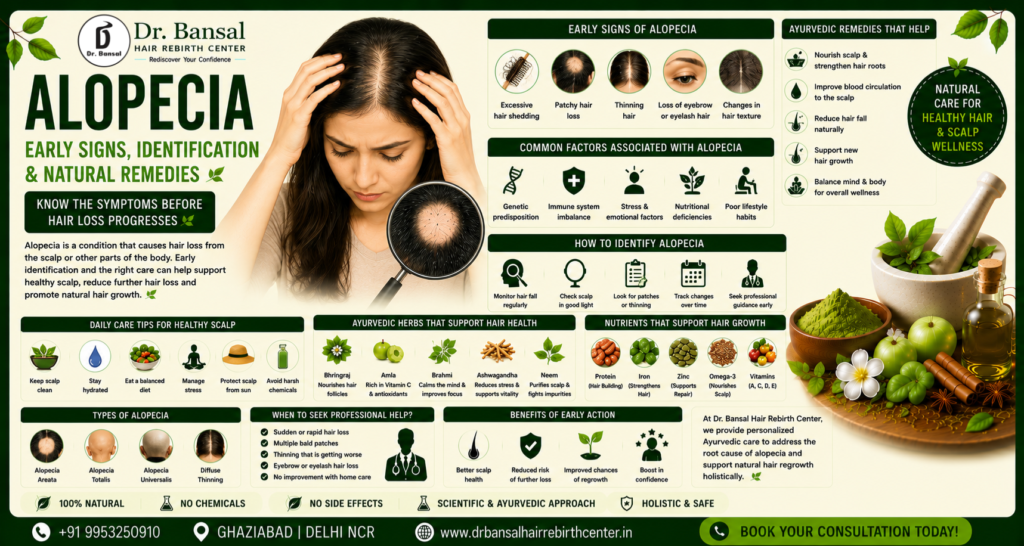
What Is Alopecia?
Alopecia is a general term used to describe different forms of hair loss that affect the scalp and sometimes other parts of the body. Depending on the type, hair loss may occur gradually or suddenly.
Common forms of Alopecia include:
- Alopecia Areata (patchy hair loss)
- Alopecia Totalis (complete scalp hair loss)
- Alopecia Universalis (complete body hair loss)
- Diffuse hair thinning
The severity and pattern of hair loss vary from person to person.
Why Early Identification Matters
Many people wait until hair loss becomes noticeable before seeking guidance. However, identifying Alopecia in its early stages may help individuals understand changes occurring in their scalp and hair follicles.
Early awareness can help:
- Monitor hair loss patterns
- Improve scalp care habits
- Support healthy lifestyle changes
- Encourage timely professional evaluation
- Reduce emotional stress related to hair loss
The sooner changes are noticed, the easier it becomes to track progression and take appropriate action.
How to Identify Alopecia: Common Warning Signs
1. Sudden Hair Shedding
One of the earliest signs of Alopecia may be excessive hair found on pillows, combs, or during hair washing.
While normal shedding occurs daily, noticeable increases should not be ignored.
2. Patchy Hair Loss
Small round or oval bald patches are often associated with certain forms of Alopecia.
These patches may:
- Appear suddenly
- Increase in size over time
- Occur in multiple areas
Patchy hair loss is one of the most recognizable signs of Alopecia.
3. Thinning Hair
Hair may gradually become less dense, making the scalp more visible.
This type of thinning often develops slowly and can be difficult to notice initially.
4. Hair Loss Beyond the Scalp
Some individuals may notice loss of:
- Eyebrows
- Eyelashes
- Beard hair
- Body hair
These changes may indicate more extensive forms of Alopecia.
5. Changes in Hair Texture
Hair may become weaker, finer, or more brittle before noticeable hair loss occurs.
Paying attention to these changes can help identify potential concerns earlier.
Common Factors Associated with Alopecia
Although the exact causes vary, several factors may contribute to Alopecia.
Family History
Genetics can influence susceptibility to certain forms of hair loss.
Immune System Activity
Some types of Alopecia are believed to involve immune-related processes affecting hair follicles.
Stress
Long-term emotional stress may influence overall hair health and growth cycles.
Nutritional Deficiencies
Hair follicles require adequate nutrients to function properly.
Lifestyle Factors
Poor sleep, unhealthy eating habits, and excessive chemical treatments may affect scalp wellness.
Remedies That May Help Support Hair and Scalp Health
While every case of Alopecia is different, maintaining a healthy scalp and lifestyle may help support overall hair wellness.
Follow a Balanced Diet
Healthy hair starts from within.
Include foods rich in:
- Protein
- Iron
- Zinc
- Vitamins
- Healthy fats
Examples include fruits, vegetables, nuts, seeds, lentils, and dairy products.
Stay Hydrated
Proper hydration supports skin and scalp health.
Drinking sufficient water daily may help maintain a healthier scalp environment.
Manage Stress Effectively
Stress management may contribute to overall wellness and healthier routines.
Helpful practices include:
- Yoga
- Meditation
- Deep breathing exercises
- Regular physical activity
Maintain Good Scalp Hygiene
Keeping the scalp clean helps remove excess oil, dirt, and product buildup.
A healthy scalp provides a better environment for hair follicles.
Avoid Harsh Hair Treatments
Excessive use of:
- Hair dyes
- Chemical treatments
- Heat styling tools
may affect hair quality and scalp comfort.
Ayurvedic Perspective on Alopecia
Ayurveda approaches Alopecia by focusing on overall balance and wellness.
According to Ayurvedic principles, healthy hair is connected to:
- Digestion
- Nutrition
- Lifestyle habits
- Emotional well-being
- Scalp nourishment
Rather than focusing only on visible hair loss, Ayurveda emphasizes supporting the body’s natural balance.
Ayurvedic Approaches That Support Hair Wellness
At Dr. Bansal Hair Rebirth Center, Ayurvedic care is tailored according to each individual’s scalp condition and overall health.
Herbal Scalp Therapies
Traditional therapies may help support scalp nourishment and comfort.
Lifestyle Guidance
Healthy routines contribute to long-term wellness.
Nutritional Recommendations
Balanced nutrition supports healthy body function and hair follicle wellness.
Stress Management Practices
Yoga and mindfulness techniques may help encourage emotional balance.
Ayurvedic Herbs Commonly Used for Hair Care
Bhringraj
Traditionally associated with healthy hair and scalp support.
Amla
Known for its antioxidant and nutritional properties.
Brahmi
Often used to support relaxation and mental well-being.
Ashwagandha
Commonly associated with stress management and overall wellness.
Neem
Supports scalp cleanliness and hygiene.
When Should You Seek Professional Guidance?
Consider seeking professional evaluation if you experience:
- Sudden bald patches
- Persistent hair shedding
- Rapid thinning
- Eyebrow or eyelash hair loss
- Significant changes in hair density
Early assessment may help identify contributing factors and provide personalized guidance.
Contact us. https://drbansalhairrebirthcenter.in/contact-us/
How Dr. Bansal Hair Rebirth Center Helps
Dr. Bansal Hair Rebirth Center provides personalized Ayurvedic care for individuals experiencing Alopecia and other forms of hair loss.
The clinic focuses on:
- Detailed scalp analysis
- Herbal scalp therapies
- Natural hair care approaches
- Lifestyle guidance
- Holistic wellness support
Patients from Ghaziabad, Delhi NCR, and across India visit the clinic seeking individualized scalp and hair-care solutions.
Final Thoughts
Alopecia can affect people of all ages, and early identification plays an important role in understanding changes in hair and scalp health. Recognizing symptoms such as patchy hair loss, excessive shedding, and thinning hair may help individuals take timely steps toward better scalp care.
By maintaining healthy lifestyle habits, focusing on scalp wellness, managing stress, and seeking professional guidance when needed, individuals can create a stronger foundation for healthy hair growth and long-term scalp health.
Contact Details
Dr. Bansal Hair Rebirth Center
MZ-07/08, Sumedha Tower, RDC, Raj Nagar, Ghaziabad
Phone: +91-9953250910
Website: https://drbansalhairrebirthcenter.in/
know more about us – https://vedantamayurveda.in/