
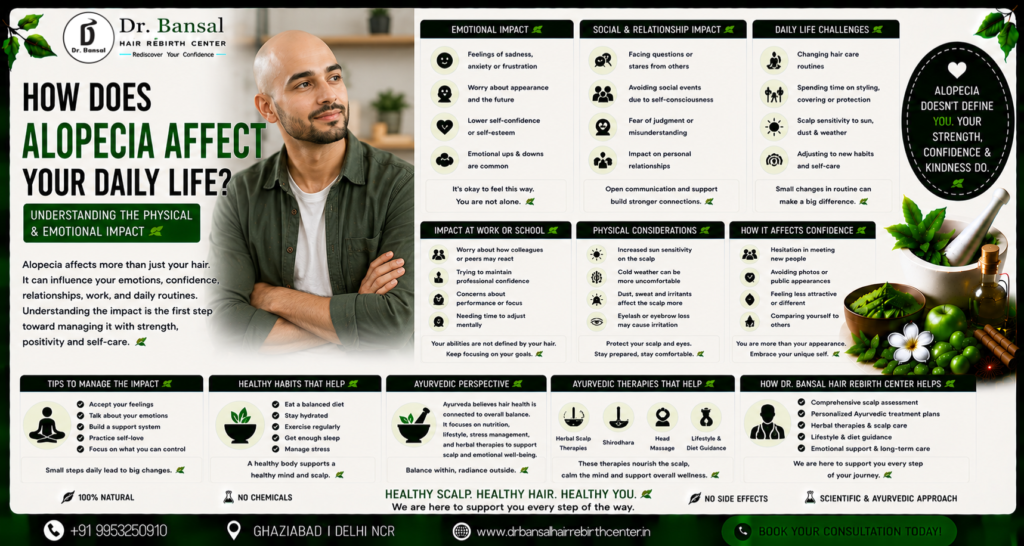
While the experience differs from person to person, hair is often considered an important part of a person’s identity, appearance, and confidence. When hair loss occurs due to alopecia, the effects can go beyond physical changes. Many people wonder how exactly Alopecia Affect daily routines, emotions, relationships, and more; alopecia can influence several aspects of everyday living.
The good news is that understanding these challenges can help individuals adapt, build confidence, and continue living a fulfilling life. In this article, we’ll explore how Alopecia Affect daily life and discuss practical ways to manage both the physical and emotional aspects of the condition.
What Is Alopecia?
Alopecia is a term used to describe various types of hair loss. One of the most common forms is alopecia areata, an autoimmune condition in which the body’s immune system mistakenly attacks healthy hair follicles.
Depending on the type and severity, alopecia may cause:
- Small bald patches
- Extensive scalp hair loss
- Loss of eyebrows and eyelashes
- Complete body hair loss in rare cases
Although alopecia primarily affects hair growth, the way Alopecia Affect daily life often extends far beyond appearance alone.
The Emotional Impact of Alopecia
One of the most significant ways Alopecia Affect individuals is emotionally.
Hair loss can trigger feelings such as:
- Shock
- Anxiety
- Frustration
- Sadness
- Embarrassment
- Reduced self-confidence
Many people experience emotional ups and downs, especially during the early stages of diagnosis. Adjusting to visible changes in appearance can take time, and emotional support is often an important part of the journey.
Self-Confidence and Body Image
Another important way Alopecia Affect daily life is through self-image.
Many individuals associate hair with:
- Personal style
- Youthfulness
- Attractiveness
- Identity
When hair loss occurs, some people may feel less confident in social situations. They may become more conscious of their appearance or worry about how others perceive them.
Over time, however, many people learn that confidence comes from much more than hair alone.
Social Interactions
Social situations can feel challenging for some people with alopecia.
Common concerns include:
- Being asked questions
- Receiving unwanted attention
- Facing misunderstandings
- Explaining the condition to others
The way Alopecia Affect social experiences often depends on personal comfort levels and the support available from friends and family.
Open communication and education can help reduce awkwardness and increase understanding.
Workplace and Professional Life
Many people worry about how Alopecia Affect their career or workplace relationships.
In reality, alopecia does not impact:
- Intelligence
- Skills
- Productivity
- Professional performance
However, visible hair loss may occasionally lead to questions from coworkers or clients. Some individuals choose to discuss their condition openly, while others prefer privacy.
Both approaches are perfectly valid.
Daily Hair Care Routines
Hair care often changes when living with alopecia.
People may spend more time:
- Caring for their scalp
- Choosing gentle hair products
- Managing wigs or head coverings
- Protecting exposed skin
The way Alopecia Affect daily grooming routines varies depending on the extent of hair loss and personal preferences.
Impact on Family Life
Family members often play a major role in providing emotional support.
Parents with alopecia may need to explain the condition to children, while spouses and relatives may offer encouragement during difficult periods.
Positive family support can significantly improve emotional well-being and help individuals adapt more comfortably.
Relationships and Dating
For some people, alopecia can create concerns about dating and romantic relationships.
Common worries include:
- Fear of rejection
- Concerns about appearance
- Anxiety about discussing hair loss
Fortunately, healthy relationships are built on trust, respect, communication, and shared values—not hair.
Many individuals discover that genuine connections are based on personality and character rather than appearance.
Physical Considerations
In addition to emotional effects, Alopecia Affect certain physical aspects of daily life.
For example:
Loss of Eyebrows
Eyebrows help protect the eyes from sweat and dust.
Loss of Eyelashes
Eyelashes help prevent small particles from entering the eyes.
Loss of Scalp Hair
Hair provides some protection from sunlight and temperature changes.
As a result, people with alopecia may need additional sun protection or protective accessories.
Stress and Alopecia
Stress does not cause all forms of alopecia, but emotional stress can affect overall well-being.
Many individuals notice that worrying about hair loss creates a cycle of:
- Anxiety
- Increased focus on appearance
- Reduced confidence
- Emotional exhaustion
Learning healthy stress-management techniques can help break this cycle.
Practical Tips for Living Well with Alopecia
Although Alopecia Affect different people in different ways, several strategies can improve quality of life.
Focus on Overall Health
Maintain:
- Balanced nutrition
- Regular exercise
- Quality sleep
- Proper hydration
Build Emotional Resilience
Practice:
- Positive self-talk
- Mindfulness
- Meditation
- Gratitude
Stay Connected
Talk openly with:
- Family
- Friends
- Support groups
- Healthcare professionals
Strong support systems make a significant difference.
Ayurvedic Perspective on Hair Wellness
Ayurveda views hair health as closely connected to overall physical and emotional balance.
Traditional Ayurvedic practices often focus on:
- Healthy digestion
- Balanced nutrition
- Stress management
- Daily routines
- Herbal scalp therapies
Rather than concentrating only on visible hair loss, Ayurveda promotes whole-body wellness.
Ayurvedic Therapies That May Support Overall Well-Being
Depending on individual needs, Ayurvedic care may include:
Herbal Scalp Therapies
Designed to nourish the scalp and support healthy hair care.
Shirodhara
A relaxing therapy often used to support emotional balance and relaxation.
Lifestyle Guidance
Recommendations related to:
- Diet
- Sleep
- Hydration
- Stress reduction
Holistic Wellness Plans
Long-term approaches focused on overall health and scalp wellness.
How Dr. Bansal Hair Rebirth Center Helps
At Dr. Bansal Hair Rebirth Center, every patient receives personalized care tailored to their unique condition and lifestyle.
The clinic offers:
- Comprehensive scalp assessments
- Personalized Ayurvedic consultations
- Herbal scalp therapies
- Lifestyle and dietary guidance
- Long-term hair wellness support
The goal is to help patients manage hair concerns while supporting overall physical and emotional well-being.
Contact us. https://drbansalhairrebirthcenter.in/contact-us/
Final Thoughts
Understanding how Alopecia Affect daily life can help individuals feel more prepared and empowered. While hair loss may influence confidence, emotions, grooming routines, and social interactions, it does not define who you are. Your abilities, relationships, achievements, and personal qualities remain unchanged.
With proper support, healthy habits, professional guidance, and a positive mindset, many people successfully adapt to life with alopecia and continue to thrive. Remember, alopecia is only one aspect of your journey—it does not determine your value, potential, or future.
Contact Details
Dr. Bansal Hair Rebirth Center
MZ-07/08, Sumedha Tower, RDC, Raj Nagar, Ghaziabad
Phone: +91-9953250910
Website: https://drbansalhairrebirthcenter.in/
know more about us – https://vedantamayurveda.in/