
Discovering that your hair is Falling Out in Patches can be alarming. You may notice a small bald spot while brushing your hair, washing it, or looking in the mirror. Naturally, your first reaction might be panic, followed by endless online searches and uncertainty about what to do next.
Thank you for reading this post, don't forget to subscribe!The good news is that patchy hair loss doesn’t always mean permanent hair loss. In many cases, early diagnosis and appropriate care can help identify the underlying cause and support healthier hair growth. Instead of worrying, it’s important to take calm and informed steps.
This guide explains why your hair may be Falling Out in Patches, what you should do first, and when it’s time to seek professional help.
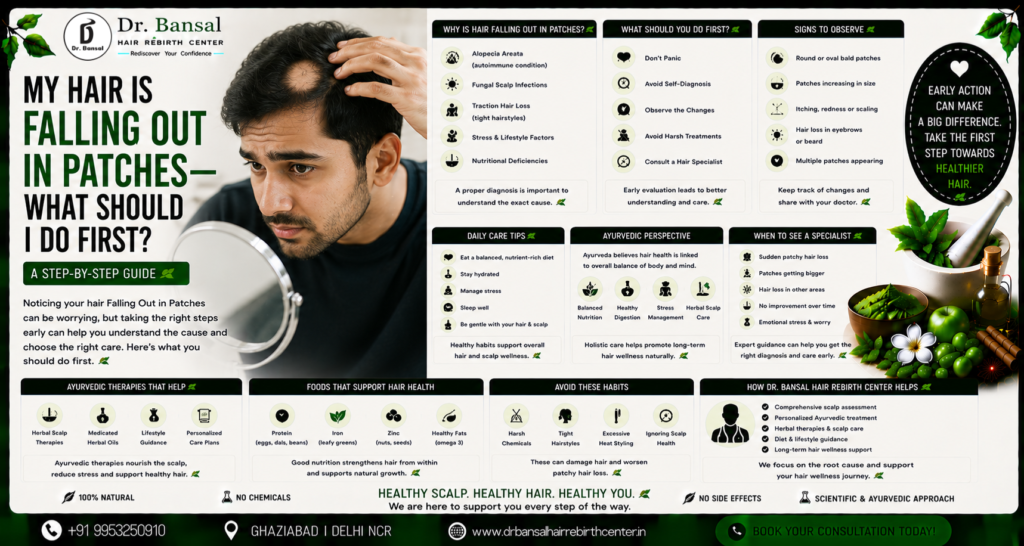
What Does “Falling Out in Patches” Mean?
Unlike general hair thinning, Falling Out in Patches refers to hair loss that occurs in one or more clearly defined areas of the scalp. These patches are often round or oval and may appear suddenly.
Some people notice:
- A single bald patch
- Multiple small patches
- Hair loss in the beard
- Eyebrow thinning
- Hair loss in different parts of the body
The size and number of patches can vary from person to person.
What Could Be Causing Patchy Hair Loss?
Several conditions may lead to hair Falling Out in Patches.
1. Alopecia Areata
One of the most common causes is alopecia areata, an autoimmune condition in which the immune system mistakenly attacks healthy hair follicles.
Hair often falls out suddenly, leaving smooth, round bald patches.
2. Fungal Scalp Infections
Certain fungal infections can cause patchy hair loss along with itching, redness, or scaling.
3. Traction Hair Loss
Frequently wearing tight hairstyles can damage hair follicles, especially around the hairline.
4. Stress
Although stress usually causes overall hair shedding, it may also contribute to conditions associated with patchy hair loss in some individuals.
5. Nutritional Deficiencies
Low levels of iron, zinc, protein, or certain vitamins may affect healthy hair growth.
Because there are multiple possible causes, professional evaluation is important.
Don’t Panic
Your first step after noticing hair Falling Out in Patches is to stay calm.
Many people immediately assume the worst, but early assessment often leads to better understanding and management of the condition.
Avoid spending hours searching for answers online or trying multiple home remedies without knowing the actual cause.
Avoid Self-Diagnosing
Not every patch of hair loss is alopecia areata.
Different conditions require different approaches.
A qualified hair specialist can determine whether your patchy hair loss is caused by:
- Autoimmune conditions
- Infection
- Nutritional deficiencies
- Scalp disorders
- Other medical conditions
An accurate diagnosis is essential before beginning any treatment.
Observe the Changes
If your hair is Falling Out in Patches, pay attention to details such as:
- Number of patches
- Size of the affected areas
- Whether the patches are growing
- Any itching or redness
- Changes in eyebrows or eyelashes
Taking occasional photographs can help your healthcare provider monitor changes over time.
Avoid Harsh Hair Treatments
While waiting for professional advice, protect your scalp by avoiding:
- Hair coloring
- Bleaching
- Chemical straightening
- Tight hairstyles
- Excessive heat styling
Gentle hair care helps reduce unnecessary stress on existing hair.
Follow Healthy Hair Habits
Supporting overall health is beneficial regardless of the cause of hair loss.
Focus on:
Balanced Nutrition
Eat foods rich in:
- Protein
- Iron
- Zinc
- Healthy fats
- Fruits
- Vegetables
Stay Hydrated
Proper hydration supports healthy skin and scalp function.
Sleep Well
Quality sleep plays an important role in overall physical recovery and immune health.
Manage Stress
Practice activities such as:
- Yoga
- Meditation
- Walking
- Deep breathing
- Relaxation exercises
These habits support overall wellness while your condition is being evaluated.
Ayurvedic Perspective on Patchy Hair Loss
According to Ayurveda, healthy hair reflects internal balance.
Traditional Ayurvedic care emphasizes:
- Balanced digestion
- Nutritious eating
- Daily routines
- Stress management
- Herbal scalp therapies
Rather than focusing only on hair loss, Ayurveda aims to improve overall health and well-being.
Ayurvedic Therapies That May Support Hair Wellness
Depending on your individual condition, Ayurvedic care may include:
Herbal Scalp Therapies
Designed to nourish the scalp and maintain healthy skin.
Herbal Oils
Traditionally used to support scalp hydration and comfort.
Personalized Lifestyle Guidance
Recommendations related to diet, sleep, hydration, and stress reduction.
Holistic Hair Wellness Programs
Long-term care plans that encourage healthy habits and scalp health.
When Should You See a Hair Specialist?
Arrange an appointment if:
- Hair is Falling Out in Patches suddenly.
- The patches continue to grow.
- Eyebrows or eyelashes begin thinning.
- You notice scalp redness, scaling, or itching.
- Hair loss continues for several weeks.
- Multiple patches develop.
Early evaluation often improves the chances of identifying the cause promptly.
How Dr. Bansal Hair Rebirth Center Helps
At Dr. Bansal Hair Rebirth Center, every patient receives individualized attention based on their unique hair and scalp condition.
The clinic offers:
- Comprehensive scalp examinations
- Personalized Ayurvedic consultations
- Herbal scalp therapies
- Lifestyle and dietary guidance
- Long-term hair wellness support
The goal is to identify the underlying cause of hair loss while supporting healthy scalp care through a holistic approach.
Contact us. https://drbansalhairrebirthcenter.in/contact-us/
Final Thoughts
Seeing your hair Falling Out in Patches can be frightening, but it doesn’t mean you should lose hope. Patchy hair loss has many possible causes, and the first step is always obtaining an accurate diagnosis rather than making assumptions.
By following healthy lifestyle habits, protecting your scalp, avoiding harsh treatments, and consulting an experienced hair specialist, you give yourself the best opportunity to understand your condition and support your overall hair health. Remember, early action and informed decisions are far more valuable than panic, and with the right guidance, you can take positive steps toward healthier hair and greater confidence.
Contact Details
Dr. Bansal Hair Rebirth Center
MZ-07/08, Sumedha Tower, RDC, Raj Nagar, Ghaziabad
Phone: +91-9953250910
Website: https://drbansalhairrebirthcenter.in/
know more about us – https://vedantamayurveda.in/