
Seeing a bald patch on your scalp for the first time can be frightening. Many people immediately panic and wonder if the hair loss is permanent. If your Hair Is Falling Out in patches, don’t ignore the problem—but don’t panic either. Patchy hair loss can happen for several reasons, and getting the right diagnosis early can make a significant difference in managing the condition.
Thank you for reading this post, don't forget to subscribe!Whether you’ve noticed one small bald spot or several patches, understanding what’s happening and knowing the right first steps can help you protect your hair and your peace of mind.
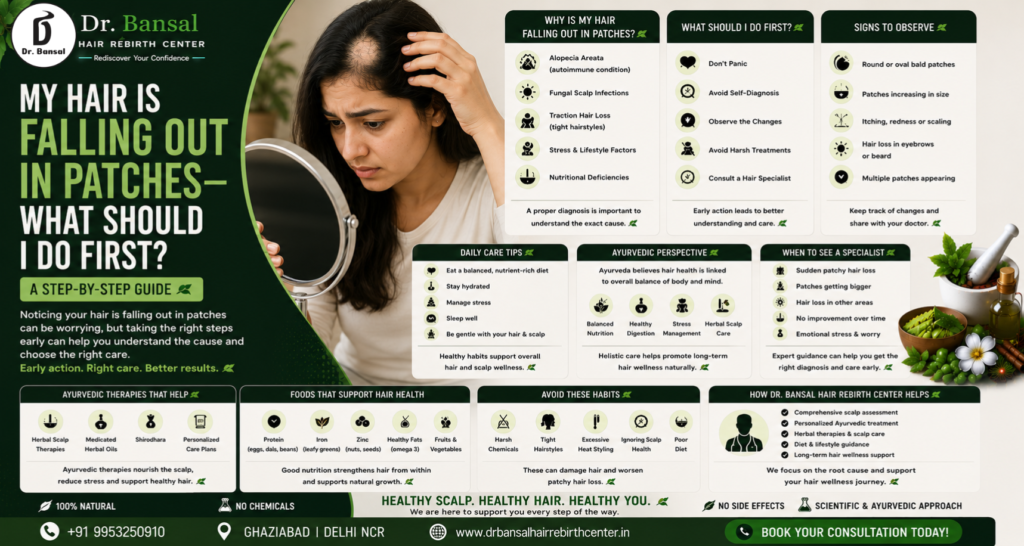
Why Is My Hair Falling Out in Patches?
If your Hair Is Falling Out in clearly defined patches instead of thinning evenly, the cause may be different from common male or female pattern hair loss.
Some possible causes include:
1. Alopecia Areata
Alopecia areata is one of the most common causes of patchy hair loss. It is an autoimmune condition in which the immune system mistakenly attacks healthy hair follicles, causing round or oval bald patches.
2. Fungal Scalp Infection
Certain fungal infections can lead to patchy hair loss along with itching, redness, or scaling of the scalp.
3. Traction Alopecia
Frequently tying your hair tightly or wearing hairstyles that pull on the scalp may damage hair follicles over time.
4. Nutritional Deficiencies
Low levels of iron, zinc, protein, or vitamins may contribute to hair problems in some individuals.
5. Stress and Illness
Physical or emotional stress can affect the normal hair growth cycle and sometimes contribute to unusual hair loss patterns.
Because there are many possible causes, it’s important not to assume the diagnosis yourself.
Stay Calm and Don’t Panic
If your Hair Is Falling Out, your first reaction may be fear. However, many conditions that cause patchy hair loss can be managed when identified early.
Avoid trying every home remedy you find online. Instead, focus on getting an accurate diagnosis.
Examine the Hair Loss Carefully
Take note of:
- The size of the patch
- The number of bald spots
- Whether the patches are increasing
- Any itching or burning
- Hair loss in eyebrows or beard
- Changes in your nails
Taking photos every few weeks can help you monitor changes and assist your doctor during consultations.
Avoid Harsh Hair Treatments
While your Hair Is Falling Out, avoid anything that may place extra stress on the scalp.
Avoid:
- Hair colouring
- Bleaching
- Chemical straightening
- Tight hairstyles
- Excessive heat styling
- Rough brushing
Gentle care helps protect the remaining hair.
Wash Your Hair Gently
Keeping your scalp clean is still important.
Use:
- A mild shampoo
- Lukewarm water
- Gentle fingertip massage
- A soft towel for drying
Avoid vigorous rubbing or scratching the scalp.
Don’t Scratch the Bald Patches
Some people experience mild itching around affected areas.
Scratching may irritate the scalp further and should be avoided.
If discomfort continues, consult a hair specialist instead of self-medicating.
Eat a Hair-Friendly Diet
Healthy nutrition supports normal hair growth and overall body function.
Include foods rich in:
- Protein
- Iron
- Zinc
- Vitamin D
- Vitamin B12
- Fresh fruits
- Green vegetables
- Healthy fats
Although diet alone cannot cure alopecia, it supports healthier hair and scalp function.
Manage Your Stress
If your Hair Is Falling Out, stress can make the emotional experience even more difficult.
Helpful ways to reduce stress include:
- Meditation
- Yoga
- Walking
- Deep breathing exercises
- Reading
- Listening to relaxing music
Good stress management benefits both mental well-being and overall health.
When Should You See a Hair Specialist?
Book an appointment if:
- Your Hair Is Falling Out suddenly.
- Bald patches continue growing.
- Hair loss spreads rapidly.
- Eyebrows or eyelashes begin thinning.
- Your scalp becomes painful or inflamed.
- Hair loss continues for several weeks.
Early diagnosis often improves treatment planning.
How Is Patchy Hair Loss Diagnosed?
A qualified hair specialist may perform:
- Medical history review
- Physical scalp examination
- Hair pull test
- Blood investigations if required
- Assessment of family history
- Scalp evaluation
These steps help determine the exact reason behind your hair loss.
Ayurvedic Perspective on Patchy Hair Loss
According to Ayurveda, healthy hair reflects overall balance within the body.
Traditional Ayurvedic principles focus on:
- Healthy digestion
- Balanced nutrition
- Stress reduction
- Daily routines (Dinacharya)
- Herbal scalp care
Rather than concentrating only on visible symptoms, Ayurveda aims to improve overall wellness.
Ayurvedic Therapies That May Support Hair Wellness
Depending on individual needs, Ayurvedic care may include:
Herbal Scalp Therapies
Designed to nourish the scalp and support healthy hair care.
Herbal Oils
Traditionally used to maintain scalp hydration and comfort.
Shirodhara
A relaxing Ayurvedic therapy often recommended to promote mental calmness and reduce stress.
Personalized Lifestyle Guidance
Recommendations related to sleep, nutrition, hydration, and daily habits that support overall wellness.
How Dr. Bansal Hair Rebirth Center Helps
At Dr. Bansal Hair Rebirth Center, every patient receives personalized care tailored to their specific condition.
The clinic offers:
- Comprehensive scalp assessments
- Personalized Ayurvedic consultations
- Herbal scalp therapies
- Lifestyle and dietary guidance
- Long-term hair wellness support
Each treatment plan is developed after understanding the patient’s hair loss pattern, scalp condition, and overall health.
Contact us. https://drbansalhairrebirthcenter.in/contact-us/
Final Thoughts
If your Hair Is Falling Out in patches, don’t ignore the early signs. Patchy hair loss may have several causes, including alopecia areata, scalp infections, or nutritional deficiencies. The sooner you seek professional guidance, the sooner you can understand the reason behind your hair loss and begin appropriate care.
Avoid panic, protect your scalp with gentle hair care, eat a balanced diet, manage stress, and consult an experienced hair specialist. At Dr. Bansal Hair Rebirth Center, we believe that informed decisions, personalized treatment, and holistic Ayurvedic care can help you take positive steps toward healthier hair and greater confidence.
Contact Details
Dr. Bansal Hair Rebirth Center
MZ-07/08, Sumedha Tower, RDC, Raj Nagar, Ghaziabad
Phone: +91-9953250910
Website: https://drbansalhairrebirthcenter.in/
know more about us – https://vedantamayurveda.in/