
Experiencing hair loss can be worrying, especially when you’re unsure about the cause. Many people assume all loss of hair conditions are the same, but that is far from the truth. Different forms of hair loss have different causes, symptoms, patterns, and treatment approaches. Understanding these differences is essential for choosing the right path toward scalp and hair health.
Thank you for reading this post, don't forget to subscribe!One condition that often causes confusion is alopecia areata. Because it can appear suddenly and create visible bald patches, many people wonder how it differs from other forms of loss of hair. If you’ve noticed changes in your hair and are seeking answers, this guide will help you understand the key differences between alopecia areata and other common hair loss conditions.
Understanding Hair Loss
Hair loss is a broad term used to describe the shedding, thinning, or disappearance of hair from the scalp or other parts of the body.
Some people experience gradual thinning over many years, while others notice sudden patches or increased shedding within weeks. The pattern and cause of loss of hair can vary significantly from person to person.
Common reasons for loss of hair may include:
- Genetics
- Hormonal changes
- Stress
- Nutritional deficiencies
- Medical conditions
- Scalp disorders
- Lifestyle factors
Identifying the specific type of loss of hair is often the first step toward effective management.
What Is Alopecia Areata?
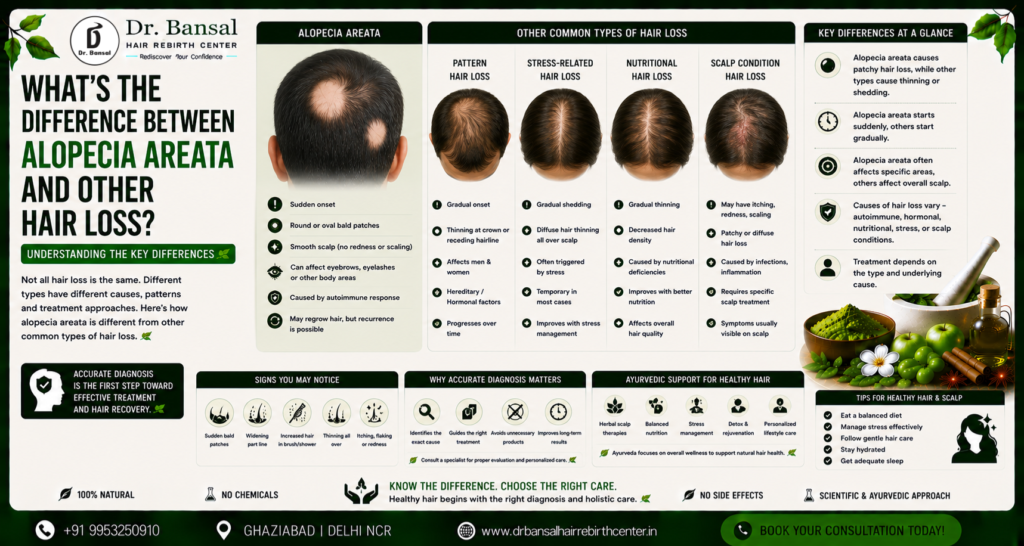
Alopecia areata is a condition that causes patchy hair loss. It often appears as small, round, smooth bald patches on the scalp.
Unlike many other forms of loss of hair, alopecia areata can develop suddenly. A person may notice a patch of missing hair within a few days or weeks.
Common characteristics include:
- Round or oval bald patches
- Sudden onset
- Smooth scalp surface
- Hair loss in localized areas
- Possible involvement of eyebrows and eyelashes
The appearance of these patches is one of the primary features that distinguish alopecia areata from other forms of loss of hair.
How Is Pattern Hair Loss Different?
Pattern hair loss is one of the most common forms of loss of hair in both men and women.
Unlike alopecia areata, pattern loss of hairusually develops gradually over time.
In men, it often appears as:
- Receding hairline
- Thinning at the crown
- Progressive hair loss
In women, it commonly presents as:
- Widening part line
- Overall thinning
- Reduced hair density
The biggest difference is that pattern loss of hair rarely causes smooth, round bald patches like alopecia areata.
Alopecia Areata vs Stress-Related Hair Loss
Stress-related hair loss often causes diffuse shedding rather than isolated patches.
Individuals experiencing stress-related loss of hair may notice:
- More hair in the shower
- Increased shedding while brushing
- Reduced hair volume
Unlike alopecia areata, stress-related hair loss generally affects the scalp more evenly.
This distinction helps specialists determine the likely cause of loss of hair during an evaluation.
Alopecia Areata vs Nutritional Hair Loss
Nutritional deficiencies can contribute to loss of hair in some individuals.
Hair loss related to nutrition often appears as:
- General thinning
- Increased shedding
- Reduced hair quality
Rather than producing isolated bald spots, nutritional loss of hair tends to affect larger portions of the scalp more uniformly.
A detailed assessment can help identify whether nutrition may be contributing to loss of hair.
Alopecia Areata vs Scalp Conditions
Certain scalp conditions may also cause hair loss.
Examples include:
- Fungal infections
- Scalp inflammation
- Chronic irritation
These conditions may produce symptoms such as:
- Itching
- Redness
- Flaking
- Discomfort
In contrast, alopecia areata often causes smooth bald patches without obvious irritation.
Signs That Your Hair Loss May Be Alopecia Areata
While professional diagnosis is important, some signs may suggest alopecia areata.
These include:
- Sudden appearance of bald patches
- Smooth scalp in affected areas
- Circular or oval-shaped loss of hair
- Hair loss involving eyebrows or eyelashes
- Rapid changes in hair density
If you notice these symptoms, seeking professional guidance can help clarify the cause of your loss of hair.
Why Accurate Diagnosis Matters
Many people search online and attempt to diagnose their own hair loss. However, different conditions may appear similar at first glance.
An accurate diagnosis helps:
- Identify the underlying cause
- Guide treatment planning
- Avoid unnecessary products
- Improve long-term outcomes
Because loss of hair can result from multiple factors, a professional assessment is often the most reliable approach.
Can Different Types of Hair Loss Occur Together?
Yes.
Some individuals may experience more than one form of loss of hair at the same time.
For example:
- Pattern loss of hair hair loss and stress-related shedding
- Alopecia areata and nutritional deficiencies
- Hair thinning and scalp conditions
This is another reason why individualized evaluation is so important.
Emotional Impact of Hair Loss
Regardless of the cause, loss of hair can affect emotional well-being.
Many people experience:
- Anxiety
- Reduced confidence
- Social discomfort
- Frustration
Recognizing these feelings is important. Hair loss affects more than appearance, and emotional support can be an important part of the journey.
Ayurvedic Perspective on Hair Loss
Ayurveda views hair health as closely connected to overall wellness.
According to Ayurvedic principles, healthy hair may be influenced by:
- Balanced nutrition
- Quality sleep
- Proper digestion
- Emotional balance
- Healthy daily routines
Rather than focusing only on visible symptoms, Ayurveda often emphasizes supporting the entire body.
Supporting Hair Health Naturally
While every type of loss of hair requires individualized care, healthy habits can support overall scalp wellness.
Helpful practices include:
Balanced Nutrition
Consume a diet rich in:
- Protein
- Fruits
- Vegetables
- Healthy fats
Stress Management
Practices such as:
- Yoga
- Meditation
- Deep breathing
may support emotional well-being.
Gentle Hair Care
Avoid excessive heat, harsh chemicals, and aggressive styling techniques.
Healthy Sleep Routine
Quality sleep contributes to overall wellness and recovery.
How Dr. Bansal Hair Rebirth Center Helps
At Dr. Bansal Hair Rebirth Center, patients receive personalized evaluations designed to identify the specific cause of their hair concerns.
The clinic focuses on:
- Detailed scalp assessments
- Personalized Ayurvedic consultations
- Herbal scalp therapies
- Lifestyle recommendations
- Long-term scalp wellness support
Every treatment plan is tailored according to the patient’s unique condition and goals.
Contact us. https://drbansalhairrebirthcenter.in/contact-us/
Final Thoughts
Not all hair loss is the same. Alopecia areata differs significantly from pattern hair loss, stress-related shedding, nutritional hair loss, and scalp disorders. Understanding these differences can help you make informed decisions about your scalp health and seek the right support when needed.
If you are experiencing loss of hair, an accurate diagnosis is one of the most important steps you can take. By understanding the cause, following appropriate guidance, and maintaining healthy lifestyle habits, you can better support your hair and scalp health for the future.
Contact Details
Dr. Bansal Hair Rebirth Center
MZ-07/08, Sumedha Tower, RDC, Raj Nagar, Ghaziabad
Phone: +91-9953250910
Website: https://drbansalhairrebirthcenter.in/
know more about us – https://vedantamayurveda.in/