
One of the most common questions we hear from patients at Dr. Bansal Hair Rebirth Centre is, “How do I know if my alopecia is getting better?” If you’ve recently started treatment or noticed changes in your hair, it’s natural to wonder whether you’re making progress.
Thank you for reading this post, don't forget to subscribe!The good news is that recovery from alopecia often happens gradually. While every individual responds differently, there are several encouraging signs that indicate alopecia is getting better. Understanding these signs can help you stay motivated and continue your treatment with confidence.
In this article, we’ll explain what to expect during recovery, the early signs of hair regrowth, and when you should consult your hair specialist.
Understanding Alopecia Recovery
Alopecia is an autoimmune condition in which the immune system mistakenly attacks healthy hair follicles, interrupting the natural hair growth cycle. Depending on the type—Alopecia Areata, Alopecia Totalis, or Alopecia Universalis—the recovery process may vary.
One important thing to remember is that hair rarely grows back overnight. Improvement usually occurs in stages, and patience is essential.
At Dr. Bansal Hair Rebirth Centre, we closely monitor each patient’s progress through regular scalp evaluations and personalized treatment plans because every recovery journey is unique.
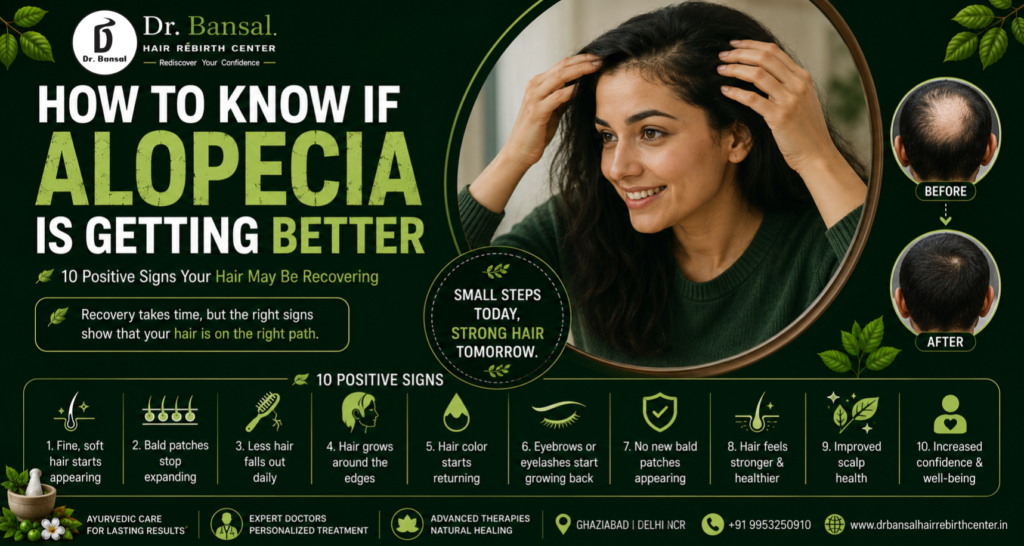
1. Fine, Soft Hair Starts Appearing
One of the earliest signs that alopecia is getting better is the appearance of tiny, soft hairs on previously bald patches.
These hairs are often:
- Thin
- White or light in color
- Soft to the touch
This is completely normal. As the hair follicles recover, stronger and darker hair may gradually replace these fine strands.
2. Bald Patches Stop Expanding
If your bald patches remain the same size for several weeks instead of continuing to grow, this is another encouraging sign.
Stable patches often indicate that the autoimmune activity affecting the hair follicles is becoming less active.
3. Less Hair Falls Out Daily
Most people naturally lose 50–100 hairs each day.
However, if you’ve been experiencing excessive shedding and suddenly notice significantly fewer hairs on your pillow, comb, or shower drain, it may suggest that alopecia is getting better.
Reduced shedding usually means the hair growth cycle is becoming more balanced.
4. Hair Begins Growing Around the Edges
Many patients first notice regrowth along the outer edges of bald patches.
Gradually, these new hairs spread toward the center until the patch becomes less noticeable.
This pattern is commonly seen during successful recovery.
5. Hair Color Starts Returning
Initially, new hair often appears white or colorless because pigment cells recover more slowly than hair follicles.
Over time, many patients notice that these hairs become darker and begin matching their natural hair color.
This is a positive sign that the follicles are functioning more normally.
6. Eyebrows or Eyelashes Start Growing Back
For people with more extensive forms of alopecia, including Alopecia Universalis, improvement isn’t limited to the scalp.
If your eyebrows, eyelashes, beard, or body hair begin returning, it often indicates that the treatment is having a broader positive effect.
7. New Bald Patches Stop Appearing
One of the clearest signs that alopecia is getting better is the absence of new hair loss areas.
If several months pass without additional patches forming, your condition may be stabilizing.
Regular follow-ups with your specialist remain important to monitor long-term progress.
8. Hair Feels Stronger
As recovery continues, many patients notice improvements in hair quality.
Hair may become:
- Thicker
- Stronger
- Less fragile
- Easier to style
These changes indicate healthier hair follicle activity.
9. Improved Scalp Health
A healthier scalp often supports healthier hair growth.
Positive changes include:
- Reduced irritation
- Less redness
- Better scalp hydration
- Fewer flaky areas
Maintaining proper scalp care during treatment is an important part of recovery.
10. Increased Confidence and Emotional Well-Being
Hair regrowth often brings emotional improvements as well.
Patients frequently report:
- Greater confidence
- Reduced anxiety
- Improved social comfort
- Better self-esteem
At Dr. Bansal Hair Rebirth Centre, we believe emotional recovery is just as important as physical hair regrowth.
How Long Does It Take to See Improvement?
Recovery timelines vary from person to person.
Factors that influence progress include:
- Type of alopecia
- Severity of hair loss
- Age
- Overall health
- Immune system activity
- Consistency with treatment
Some individuals notice early improvements within a few months, while others require longer-term management. It’s important to follow your specialist’s advice and avoid comparing your progress with others.
What Can Support Hair Recovery?
While no treatment guarantees identical results for everyone, several healthy habits can support your recovery:
Follow Your Treatment Plan
Consistency is one of the most important factors in managing alopecia.
Eat a Balanced Diet
A nutrient-rich diet helps support healthy hair follicles and overall wellness.
Manage Stress
Although stress is not the sole cause of alopecia, reducing emotional stress may help improve overall health and support treatment.
Avoid Self-Medicating
Internet remedies and unverified treatments may delay proper care.
Always consult experienced hair specialists before trying new products or therapies.
When Should You Revisit Your Hair Specialist?
Even if you believe alopecia is getting better, regular check-ups remain essential.
You should schedule a follow-up if:
- Hair loss suddenly increases again
- New bald patches appear
- Existing patches expand
- You experience scalp discomfort
- Hair regrowth stops for an extended period
Regular monitoring allows your treatment plan to be adjusted whenever necessary.
How Dr. Bansal Hair Rebirth Centre Helps Patients with Alopecia
At Dr. Bansal Hair Rebirth Centre, we understand that every alopecia case is different. That’s why our approach focuses on identifying the root cause and providing personalized care rather than a one-size-fits-all solution.
Our comprehensive approach includes:
- Detailed scalp and hair analysis
- Personalized Ayurvedic treatment plans
- Herbal scalp therapies
- Lifestyle and nutritional guidance
- Advanced hair restoration therapies
- Regular progress monitoring
- Long-term support for sustained hair health
Our goal is not only to encourage healthy hair regrowth but also to restore confidence and improve overall well-being.
Contact us. https://drbansalhairrebirthcenter.in/contact-us/
Final Thoughts
Watching for signs that alopecia is getting better can give you hope during your treatment journey. Fine new hairs, reduced shedding, stable bald patches, stronger hair, and improved scalp health are all encouraging indicators that your hair follicles may be recovering.
Remember that alopecia recovery is rarely immediate. Patience, consistency, and expert guidance are key to achieving the best possible outcomes.
If you’re experiencing alopecia or want to understand whether your treatment is working, the specialists at Dr. Bansal Hair Rebirth Centre are here to help with compassionate care, personalized treatment plans, and ongoing support throughout your hair restoration journey.
Frequently Asked Questions (FAQs)
How do I know if my alopecia treatment is working?
Early signs include fine hair regrowth, reduced hair shedding, no new bald patches, and healthier scalp conditions. Your specialist can assess progress during follow-up visits.
Does white hair mean alopecia is improving?
Yes. New hair often grows back white or light-colored initially. As recovery continues, the hair may gradually regain its natural color.
Can alopecia come back after improvement?
Yes. Alopecia is an autoimmune condition, and some people may experience future flare-ups. Regular monitoring and following your treatment plan can help manage the condition.
Should I stop treatment once my hair starts growing?
No. Always consult your specialist before making any changes to your treatment plan. Continued care may help support long-term results.
Contact Details
Dr. Bansal Hair Rebirth Center
MZ-07/08, Sumedha Tower, RDC, Raj Nagar, Ghaziabad
Phone: +91-9953250910
Website: https://drbansalhairrebirthcenter.in/
know more about us – https://vedantamayurveda.in/