
Not all hair loss begins with a round, visible bald patch. Sometimes, you may notice more hair than usual on your pillow, in your comb, or while washing your hair. Your ponytail may feel less full, or your scalp may gradually become more visible. This type of Diffuse Hair Loss can be confusing because the thinning appears across a wider area rather than in one specific spot.
Thank you for reading this post, don't forget to subscribe!Although common shedding patterns can cause diffuse thinning, some less typical forms of alopecia areata may also produce widespread hair shedding without the classic bald patches. Understanding the possible causes of Diffuse Hair Loss is important because different conditions can look similar but require different approaches to assessment and care.
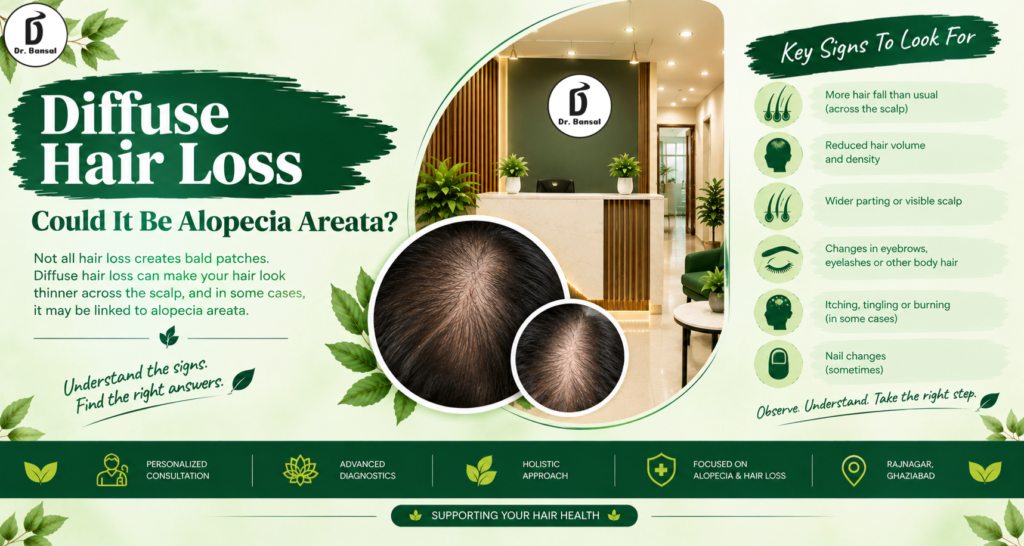
What Is Diffuse Hair Loss?
Diffuse Hair Loss refers to thinning or shedding that affects multiple areas of the scalp rather than one clearly defined patch. You may notice a reduction in overall hair volume, a wider-looking parting, or more loose strands during everyday grooming.
Unlike typical patchy alopecia areata, Diffuse Hair Loss may not create smooth, round bald spots that are easy to identify. The change can be subtle at first, making it difficult to determine when the shedding began.
Diffuse thinning is a description of a pattern, not a diagnosis. Several factors may contribute to it, including temporary changes in the hair-growth cycle, nutritional deficiencies, hormonal changes, certain health conditions, and some forms of alopecia.
Can Alopecia Areata Cause Diffuse Hair Loss?
Yes, certain less common presentations of alopecia areata can resemble widespread shedding instead of classic patchy hair loss. One recognised presentation is known as alopecia areata incognita. It can be difficult to distinguish from other causes of sudden thinning because obvious bald patches may be absent.
Alopecia areata occurs when the body’s immune system mistakenly targets hair follicles. The exact reasons it develops vary, and there may not be one clear trigger. Family history and other personal health factors can sometimes be relevant.
However, not every case of Diffuse Hair Loss is alopecia areata. Identifying the pattern alone is not enough to confirm the cause. A proper scalp assessment helps avoid assumptions and supports a more appropriate care plan.
Early Signs You Should Not Ignore
Recognising changes early can help you seek an assessment before the pattern becomes more noticeable. Watch for the following signs:
- Increased shedding: You regularly notice more loose hair than usual.
- Reduced hair volume: Your hair feels less dense when you tie or style it.
- A wider parting: More scalp becomes visible along your usual parting.
- Sudden changes: Your hair density appears to decrease over a relatively short period.
- Changes in other areas: You notice thinning in your eyebrows, eyelashes, or beard.
- Scalp sensations: Itching, tingling, or burning may occur, although these symptoms are not specific to alopecia areata.
- Nail changes: Small dents or unusual surface changes can sometimes accompany alopecia areata.
These signs do not prove that you have alopecia areata. They are reasons to pay attention to changes and seek professional guidance when the shedding is sudden, persistent, or progressing.
What Causes Diffuse Hair Loss?
There is no single cause of Diffuse Hair Loss. The possibilities include:
1. Changes in the hair-growth cycle
Hair naturally passes through growing, resting, and shedding phases. After a significant illness, high fever, major physical stress, or another bodily change, increased shedding may develop after a delay. This pattern is often temporary, but the cause should be considered carefully.
2. Nutritional deficiencies
Insufficient intake or low levels of certain nutrients, including iron, can contribute to hair shedding in some people. Eating a varied, balanced diet supports general health, but dietary changes alone may not resolve every cause of thinning.
3. Hormonal or health-related changes
Some hormonal changes and underlying health conditions can affect hair growth. When appropriate, a healthcare professional may recommend further assessment based on your symptoms and medical history.
4. Alopecia areata
Alopecia areata may cause sudden patchy loss or, in less common presentations, more widespread shedding. This possibility becomes particularly relevant when the pattern changes quickly or other characteristic signs are present.
5. Hair-care practices
Repeated tension from tight hairstyles, rough brushing, or frequent heat styling may contribute to breakage or hair loss. These problems can sometimes resemble Diffuse Hair Loss, although their patterns may differ.
How Is Diffuse Hair Loss Assessed?
The first step is to understand when the shedding began, how quickly it is progressing, and whether other symptoms are present. A professional may examine your scalp, hair density, affected areas, and nails.
Depending on the findings, magnified scalp examination or selected laboratory tests may help distinguish alopecia areata from other causes of Diffuse Hair Loss. Not everyone needs the same investigations; they should be guided by individual findings.
Avoid diagnosing yourself based only on photographs or the number of hairs you shed on a particular day. Hair shedding varies naturally, and several conditions can produce similar changes.
What Can You Do When You Notice Sudden Thinning?
If you notice sudden or persistent Diffuse Hair Loss, arrange a professional assessment rather than waiting for the pattern to become severe. Keep a simple record of when the shedding started and take occasional photographs under similar lighting to track visible changes.
Handle your hair gently, avoid unnecessarily tight hairstyles, and maintain balanced meals and regular sleep. These habits support general hair health, but they cannot guarantee regrowth or replace an assessment of the underlying cause.
Seek prompt medical advice if hair loss progresses rapidly, involves multiple body areas, or occurs alongside significant scalp discomfort or other new symptoms.
Why You Need to Visit Dr. Bansal Hair Rebirth Centre
At Dr. Bansal Hair Rebirth Centre, the focus is on understanding the pattern of hair loss and considering the factors that may be contributing to it. Because Diffuse Hair Loss can have several possible causes, identifying the pattern and reviewing your individual history are important starting points.
The centre offers personalised hair and scalp assessment, with guidance tailored to the individual’s concerns. If you are experiencing sudden shedding, widespread thinning, or changes that do not resemble ordinary patchy alopecia areata, a consultation can help you understand what needs further evaluation.
Rather than relying on assumptions or expecting the same outcome as someone else, seek guidance based on your specific condition. Hair regrowth and the course of alopecia vary between individuals, so no result should be guaranteed.
Visit Dr. Bansal Hair Rebirth Centre
- Address: MZL 07/08, Sumedha Tower, Ansal Building, Raj Nagar, Ghaziabad, Uttar Pradesh 201002
- Phone: +91-9953250910
- Website: https://drbansalhairrebirthcenter.in/
- Contact us. https://drbansalhairrebirthcenter.in/contact-us/.
Frequently Asked Questions
1. Can alopecia areata cause thinning without bald patches?
Yes. Some less common forms can cause widespread shedding without obvious round patches. An assessment is needed to distinguish them from other causes.
2. Is diffuse hair shedding always permanent?
No. Some causes are temporary, while others may continue or recur. The outlook depends on the underlying condition and individual circumstances.
3. Can stress cause diffuse hair loss?
Significant physical or emotional stress may contribute to some shedding patterns. However, stress should not automatically be assumed to be the cause, especially when thinning is sudden or progressive.
4. When should I seek professional advice?
Seek an assessment if shedding begins suddenly, continues longer than expected, becomes more noticeable, or affects your eyebrows, eyelashes, beard, or other areas.
5. Can I identify alopecia areata at home?
You may notice clues, such as sudden changes in density or smooth bald patches, but appearance alone cannot reliably confirm the diagnosis. Professional assessment is recommended.
Conclusion
Diffuse Hair Loss can be worrying, particularly when your hair becomes thinner without a clear explanation. Although it may be associated with changes in the hair-growth cycle, nutritional factors, health conditions, or less typical alopecia areata, the cause cannot be confirmed from appearance alone.
Pay attention to sudden changes, care for your hair gently, and seek professional guidance when shedding persists or progresses. Understanding the reason behind Diffuse Hair Loss is the first step towards making informed decisions about your hair and scalp health.
Contact Details
Dr. Bansal Hair Rebirth Center
MZ-07/08, Sumedha Tower, RDC, Raj Nagar, Ghaziabad
Phone: +91 8595340077
Website: https://drbansalhairrebirthcenter.in/
know more about us – https://vedantamayurveda.in/